AI Speeds Up Cyberattacks: Why Your Devices Need More Updates

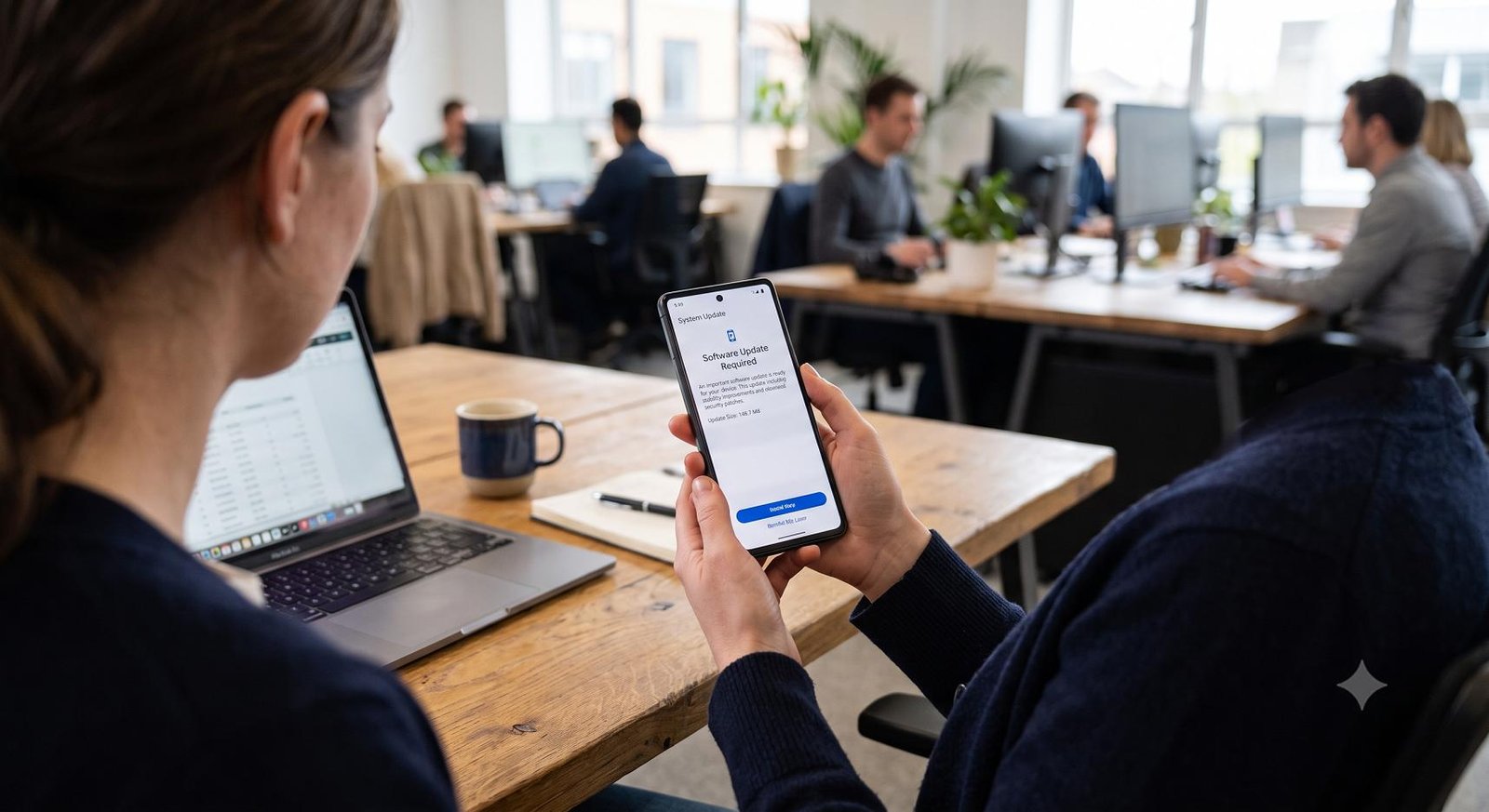
If your smartphone or laptop seems to be asking you to install security updates more frequently than it did a few years ago, you are not imagining things.
For decades, the technology industry operated on a predictable schedule. Companies like Microsoft established routines like “Patch Tuesday,” releasing a bundle of security fixes on the second Tuesday of every month. IT administrators planned their weeks around it, and consumers grew accustomed to the occasional prompt to restart their machines.
That schedule is quietly falling apart. The primary reason is artificial intelligence.
Generative AI models and large language models (LLMs) are changing the economics and speed of cybercrime. Tools originally designed to help software engineers write code are being repurposed by hackers to discover software flaws, reverse-engineer existing patches, and write exploit scripts in a fraction of the time it used to take.
To prevent widespread breaches, software vendors are abandoning their leisurely release schedules. Instead, they are pushing out smaller, faster, and more frequent updates, changing how consumers and businesses manage their digital security.
The Shrinking Vulnerability Window
In cybersecurity, the most critical metric is time.
When a software vendor discovers a flaw in its code, the clock starts ticking. If hackers find the flaw first, it is considered a “zero-day” vulnerability—meaning the vendor has had zero days to fix it. But even when a company finds and patches a bug, a different countdown begins.
Historically, when a company released a security patch, hackers would download the update, compare it to the old version of the software, and analyze the differences. This process, known as patch diffing, reveals exactly what the company fixed. By understanding the fix, hackers can write malicious code to attack users who have not yet installed the update.
Before the widespread availability of advanced AI, reverse-engineering a patch and writing a functional exploit took human analysts days or even weeks of tedious work. That delay gave consumers and businesses a grace period to install updates.
AI has nearly erased that grace period. Modern AI models can ingest millions of lines of code, compare software versions instantly, and highlight the exact nature of a vulnerability. More importantly, they can assist in writing the code needed to exploit it. What used to take a team of skilled researchers a week can now be accomplished by a novice hacker in hours.
The result is a surge in what security researchers call “N-day” attacks—exploits that target known vulnerabilities shortly after a patch is released, catching users who delay their updates off guard.
How Hackers Are Using Generative AI
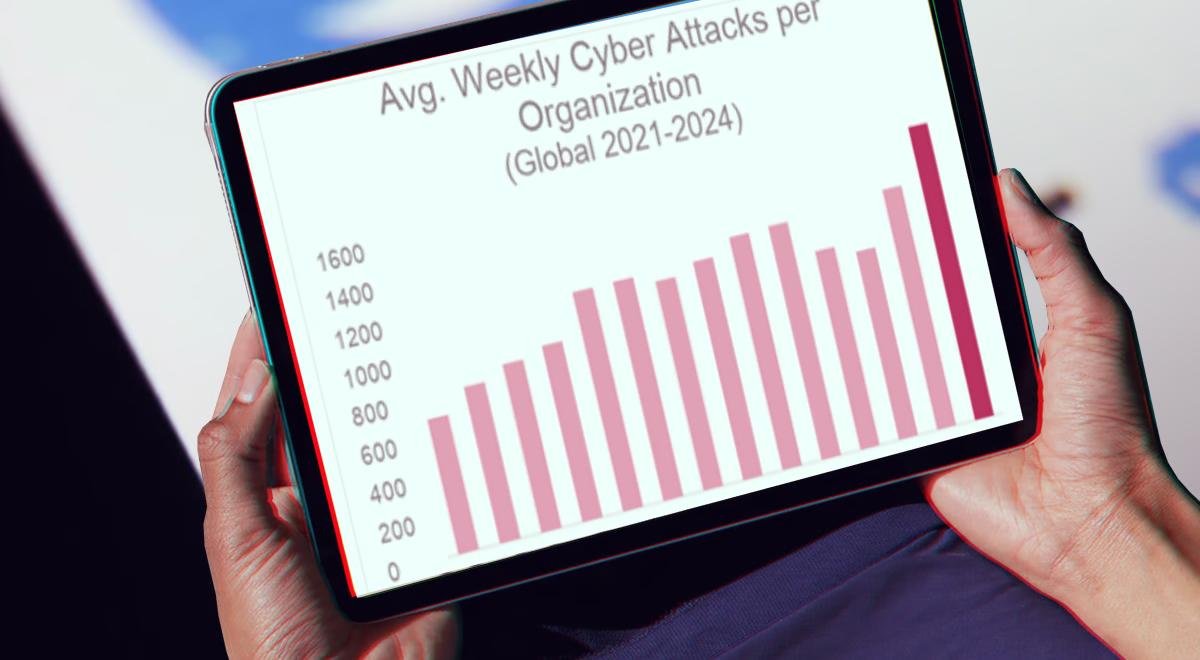
Security agencies and researchers have tracked a steady increase in AI-assisted attacks over the past two years. The U.S. Cybersecurity and Infrastructure Security Agency (CISA) and the UK’s National Cyber Security Centre (NCSC) have repeatedly warned that AI lowers the barrier to entry for novice cybercriminals.
You do not need to be an expert programmer to launch an attack anymore. A user can prompt an LLM to generate a Python script designed to scan web servers for a specific, newly disclosed vulnerability. While mainstream AI platforms like ChatGPT and Google Gemini have safety guardrails to prevent the generation of malicious code, the open-source nature of AI means those guardrails are easily bypassed.
Cybercriminals have developed their own uncensored AI models, trained specifically on malware repositories and hacking forums. These models operate on the dark web and are rented out as a service. They excel at writing phishing emails that lack the obvious grammatical errors of the past, but their true utility lies in code generation.
Furthermore, AI is making malware polymorphic. Traditional antivirus software works by scanning files against a database of known threats—much like checking a suspect against a database of fingerprints. AI allows malware to rewrite its own underlying code every time it infects a new device. The malicious behavior remains the same, but the “fingerprint” changes constantly, rendering traditional antivirus software far less effective.
The Defense: AI Fighting AI
Technology companies are not sitting idle. They are deploying their own AI systems to find vulnerabilities before the software is ever released to the public.
Google, Microsoft, and Apple now use AI-driven fuzzing—an automated software testing technique—to throw massive amounts of random data at their operating systems, looking for crashes that might indicate a vulnerability. AI models analyze the crash logs, identify the root cause, and even suggest the code needed to fix it.
Google recently detailed how it uses AI to secure the Android operating system and the Chrome browser, employing models that can review thousands of code commits per day to flag potential security regressions.
However, defensive AI has a distinct disadvantage. A technology company has to find and fix every single vulnerability in a massive operating system. An attacker only needs to find one.
Because the attackers are moving faster, the defenders have realized that simply finding the bugs is no longer enough. The delivery mechanism for the fixes has to change.
The End of the Monthly Patch Cycle
The traditional monthly update cycle was designed for a different era of the internet. Today, waiting three weeks to bundle a critical fix with other routine updates is considered an unacceptable risk.
Apple was among the first consumer tech giants to formalize a faster approach. In 2023, the company introduced Rapid Security Responses (RSR) for iOS and macOS. Unlike traditional software updates, which can be massive files requiring a lengthy installation and reboot, RSRs are tiny, targeted patches. They deliver security fixes for the Safari browser, the WebKit framework, and critical system libraries directly to the device, often installing automatically in the background.
Google has taken a similar route with its Chrome browser. Chrome used to receive security updates roughly every month. Recognizing that hackers were exploiting browser vulnerabilities within days of their discovery, Google shortened its update cycle. The company now pushes out Chrome security patches weekly, and sometimes even more frequently if a critical zero-day flaw is actively being exploited in the wild.
Microsoft continues to observe Patch Tuesday, but the company has increasingly relied on out-of-band updates. When an active exploit targets a flaw in Windows or Microsoft Exchange Server, the company does not wait for the second Tuesday of the month. It issues an emergency patch immediately.
Behind the scenes, mobile operating systems have also become more modular. Google decoupled many core Android security components from the main operating system years ago, turning them into “Project Mainline” modules. This allows Google to push security updates directly through the Google Play Store, bypassing mobile carriers and phone manufacturers who are notorious for delaying updates.
The Burden on IT Departments
While faster updates are better for security, they are creating a massive logistical headache for businesses.
Corporate IT departments generally dislike installing updates immediately. A poorly written patch can break custom software, cause servers to crash, or render employee laptops unusable. Standard practice is to test a patch on a small group of devices before rolling it out company-wide.
The compressed timeline caused by AI-driven attacks forces IT administrators to make difficult choices. They must balance the risk of breaking their internal systems against the risk of suffering a data breach.
Cybersecurity firms like CrowdStrike and Mandiant have reported that the time between a vulnerability’s disclosure and its mass exploitation has dropped from weeks to days. For IT teams, this means the testing window is virtually gone. The modern advice from security agencies is to patch internet-facing systems immediately, accepting the risk of operational hiccups as the lesser of two evils.
What This Means for Users
For the average consumer, the shifting landscape of cybersecurity means a change in digital habits is necessary.
In the past, ignoring an “update available” notification for a few weeks carried a relatively low risk. Today, delaying a browser update or a mobile operating system patch leaves a device exposed to automated, AI-driven exploitation campaigns.
Technology companies are trying to remove the user from the equation entirely by making automatic updates the default setting. Apple, Google, and Microsoft all heavily encourage users to leave auto-updates enabled. Modern devices are designed to download the patch in the background and install it overnight while the device is plugged in, minimizing disruption.
The reality of the current threat landscape is that software will never be perfectly secure upon release. The complexity of modern operating systems, combined with the analytical power of artificial intelligence, ensures that new vulnerabilities will always be found.
The security of a phone or laptop no longer depends solely on how well it was built, but on how quickly it can be repaired. As AI continues to accelerate the pace of cyberattacks, those repairs will only become more frequent.