Agentic AI in 2026: How Autonomous AI Agents Are Transforming Business


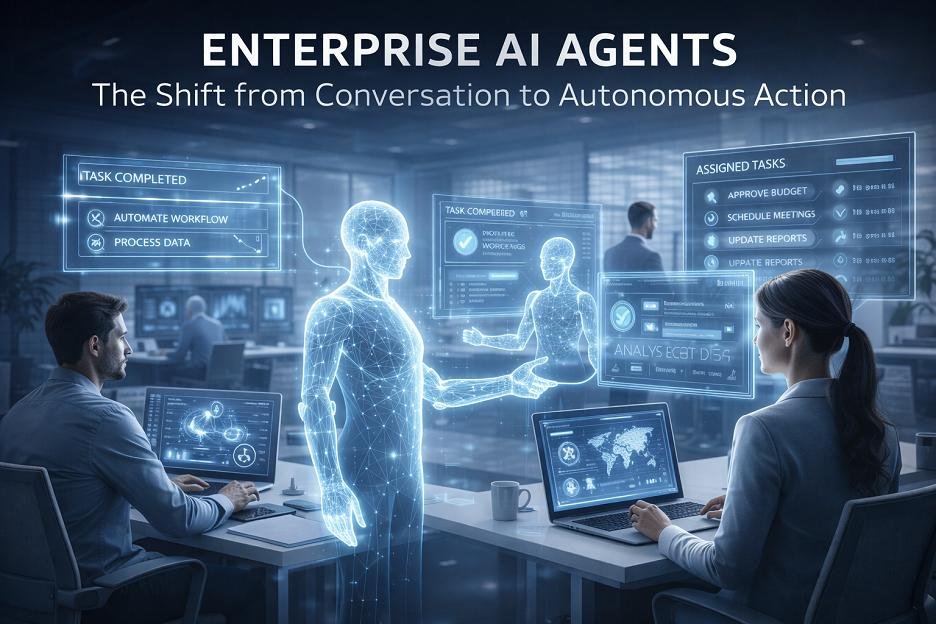
Artificial intelligence is entering a new era. After years dominated by chatbots and generative tools, the spotlight is shifting toward Agentic AI — autonomous systems capable of planning, reasoning, and executing complex workflows with minimal human supervision.
In 2026, AI is no longer just answering questions. It’s completing tasks, managing systems, and driving business outcomes.
Technology leaders, including OpenAI and Google, are accelerating research into AI agents that go beyond conversation and into execution.
What Is Agentic AI?
Agentic AI refers to AI systems that act independently toward defined goals.
Unlike traditional AI tools that wait for prompts, AI agents can:
-
Set objectives
-
Break tasks into structured steps
-
Access external tools and APIs
-
Make decisions based on live data
-
Adapt based on feedback
This shift moves AI from assistant to digital operator.
Real-World Use Cases of Autonomous AI Agents:
DevOps & IT Automation
AI agents monitor cloud infrastructure, detect performance anomalies, and automatically fix deployment issues. Instead of escalating alerts to engineers, these systems can resolve incidents autonomously.
Impact: Reduced downtime, faster deployment cycles, lower operational costs.
2. Customer Support Transformation
Modern AI agents can:
-
Access CRM systems
-
Process refunds
-
Escalate complex issues
-
Personalize responses
Companies are cutting support costs while improving customer experience through enterprise AI automation.
3. AI in Sales & Marketing Optimization
Agentic systems analyze user behavior, adjust ad campaigns in real time, and automate email outreach sequences.
Instead of static dashboards, marketing teams now leverage AI workflow automation for continuous performance optimization.
4. Financial Operations & Compliance
AI agents monitor transactions, flag suspicious activity, generate compliance reports, and forecast cash flow.
For fintech and mid-sized enterprises, this reduces manual auditing and enhances regulatory compliance.
Why Is Agentic AI Trending in 2026?
Several forces are accelerating adoption:
- Advanced Reasoning Models
Large language models now support multi-step reasoning and tool integration.
- API-Driven Ecosystems
Enterprise platforms increasingly expose APIs, allowing AI agents to operate directly within business software.
- Cost Efficiency Pressure
Global economic pressure is pushing companies toward automation-first strategies.
- AI-First Startups
New startups are building fully autonomous workflows instead of basic AI assistants.
Risks, Governance & Ethical Considerations
With increased autonomy comes increased responsibility.
🔐 Security Risks
AI agents with system-level access pose cybersecurity challenges if compromised.
📜 Regulatory Oversight
Global AI governance frameworks are emerging, especially across Europe and North America.
👩💼 Workforce Impact
While AI augments productivity, certain repetitive roles may be automated. Upskilling becomes essential.
Organizations are responding by implementing:
-
Human-in-the-loop systems
-
AI audit trails
-
Governance committees
-
Responsible AI frameworks
What’s Next for Agentic AI?
By 2027, we may see:
-
Fully autonomous digital employees
-
AI agents collaborating with other AI agents
-
Industry-specific agent platforms (healthcare, legal, logistics)
-
Enterprise AI workforce management systems
The transition to Agentic AI could rival the cloud computing revolution in scale and disruption.