Indonesia’s Copyright Overhaul Targets AI Training and Tech Platforms

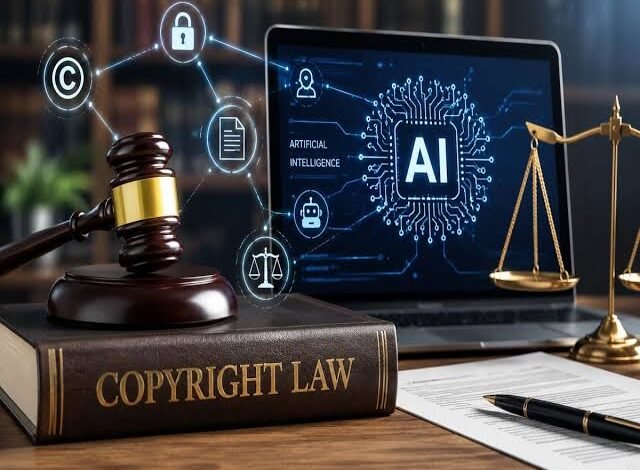
Indonesia is advancing a sweeping revision of its copyright laws that would place the country at the forefront of artificial intelligence regulation in Southeast Asia.
Included in the government’s 2026 National Legislative Program, the draft bill attempts to resolve complex legal questions regarding AI authorship while imposing strict new financial obligations on technology platforms like Google and Meta.
The proposed legislation, intended to replace the 2014 Copyright Law, explicitly addresses the intersection of generative AI and intellectual property. It outlines conditions under which AI-assisted works can receive copyright protection, mandates transparency in AI usage, and establishes a framework to force tech companies to pay publishers for the content used to train their models.
If enacted in its current form, the law carries severe operational consequences for digital platforms, including the potential revocation of business permits for non-compliance.
Defining the Boundaries of AI Authorship
A central component of the draft legislation is a “human-involvement” test designed to determine whether AI-assisted works qualify for copyright protection.
Under the proposed rules, works created with the help of artificial intelligence will only receive copyright protection if they demonstrate significant human creative input. The human user would be recognized as the author. Conversely, content generated entirely by AI systems without meaningful human direction is excluded from full copyright protection.
However, the draft stops short of defining the exact threshold of human involvement required, leaving a critical legal gray area that will likely require further regulatory guidance.
The bill also introduces specific guardrails to protect existing creators. It explicitly prohibits the use of AI systems to imitate a creator’s “distinctive style”. Furthermore, it mandates that creators disclose when artificial intelligence has been used in the production of their content, aligning with transparency measures emerging in jurisdictions like the European Union.
Hermansyah Siregar, Director General of Intellectual Property at the Legal Affairs Ministry, emphasized that the regulations are necessary to protect the domestic creative economy.
“The development of generative AI has disrupted the copyright framework,” Siregar said in a recent statement. “If unregulated, it could kill human creation”.
Forcing Tech Giants to Pay for Content
Beyond authorship, the most contentious elements of the draft bill focus on how technology companies aggregate content and acquire data to train large language models.
The legislation requires platforms to compensate news publishers and other rights holders when they aggregate, republish, or display link previews of copyrighted material. Crucially, this compensation requirement extends to the use of journalistic content, photography, film, and software for AI training purposes.
Under the framework, the use of copyrighted works to train AI models must fall under formal licensing agreements or recognized fair-use provisions.
To manage these transactions, the government plans to establish state-supervised collective management organizations (LMKs). During a recent hearing with lawmakers, Siregar explained that it would be impractical for AI companies to secure individual permissions from millions of creators.
Instead, tech companies would pay royalties into the collective management organization, which would then distribute the funds to the original publishers and creators. Siregar noted that while exemptions might exist for educational or research purposes, commercial AI development would require licenses and royalty payments.
Industry Pushback and Potential Penalties
The proposed mandates have already drawn significant opposition from major technology companies operating in the region.
Google publicly criticized the planned overhaul in a statement last month, arguing that the rules could stifle technological development.
“Rigid, overbroad mandates, however, would harm local creators, slow innovation, and leave Indonesia as an international outlier, ultimately discouraging the investment needed to drive its digital future,” the company stated, while pledging to continue engaging with the government on the draft.
The stakes for platforms navigating the new rules are high. The draft includes provisions that would allow the Indonesian government to revoke the local operating permits of technology platforms that fail to comply with the compensation and licensing mandates.
A Global Regulatory Context
Indonesia’s approach reflects a broader global struggle to adapt aging intellectual property frameworks to the realities of generative AI.
Media organizations worldwide are increasingly challenging how tech companies utilize their intellectual property. The New York Times and several prominent authors are currently pursuing litigation against major AI developers in the United States over alleged copyright infringement regarding training data.
While the EU’s AI Act focuses heavily on risk categorization and deepfake labeling, and U.S. courts continue to deliberate on fair use, Indonesia is attempting to codify clear financial obligations directly into its national copyright statute.
The draft bill is not yet final. The government is currently soliciting feedback from stakeholders across the technology, publishing, and legal sectors. While the legislation is slated for the 2026 parliamentary agenda, no definitive timeline has been set for its enactment.