Samsung’s Record Q2 Shows AI Chip Demand Is Still Surging

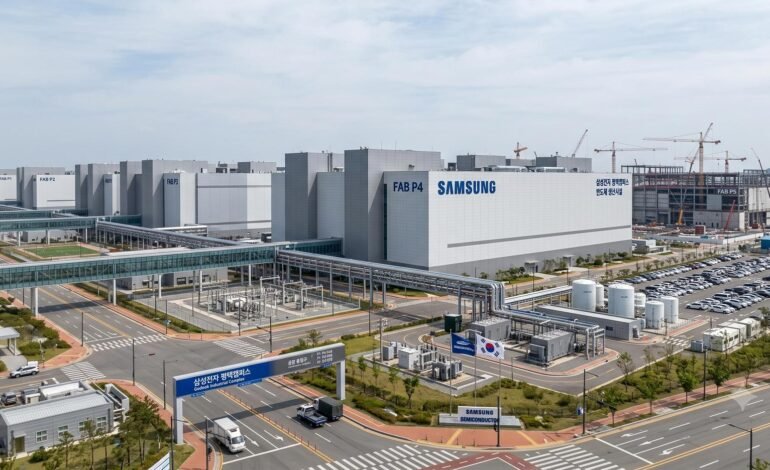
SEOUL — Samsung Electronics reported an unprecedented surge in second-quarter earnings on Thursday, posting its highest-ever quarterly operating profit and revenue. The South Korean technology conglomerate continues to benefit massively from the global rush to build artificial intelligence infrastructure, which has tightened the supply of advanced memory chips and driven up prices.
For the April-June 2026 period, Samsung reported an operating profit of 89.49 trillion won ($62 billion), a massive 1,813% increase from the 5.11 trillion won recorded in the same quarter last year. Net profit soared nearly 1,300% to 71.62 trillion won ($49.6 billion), while total revenue reached an all-time high of 171.49 trillion won ($119 billion), up 130% year-on-year.
The staggering financial performance was carried almost entirely by the company’s Device Solutions (DS) division, which oversees its semiconductor operations. The chip business posted record sales of 127.5 trillion won and an operating profit of 89.2 trillion won.
The success of the memory chip unit managed to offset a difficult quarter for Samsung’s consumer-facing businesses. The mobile, television, and home appliances division reported an operating loss for the quarter. That loss was driven partly by higher component costs—the same rising memory prices that enriched the company’s semiconductor division have heavily squeezed profit margins on its Galaxy smartphones and consumer electronics.
The AI Server Hardware Boom
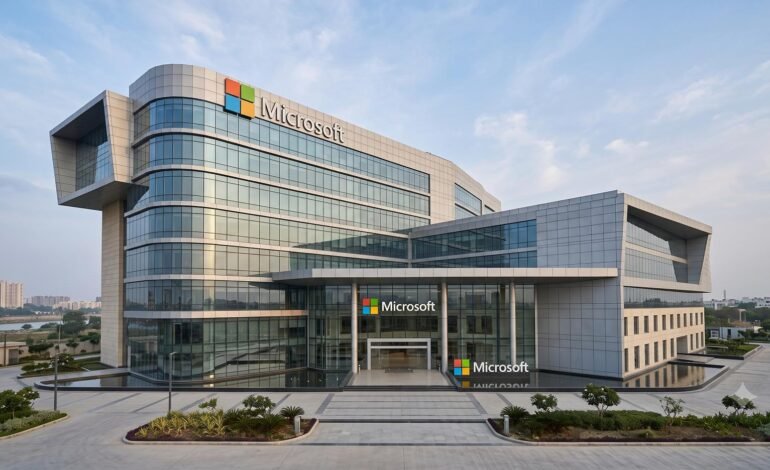
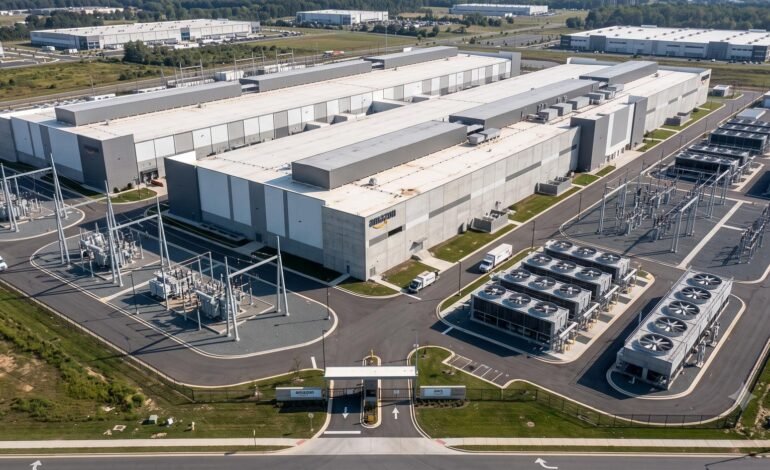
Samsung’s return to record profitability after a cyclical industry downturn in 2023 and early 2024 is the direct result of capital expenditure by global hyperscalers—major technology companies operating massive data centers, such as Microsoft, Google, Meta, and Amazon.
These companies are buying tens of thousands of specialized AI accelerators, primarily supplied by Nvidia, to train and run complex artificial intelligence models. Those processors require enormous amounts of advanced memory to function efficiently, specifically high-bandwidth memory (HBM) and high-capacity enterprise solid-state drives (SSDs).
As data center operators aggressively acquired these components throughout the first half of 2026, memory suppliers gained significant pricing power. Industry analysts estimate that average selling prices for DRAM rose by approximately 44% quarter-on-quarter in Q2, while NAND flash prices jumped around 53%. This steep increase in the cost of raw components allowed Samsung’s semiconductor division to achieve an estimated operating margin of 52.3%, up from 42.8% in the first quarter.
Samsung executives expect this dynamic to persist. In a release detailing the earnings, the company stated it expects semiconductor demand to remain strong in the second half of the year, supporting continued growth.
“In the second half of this year, the memory business expects robust demand centered on servers stemming from continued AI infrastructure capex and broader adoption of agentic AI,” the company outlined in its official statement. Agentic AI refers to artificial intelligence systems capable of taking independent actions to achieve multi-step goals, a development that requires even more compute and memory resources than standard text-generation models.
The Rivalry with SK Hynix
Samsung’s results arrived one day after its primary domestic rival, SK Hynix, also reported record earnings. SK Hynix posted second-quarter revenue of 60.5 trillion won ($42 billion), confirming that the AI hardware boom is lifting the entire South Korean memory sector.
Between them, Samsung and SK Hynix produce roughly two-thirds of the world’s memory chips. However, the dynamic between the two companies has shifted over the past two years.
While Samsung remains the overall leader in total memory volume, SK Hynix currently commands a dominant position in the premium high-bandwidth memory segment. SK Hynix controls more than 50% of the global HBM market and serves as the primary supplier to Nvidia for both current HBM3E chips and the emerging HBM4 generation.
Samsung has aggressively restructured its memory division to close this gap. The company highlighted increased shipments of its own advanced HBM chips in the second quarter, noting that higher yields and faster qualification with major clients are beginning to translate into revenue. Still, market analysts note that Samsung remains in a catch-up position in the absolute highest tier of AI memory, relying heavily on its massive volume in standard enterprise DRAM and NAND to generate its record $62 billion operating profit.
Massive Investments and Investor Anxiety
Despite posting financial numbers that exceed the total quarterly revenues of many Fortune 500 companies, Samsung did not see a corresponding bump in its valuation. Both Samsung and SK Hynix have seen their shares decline sharply this week in South Korean trading. Following its preliminary earnings guidance earlier in July, Samsung’s stock dropped roughly 7%. Following SK Hynix’s Q2 report on Wednesday, its shares fell by more than 9%.
The market reaction reflects a classic “buy the rumor, sell the news” pattern among retail and institutional investors, but it also signals deeper structural anxieties regarding the semiconductor industry’s long-term capital requirements.
To maintain their competitive edge, both companies have committed to staggering infrastructure spending. Last month, Samsung and SK Hynix announced plans to invest a combined 800 trillion won ($554 billion) in a new chipmaking hub located in South Korea’s southwest. The initiative, strongly backed by the South Korean government, is designed to consolidate the country’s lead in advanced manufacturing and capitalize on future AI demand.
Financial analysts and investors are questioning whether this scale of investment will eventually lead to massive oversupply. The memory chip market is notoriously cyclical. When supply outpaces demand, prices crash rapidly, leading to the type of severe operating losses Samsung experienced just a few years prior. If hyperscalers ever pause or reduce their AI infrastructure spending, Samsung and SK Hynix could be left with expensive, underutilized factories.
The China Factor
Beyond internal market cycles, geopolitical pressures and foreign competition are weighing on investor sentiment. South Korean chipmakers are facing increasingly sophisticated pressure from China, which has accelerated its domestic semiconductor programs in response to U.S. export controls.
Recent reports indicate that a state-owned Chinese enterprise has successfully begun mass-producing domestically developed immersion deep-ultraviolet (DUV) lithography machines. Lithography is a critical bottleneck in advanced chip manufacturing, and domestic Chinese alternatives reduce the country’s reliance on foreign equipment suppliers like ASML.
Furthermore, Chinese memory chipmaker ChangXin Memory Technologies (CXMT) recently made a strong stock market debut, securing capital to expand its operations. According to market research firm Counterpoint, CXMT accounted for an estimated 8% of the global DRAM market in Q1 2026, up from 3% the previous year.
While CXMT is currently producing older generations of memory rather than the premium HBM required for Nvidia’s AI accelerators, its rapid expansion in the broader market threatens to compress margins on standard memory products. If Chinese suppliers begin flooding the market with legacy DRAM and NAND, Samsung could see profitability erode in its foundational product lines, forcing it to rely even more heavily on premium AI components to maintain its margins.
Looking Forward
For now, the financial reality remains highly favorable for the world’s largest memory maker. Samsung expects the server chip market to remain undersupplied through the end of 2026, meaning prices are likely to hold steady or continue rising.
The company is preparing to ramp up production of its next-generation memory products to support the anticipated rollout of new AI architectures from major hardware developers in late 2026 and 2027. While its consumer divisions face an uphill battle against rising component costs and cautious consumer spending, Samsung’s role as the primary engine room for the global AI buildout appears secure for the immediate future.