Microsoft Developing AI Tool to Automatically Fix Software Bugs

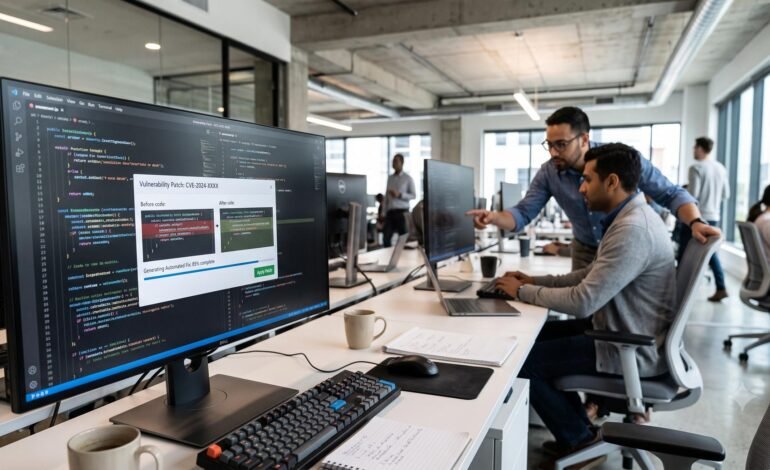
Microsoft Corp. is preparing to launch a new artificial intelligence system designed to autonomously detect and repair software vulnerabilities, expanding the company’s footprint in enterprise cybersecurity.
The upcoming product, known internally as “Project Perception,” is expected to be unveiled by late July 2026. According to early industry reports, the system aggregates foundation models from OpenAI, Anthropic, and Microsoft’s internal research divisions to identify security flaws and automatically generate the necessary code to patch them, providing a cost-efficient alternative to Anthropic’s enterprise offerings.
The initiative represents a fundamental shift in how the software industry manages application security. As generative AI accelerates the pace of software development, the volume of code requiring security audits has expanded far beyond the capacity of human engineering teams. By automating the remediation process, Microsoft aims to close the critical window of exposure between the discovery of a vulnerability and the deployment of a permanent fix.
The Evolution of Vulnerability Discovery (Background)
For decades, application security relied heavily on manual penetration testing, external bug bounty programs, and static application security testing (SAST) tools. While SAST systems—such as CodeQL—excel at flagging potential vulnerabilities based on predefined rules, they frequently generate high rates of false positives. Furthermore, traditional static analysis leaves the arduous task of writing, testing, and deploying the remediation code entirely to human engineers.
The dynamic shifted drastically over the past two years as frontier AI models became highly proficient at vulnerability discovery. Rather than relying solely on rigid rule sets, language models can perform deep semantic analysis, understanding the context and intent of the code to identify complex logical flaws that traditional scanners miss.
Microsoft has actively utilized this technology to audit its own flagship products. The company recently deployed an internal AI framework known as MDASH across the Windows operating system codebase. MDASH utilizes a network of specialized AI agents to scan for software flaws and validate findings over dedicated cloud infrastructure. The system is designed to eliminate false positives before referring high-confidence vulnerabilities to human engineers, as outlined in a recent briefing covered by PCMag.
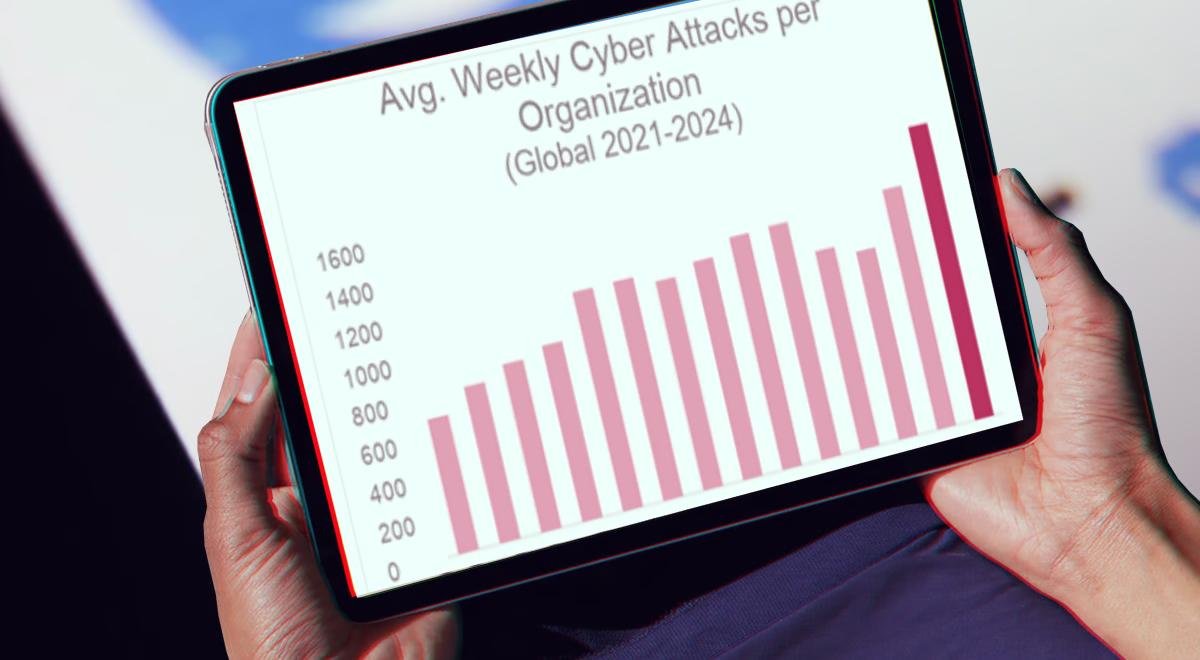
This aggressive internal auditing culminated in Microsoft’s July 2026 Patch Tuesday, which broke industry records by issuing fixes for more than 600 Common Vulnerabilities and Exposures (CVEs) in a single update. The massive disclosure confirmed long-standing forecasts that the application of AI to security auditing would result in a sharp, unprecedented increase in discovered vulnerabilities.
Project Perception and Multi-Model Architectures (Key Developments)
While internal tools like MDASH focus on Microsoft’s proprietary infrastructure, Project Perception is being designed for commercial enterprise deployment.
According to reporting from Digital Today, Project Perception takes a multi-model approach, integrating specialized capabilities from different artificial intelligence laboratories. By synthesizing the analytical strengths of Anthropic’s Claude models, OpenAI’s latest architectures, and Microsoft’s proprietary systems, the tool is engineered to provide comprehensive code analysis.
This hybrid approach highlights the complexity of the task. Identifying a bug requires a different computational skill set than writing the patch. By routing specific tasks to the models most suited for them, Microsoft is attempting to create a highly accurate, automated security engineer.
While Project Perception is being readied for a broader release, Microsoft is simultaneously embedding automated remediation directly into existing developer workflows. In June 2026, the company launched the limited public preview of Copilot Autofix for Azure DevOps, extending AI-powered vulnerability management to organizations utilizing Azure Repos, as detailed by InfoQ.
Copilot Autofix pairs the static analysis engine of CodeQL with the code-generation capabilities of GitHub Copilot. When a vulnerability is flagged during the continuous integration process, the Copilot agent analyzes the localized codebase context. Instead of merely alerting the developer to the presence of a flaw, the system drafts a proposed correction and automatically opens a pull request.
The Mechanics of AI-Driven Remediation (Why It Matters)
Remediating software vulnerabilities autonomously requires an advanced understanding of complex application logic. A critical security flaw is rarely a simple syntax error; it often involves intricate data flows, improper memory allocation, or inadequate authentication checks distributed across decentralized microservices.
By expanding the context windows of underlying large language models, systems like Project Perception and Copilot Autofix can analyze entire software repositories rather than isolated snippets. Unlike earlier iterations of AI coding assistants that operated on single lines of text, the current architecture is capable of executing coordinated adjustments across multiple files to resolve underlying structural issues. This ensures that a fix applied to a database query in one file correctly updates the corresponding data models and API endpoints in linked files.
Microsoft executives argue that this specific phase of development—often referred to as the “last mile” of application security—has become the primary bottleneck in secure software delivery. Identifying an issue provides no protective value until the remediation code is written, reviewed, tested, and merged into the production environment. Automated generation of the patch directly addresses this bottleneck.
The Arms Race: Hackers vs. Automated Defense
The transition toward automated remediation is not merely a matter of operational efficiency; it is a required defensive posture. As AI models become universally accessible, malicious actors are increasingly utilizing the same technology to uncover zero-day exploits and automate the development of attack vectors.
The defensive side of the cybersecurity industry has been forced to adopt AI to maintain parity. If an AI-assisted attacker can identify a vulnerability in seconds, relying on a human developer to spend hours triaging the alert, understanding the context, writing a fix, and testing the code creates a highly dangerous window of exposure.
As noted by PCWorld, Microsoft is now utilizing AI to patch Windows flaws before malicious entities can exploit them. Pavan Davuluri, Microsoft’s Executive Vice President of Windows and Devices, recently stated that as AI helps defenders discover more issues, customers will inevitably see a higher volume of security updates included in future releases. Davuluri added that Microsoft is investing heavily in “agentic harnesses to enable end-to-end generation and validation of fixes using AI”.
The “Bug Apocalypse” and Enterprise Patch Management (Industry Perspective)
The sudden influx of AI-discovered vulnerabilities is forcing enterprise IT departments to fundamentally reevaluate their patch management protocols. The sheer volume of incoming security updates threatens to overwhelm organizations that still rely on manual testing and deployment schedules.
The cybersecurity community is observing these developments with a mix of optimism and severe caution. Following Microsoft’s record-breaking July 2026 update, Dustin Childs, head of threat awareness at the Zero Day Initiative, stated that the “bug apocalypse has fully descended upon us,” according to industry publication CRN.
For IT administrators, this influx means the traditional method of applying every monthly patch sequentially is no longer viable. Zack Finstad, Vice President of Cybersecurity at Logically, warned that the massive scale of releases suggests organizations will face difficult decisions regarding deployment timelines. The volume may force companies to compress their testing phases, requiring them to constantly balance the risk of an unpatched vulnerability against the risk of a new patch breaking existing infrastructure.
The industry consensus suggests that the historical model of human adversaries seeking vulnerabilities against human defenders has effectively concluded. AI has become the primary instrument for both offensive exploitation and defensive auditing.
The Human-in-the-Loop Requirement
Despite the rapid shift toward automation, Microsoft continues to emphasize that human developers remain a mandatory component of the security pipeline. The company has explicitly positioned its AI tools as reviewable assistants rather than fully autonomous security engineers.
AI models are statistically prone to generating incomplete code or introducing unintended side effects. An AI might successfully close a cross-site scripting (XSS) vulnerability, but inadvertently introduce a performance degradation or alter a necessary business logic function in the process.
Consequently, pull requests generated by Copilot Autofix or Project Perception are not pushed directly to production. They must pass through the same automated testing frameworks as human-written code and require explicit approval from a human engineer before they can be merged. The objective is to eliminate the manual labor of drafting the fix, while retaining human judgment for final validation.
Market Competition (Market or Consumer Impact)
The commercialization of AI bug-fixing tools places Microsoft in direct contention with specialized security vendors, legacy application testing firms, and rival artificial intelligence laboratories. By integrating these capabilities directly into platforms like Azure DevOps and GitHub, Microsoft is attempting to consolidate its position as the default ecosystem for both software development and application security.
For chief information security officers (CISOs) and engineering directors, the economic proposition is compelling. Reducing the labor hours associated with manual code auditing directly lowers operational expenditures. More importantly, accelerating the mean time to remediation (MTTR) significantly reduces the financial risk associated with a potential data breach.
However, widespread adoption will depend heavily on the accuracy of the generated fixes and the pricing structures of the new tools. If Project Perception successfully undercuts the pricing of competing enterprise models while delivering comparable accuracy, it could rapidly capture significant market share among Fortune 500 engineering teams.
Future Outlook
Looking ahead, the integration of agentic computing into software engineering is expected to accelerate dramatically. Future iterations of systems like Project Perception will likely operate with greater autonomy, transitioning from assistive drafting tools to primary operators capable of managing the entire vulnerability lifecycle—from discovery and code generation to automated unit testing and final deployment.
Microsoft’s aggressive development of AI bug-fixing assistants marks a necessary evolution in enterprise software architecture. The unprecedented volume of vulnerabilities exposed by advanced AI requires an equally sophisticated, automated response.
Conclusion
While human oversight remains necessary to ensure overall code integrity, the operational burden of application security is rapidly shifting from manual engineering to algorithmic remediation. For the global technology sector, this transition marks the beginning of an era where software must autonomously defend itself against systemic threats.
FAQs
What is Microsoft Project Perception?
Project Perception is an upcoming AI-powered security tool developed by Microsoft that detects software vulnerabilities and automatically generates code to fix them.
How does Copilot Autofix work?
Copilot Autofix combines CodeQL’s static analysis with GitHub Copilot’s generative AI to find vulnerabilities, draft contextual code fixes, and automatically open pull requests for human review.
Which AI models are used in Microsoft’s bug-fixing tools?
Industry reports indicate that Microsoft utilizes a combination of models, including those from OpenAI, Anthropic, and its own proprietary AI research, to power these security features.
Will AI replace human security engineers?
No. Microsoft emphasizes a “human-in-the-loop” approach. While the AI drafts the remediation code, human engineers must review, test, and approve all generated pull requests before deployment.
Why did Microsoft issue over 600 CVE patches in July 2026?
Microsoft utilized an internal AI system called MDASH to proactively scan the Windows codebase, leading to a record-breaking number of discovered and patched vulnerabilities in a single month.
What is the “last mile” of application security?
The “last mile” refers to the process of actually writing, testing, and deploying a patch after a vulnerability has been identified—a process that has historically been a major bottleneck.
How does AI bug-fixing integrate with existing development workflows?
Tools like Copilot Autofix integrate directly into CI/CD pipelines (like Azure DevOps). They analyze the codebase and submit proposed fixes as standard pull requests within the developer’s normal environment.
Why is automated remediation necessary?
As malicious actors increasingly use AI to quickly discover zero-day exploits, manual human patching is too slow to effectively secure applications, necessitating automated defensive measures.
Can AI introduce new bugs while fixing old ones?
Yes. AI models can experience hallucinations or generate code with unintended side effects, which is why automated testing and human validation remain mandatory parts of the workflow.
Who is the target market for these AI security tools?
The primary market includes enterprise software development teams, Managed Service Providers (MSPs), and IT departments looking to reduce their mean time to remediation (MTTR) and manage large-scale codebases efficiently.