Meta Hires AWS Veteran Dave Brown in Major Cloud Push


Meta Platforms has hired one of Amazon Web Services’ most senior executives, Dave Brown, to help manage its massive investments in artificial intelligence hardware and data center expansion. The appointment represents one of the most significant executive migrations between major technology firms this year, firmly indicating that the social media company is preparing to enter the commercial cloud computing market.
Brown, who spent nearly two decades at Amazon and most recently served as the senior vice president of AWS Compute and Machine Learning Services, will report directly to Meta’s head of infrastructure, Santosh Janardhan. His arrival coincides with an aggressive capital expenditure strategy by Meta, which expects to spend between $125 billion and $145 billion in 2026 to support its “Meta Compute” initiative.
Background: An Architect of Modern Cloud Computing
To understand the weight of this executive move, it is necessary to examine Brown’s foundational role at Amazon. Brown joined Amazon in August 2007 as the fourteenth engineer working on Elastic Compute Cloud (EC2), the foundational rentable server product that effectively created the modern public cloud industry. Initially operating out of an engineering outpost in Cape Town, South Africa, Brown helped build the systems that taught enterprises to lease computing power by the second.
Over the next 19 years, Brown’s responsibilities expanded to encompass oversight of the entire compute and machine learning portfolio at AWS. This included the development and management of SageMaker, Amazon’s machine learning platform, and Bedrock, the service used to host foundation AI models. Before his departure, he was a member of the “S-Team,” the exclusive group of senior executives that advises Amazon Chief Executive Officer Andy Jassy.
In an internal corporate memo circulated in mid-July, AWS cloud chief Matt Garman confirmed that Brown would step down at the end of the month to pursue an outside opportunity. Brown will be succeeded at AWS by Dave Treadwell, a 27-year Microsoft veteran who joined Amazon in 2016.
Key Developments: The Shift Toward Commercial Cloud
Meta has historically designed and built its global network of data centers for internal use. The infrastructure was tailored exclusively to serve content across Facebook, Instagram, and WhatsApp, and more recently, to train its large language models like Llama. However, the calculus is changing as the company scales its hardware procurement.
During Meta’s annual shareholder meeting in May 2026, CEO Mark Zuckerberg publicly floated the concept of a commercial cloud business. Zuckerberg told investors that external enterprises were approaching Meta “almost every week” asking to purchase access to the company’s spare computing capacity and premium versions of its open-source AI models. He noted that while Meta currently consumes virtually all of its server capacity internally for AI training, offering commercial cloud services is “definitely on the table” once the company builds excess infrastructure.
The hiring of a hyperscale cloud veteran like Brown is the logistical execution of Zuckerberg’s strategy. Transitioning from internal infrastructure management to a multi-tenant public cloud provider requires distinct engineering capabilities. Commercial cloud providers must build complex billing systems, implement strict data isolation protocols between competing enterprise clients, and maintain dedicated customer support operations. Brown’s tenure at AWS provides Meta with the exact blueprint required to bridge this gap.
Why It Matters: Disrupting the Cloud Oligopoly
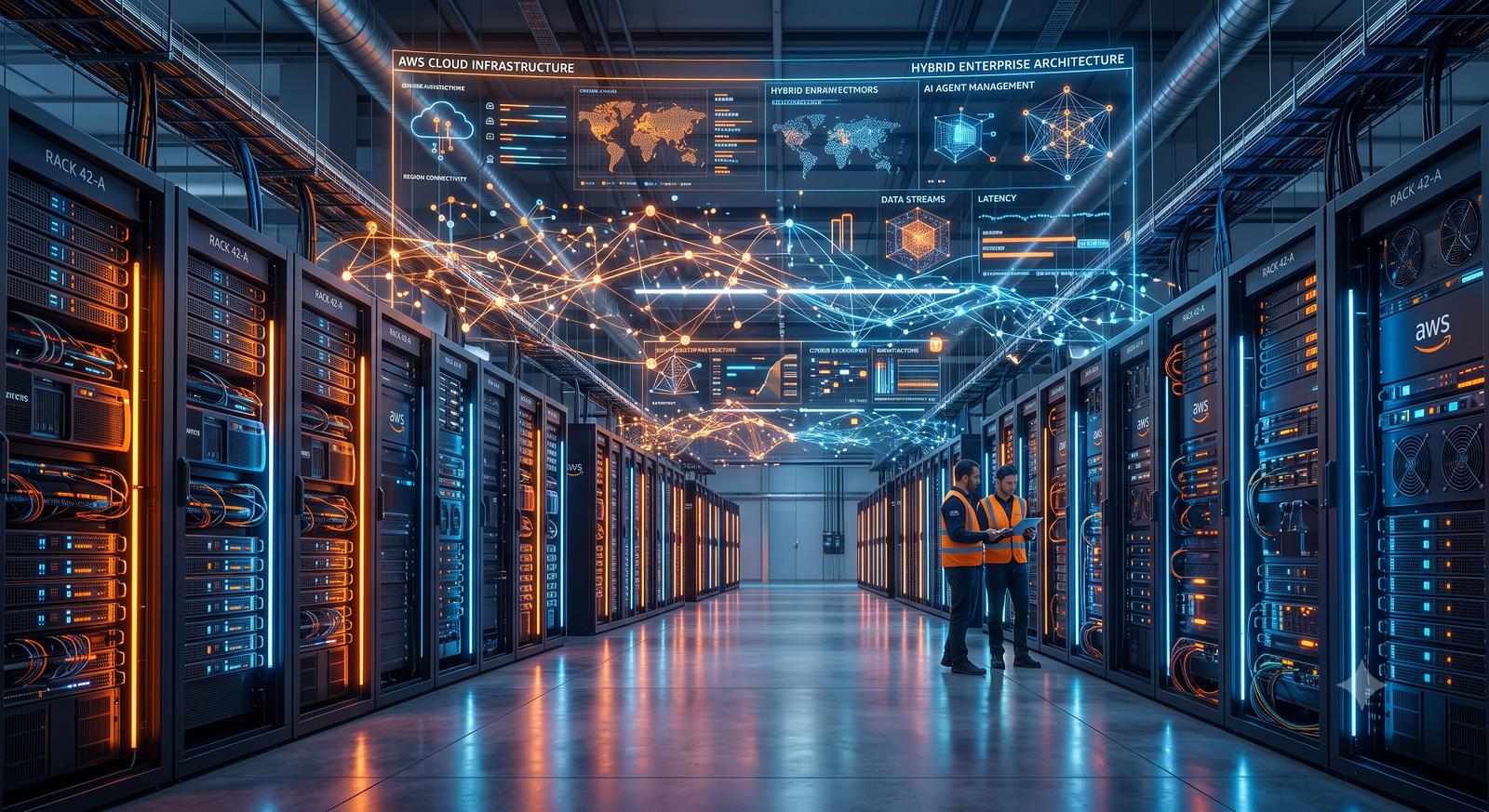
The global cloud computing market is currently dominated by three entities: Amazon Web Services, Microsoft Azure, and Google Cloud. These providers rely heavily on selling AI compute, specifically access to advanced graphics processing units (GPUs), to enterprise customers and startup developers.
Meta’s entry into this market would introduce a heavily capitalized competitor with an unconventional business model. Unlike the primary cloud vendors, Meta generates its revenue almost entirely through digital advertising. If Meta decides to lease its excess AI computing capacity at cost—or even as a loss leader—to drive adoption of its Llama ecosystem, it could severely compress the profit margins of AWS, Azure, and Google Cloud.
Furthermore, Meta has quietly executed a broader talent acquisition strategy. Reports indicate the company has recently recruited several prominent former OpenAI executives, AI entrepreneur Alexandr Wang, and former GitHub CEO Nat Friedman to assist in its long-term AI strategy. This aggregation of talent suggests Meta is building an enterprise-facing division that extends beyond consumer social media applications.
Industry Perspective and Capital Expenditures
The financial commitment backing Meta’s transition is massive. Financial guidance indicates Meta will allocate between $125 billion and $145 billion in capital expenditures in 2026 alone. This budget is primarily directed at expanding AI data centers, procuring networking equipment, and securing power agreements.
Industry analysts point out that the central bottleneck in AI development is no longer just securing GPUs, but acquiring the physical real estate and energy grids required to operate them. Meta’s “Meta Compute” initiative aims to construct hundreds of gigawatts of energy and computing capacity over the next decade. By hiring Brown, Meta secures a leader experienced in navigating supply chain constraints, negotiating with regional utility providers, and designing power-efficient data centers at a global scale.
From AWS’s perspective, the departure of a key executive highlights the retention challenges facing legacy cloud providers. While AWS has previously utilized noncompete agreements to block executives from joining rivals like Google Cloud, such legal mechanisms have become difficult to enforce due to recent legislative changes in states like California and Washington.
Market or Consumer Impact
For enterprise clients, Meta’s potential emergence as a cloud provider offers a valuable alternative. Companies are currently locked into long-term contracts with existing hyperscalers, often facing high egress fees and limited GPU availability. If Meta begins renting out compute instances specifically optimized for its Llama models, developers will likely gain a more direct, cost-effective method for deploying open-source AI applications.
Additionally, this move will likely accelerate the development of localized AI data centers. To serve a global commercial customer base, Meta will need to expand its infrastructure footprint across various regulatory jurisdictions, adhering to data sovereignty laws in Europe and Asia.
Future Outlook
Looking ahead, the integration of Dave Brown into Meta’s executive team will likely catalyze a series of internal structural changes. Over the next 12 to 18 months, industry observers will watch for Meta to announce formal enterprise service level agreements (SLAs), dedicated enterprise sales teams, and proprietary cloud software interfaces.
The timeline for a fully operational “Meta Cloud” remains unconfirmed. However, the company is already laying the physical groundwork. With facilities currently under construction and power purchase agreements being signed, the surplus capacity Zuckerberg mentioned may materialize sooner than competitors expect.
Conclusion
The recruitment of Dave Brown from Amazon Web Services marks a distinct pivot in Meta’s corporate trajectory. It is an acknowledgment that the infrastructure required to build modern artificial intelligence has intrinsic commercial value outside of digital advertising. By pairing an unprecedented capital expenditure budget with the architect of the original public cloud, Meta is positioning itself to challenge the very companies it has historically relied upon for enterprise services. As the technology sector races to construct the physical foundation of the AI economy, the lines dividing social media platforms, AI research labs, and cloud computing utilities are rapidly disappearing.
FAQs
1. Who is Dave Brown?
Dave Brown is a technology executive who spent nearly 19 years at Amazon Web Services (AWS). He was the senior vice president of AWS Compute and Machine Learning Services and a member of Amazon’s senior leadership team (S-Team).
2. What is Dave Brown’s new role at Meta?
Brown will oversee Meta’s expanding global data center program and AI infrastructure build-out, reporting to Santosh Janardhan, Meta’s head of infrastructure.
3. Why is Meta hiring an AWS executive?
Meta is scaling its AI infrastructure rapidly and exploring a potential launch of a commercial cloud computing business to sell access to its spare computing capacity and AI models. Brown’s experience building AWS makes him highly qualified for this transition.
4. How much is Meta spending on infrastructure in 2026?
Meta expects to spend between $125 billion and $145 billion on capital expenditures in 2026, with the vast majority directed toward AI data centers and computing capacity.
5. What is the “Meta Compute” initiative?
Meta Compute is the company’s long-term strategy to build out hundreds of gigawatts of energy and computing capacity over the next decade to power advanced artificial intelligence systems.
6. Did Mark Zuckerberg confirm a Meta cloud service?
While not formally launching a service yet, Zuckerberg stated during a May 2026 shareholder meeting that offering cloud computing services to external businesses is “definitely on the table” as the company builds excess infrastructure.
7. Who is replacing Dave Brown at Amazon?
Dave Treadwell, a long-time Amazon executive and former Microsoft veteran, will succeed Brown at AWS on August 1.
8. Has Meta hired other high-profile tech leaders recently?
Yes. Meta has reportedly recruited several top executives, including AI entrepreneur Alexandr Wang and former GitHub CEO Nat Friedman, to bolster its AI ambitions.
9. How will Meta’s cloud ambitions impact the current market?
If Meta begins selling compute capacity, it will directly compete with established cloud providers like Amazon Web Services, Microsoft Azure, and Google Cloud, potentially driving down costs for enterprise customers.
10. What is AWS EC2 and what was Brown’s role in it?
Amazon Elastic Compute Cloud (EC2) is a foundational service that allows users to rent virtual computers. Brown joined Amazon in 2007 as the fourteenth engineer on the original EC2 team and helped build the service from its inception.