Amazon Raises $25 Billion to Fund Massive AI Expansion

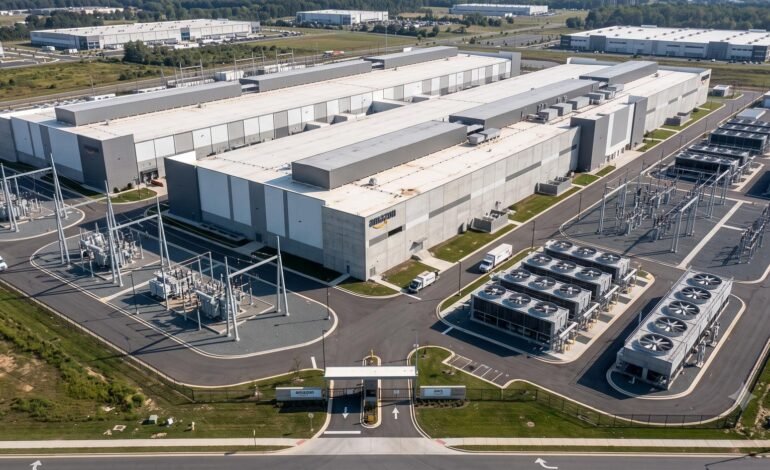
Amazon returned to the U.S. corporate bond market in early July, raising $25 billion to finance a massive expansion of its artificial intelligence data centers and cloud architecture. The debt offering caps what has become the most aggressive borrowing spree in the company’s history, as Amazon secures capital to support a staggering $200 billion infrastructure spending plan for 2026.
The eight-part offering of senior unsecured notes spans maturities ranging from three to 40 years. Proceeds from the sale are earmarked for general corporate purposes, which heavily include the rapid deployment of data centers, custom silicon, and networking equipment required to run Amazon Web Services (AWS) AI workloads.
According to regulatory filings, the aggregate public offering price of the notes reached $24.923 billion, resulting in estimated net proceeds of approximately $24.867 billion before offering expenses. The offering mixes a 2029 floating-rate tranche with seven fixed-rate series, ending with a $2.25 billion block of 6.250% notes due in 2066.
Barclays, Goldman Sachs, JPMorgan, and Morgan Stanley managed the book-building for the July offering. Amazon reportedly told its underwriters that it does not plan to issue any additional debt for the remainder of the year.
The $200 Billion Capex Strategy
The July bond sale provides immediate liquidity for a capital expenditure strategy that has rewritten the scale of tech investments. Amazon expects its capital expenditures to reach $200 billion in 2026. That figure represents a 52% increase from the $131 billion the company spent in 2025.
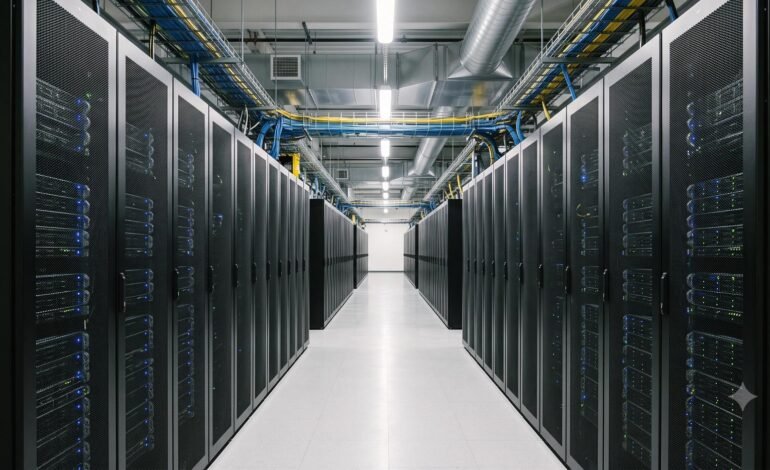
The vast majority of this capital is directed toward AWS. The cloud division is rapidly expanding its physical footprint across the United States and international markets to accommodate high-compute demands. Building these facilities requires securing vast tracts of real estate, negotiating massive power purchase agreements, and procuring advanced cooling systems to manage the thermal output of high-density server racks.
Beyond the physical buildings, Amazon is spending heavily on internal hardware. The company is funding the development and deployment of its proprietary Trainium and Inferentia chips. These custom processors are designed to handle complex machine learning training and inference workloads, offering AWS customers an alternative to the expensive and heavily constrained graphics processing units (GPUs) dominating the broader market.
A Shift in Tech Financing
Raising debt to fund operations marks a structural shift for Silicon Valley giants, which have historically relied on their massive cash reserves. Amazon held $101.8 billion in cash and equivalents at the end of the first quarter. However, the sheer scale of the AI transition has altered the math.
During the trailing 12 months ending in March 2026, Amazon generated roughly $148.5 billion in operating cash flow while spending $151 billion on capital expenditures. The resulting negative free cash flow dynamic requires the company to tap capital markets to bridge the gap and fund daily corporate operations, debt refinancing, and potential acquisitions.
The July transaction is the company’s fourth major debt raise of the year. In March, Amazon sold $37 billion in U.S. bonds across 11 tranches, simultaneously completing a €14.5 billion ($16.8 billion) euro-denominated deal. In June, the company secured an additional $10 billion through a Canadian bond sale and locked in a $17.5 billion delayed-draw term loan. With this latest $25 billion move, Amazon’s total debt issuance for 2026 now exceeds $106 billion.
Balancing Investor Fatigue with Executive Confidence
The scale of this spending has generated friction on Wall Street. Investors have grown increasingly concerned about the timeline for generating meaningful returns on such massive capital outlays. Following the company’s initial announcement of the $200 billion capex target during its fourth-quarter earnings call in February, Amazon shares dropped sharply in extended trading. Analysts repeatedly pressed management on the call for a clear timeline regarding return on invested capital.
Recent bond market data also points to emerging debt fatigue. While Amazon’s March bond sale was approximately 3.4 times oversubscribed, order demand for the July offering cooled, covering the amount sold by about 1.6 times. Some of Amazon’s earlier 30-year bonds saw their spreads widen slightly following the new issuance, reflecting a market attempting to digest the volume of tech debt.
Despite the market’s hesitation, Amazon executives remain firm. Chief Executive Officer Andy Jassy has aggressively defended the spending, dismissing concerns that AI represents an unsustainable bubble.
In his annual letter to shareholders published in April, Jassy described artificial intelligence as a “once-in-a-lifetime opportunity where the current growth is unprecedented and the future growth even bigger”. He noted that AI will eventually reinvent every customer experience and create entirely new services that were previously impossible.
Jassy reinforced this position during recent earnings calls, arguing that the company is monetizing its capacity at the fastest rate possible. AWS revenue grew by 24% in the fourth quarter of 2025, reaching $35.6 billion and reaccelerating the division’s growth narrative. Management maintains that demand for both core and AI workloads simply exceeds current supply, forcing the company to build infrastructure as fast as supply chains and power grids allow.
The Broader Industry Context
Amazon is not operating in a vacuum. The entire hyperscaler sector is engaged in an infrastructure arms race, driven by the fear that failing to invest now will permanently cede market share in the next computing era.
The $200 billion capex commitment places Amazon at the top of the industry’s spending hierarchy. Google parent Alphabet has projected its own capital expenditures to land between $185 billion and $205 billion for the year. Meta Platforms expects to spend between $125 billion and $145 billion. Microsoft and Oracle are similarly scaling their data center operations through combinations of debt and cash reserves.
Combined, the major hyperscalers are expected to spend more than $700 billion on artificial intelligence infrastructure this year alone. Industry analysts estimate that debt is funding roughly one-third of current hyperscaler capital expenditure, underscoring how vital the corporate bond market has become to the future of AI development.
For Amazon, the strategy is a calculated risk based on historical tech transitions. Management appears convinced that the penalty for underinvesting in the early stages of generative AI far outweighs the short-term margin compression and debt obligations currently dragging on the balance sheet. As Jassy has framed the situation to investors, the risk is not spending too much on infrastructure, but failing to capture the defining technology shift of the decade.