Apple iPhone 18 Pro vs. iPhone 17 Pro: Does the 2nm Era Justify the Upgrade?

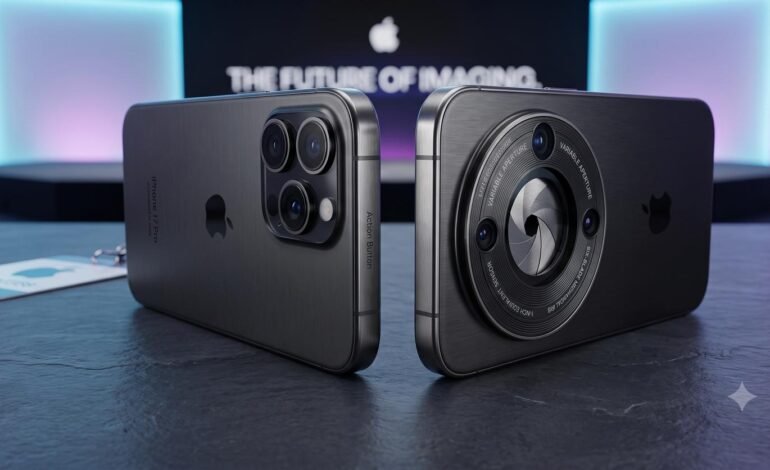
Every September, the tech world stops to evaluate Apple’s latest flagship. When the iPhone 17 Pro launched last year, it brought the most significant structural overhaul we had seen in years. It introduced a unibody aerospace-grade aluminum chassis, a dedicated vapor chamber cooling system, and an ambitious all-48MP camera trio. Fast forward to the iPhone 18 Pro, and Apple has shifted its engineering focus from the chassis back to the silicon and optics.
The conversation this year isn’t just about incremental speed bumps. The iPhone 18 Pro introduces TSMC’s bleeding-edge 2nm fabrication process and a mechanical variable aperture camera—a first for the iPhone lineup.
If you are holding onto an older model, which of these two Pro devices deserves your money? And if you already own an iPhone 17 Pro, is there enough here to justify a trade-in? Let’s break down exactly what separates Apple’s last two heavyweights.
Design and Build: Refining the Plateau
When Apple released the iPhone 17 Pro, it made a controversial but ultimately successful pivot. Moving away from the heavier stainless steel and standard titanium frames of older models, Apple adopted a unibody aluminum chassis with a half-aluminum, half-Ceramic Shield back. This layout allowed for vastly superior heat dissipation, but gave the phone a distinct two-tone look.
With the iPhone 18 Pro, Apple is dialing back the visual contrast. The polarizing two-tone back glass is gone, replaced by a more unified, seamless color treatment across the rear panel. The overall dimensions remain nearly identical, retaining the 6.3-inch (Pro) and 6.9-inch (Pro Max) form factors.
One subtle but welcome physical change on the 18 Pro is the footprint of the front display cutout. Thanks to advances in under-display Face ID technology, the interactive pill shape has shrunk. It provides a bit more usable screen real estate, letting iOS display up to three Live Activities simultaneously. It’s not a completely uninterrupted display yet, but it’s the closest Apple has gotten.
Display Technology: Pushing Peak Brightness
When looking at the screens side-by-side indoors, you would be hard-pressed to spot the difference. Both phones utilize LTPO OLED panels with 120Hz ProMotion, and both are capable of hitting a blinding 3,000 nits of peak outdoor brightness.
| Feature | iPhone 17 Pro | iPhone 18 Pro |
| Screen Sizes | 6.3″ (Pro) / 6.9″ (Pro Max) | 6.3″ (Pro) / 6.9″ (Pro Max) |
| Panel Tech | LTPO OLED, 120Hz ProMotion | LTPO+ OLED, 120Hz ProMotion |
| Peak Brightness | 3,000 nits | 3,000 nits |
| Front Cutout | Standard Dynamic Island | Reduced pill (Under-display Face ID) |
| Glass Protection | Ceramic Shield 2 | Ceramic Shield 2 |
However, the iPhone 18 Pro utilizes a more power-efficient LTPO+ panel. This upgraded display tech helps offset the power draw of the new processor, keeping battery life stable despite the massive jump in computational power.
Performance: The 3nm vs. 2nm Divide
This is where the iPhone 18 Pro flexes its muscles. The A19 Pro inside the iPhone 17 Pro is an absolute powerhouse, built on a 3-nanometer architecture and backed by Apple’s first smartphone vapor chamber cooling system. For most users, the A19 Pro chews through heavy gaming, 4K video rendering, and multitasking without breaking a sweat.
The iPhone 18 Pro steps into entirely new territory with the A20 Pro chip, fabricated on TSMC’s advanced 2nm process. The smaller node means transistors are packed tighter, resulting in faster electrical pathways and less heat generation. Apple paired this new silicon with a second-generation vapor chamber.
What does that mean in practical terms? Apple claims the 18 Pro achieves up to 40% higher sustained processing performance under heavy operational loads compared to the 17 Pro. If you rely on your phone for intensive machine-learning workloads, complex photo processing, or sustained high-framerate gaming, the A20 Pro maintains peak speeds significantly longer before thermal throttling kicks in.
Both devices feature 12GB of RAM, a baseline Apple established with the 17 Pro to support heavy on-device AI tasks seamlessly.
Cameras: The Arrival of Variable Aperture
If there is one reason to buy the iPhone 18 Pro, it is the primary camera.
Last year, the iPhone 17 Pro focused heavily on telephoto reach, outfitting the device with an upgraded 48MP Telephoto lens capable of an impressive 8x optical zoom. It was a massive win for sports and wildlife shooters.
The iPhone 18 Pro shifts the engineering spotlight back to the main sensor. Apple has introduced a 48MP Fusion Main camera equipped with physical, mechanical aperture control. Using six laser-cut blades, the lens physically transitions between four distinct stops: f/1.48, f/1.8, f/2.8, and f/4.0.
Why does physical aperture matter?
Most smartphone cameras have a fixed aperture. To change the depth of field (that creamy blurred background in portraits), phones rely on software computation. The iPhone 18 Pro can do this optically. When shooting a group of people, the lens can stop down to f/4.0 to keep everyone in sharp focus. When shooting a single subject in low light, it can open up to f/1.48 to let in maximum light and create a natural, optical bokeh.
This bridges the gap between smartphones and dedicated mirrorless cameras more than any software update ever could. Apple is even opening the aperture control range to external software developers via a dedicated API, meaning apps like Halide will soon take full advantage of the hardware.
Connectivity and Battery Life: Bringing Modems In-House
The iPhone 18 Pro marks a major behind-the-scenes milestone for Apple: the debut of its homegrown cellular modem. After years of relying on Qualcomm (which powered the iPhone 17 Pro’s 5G capabilities), Apple is using its own C2 hardware in the 18 Pro.
While both phones deliver excellent 5G speeds, the in-house modem gives Apple tighter control over hardware integration and power efficiency. Consequently, despite running a denser processor, the iPhone 18 Pro ekes out slightly better battery longevity. It also packs a larger internal battery capacity (4,288 mAh vs. the 17 Pro’s 3,692 mAh).
Both devices utilize the Apple N1 networking chip for Wi-Fi 7 and Bluetooth 6, ensuring future-proof local connectivity regardless of which model you choose.
The Verdict: Which Pro Belongs in Your Pocket?
You should buy the iPhone 17 Pro if:
You want near-identical battery life, the same brilliant 3,000-nit display, and an exceptional 8x optical zoom camera for a lower price point. The A19 Pro is still faster than most desktop computers from a few years ago, and the unibody thermal design is excellent.
You should buy the iPhone 18 Pro if:
You are a photography enthusiast who understands the value of a mechanical aperture. The optical depth of field control is a monumental shift for mobile photography. Additionally, if you upgrade your phone only once every four or five years, the 2nm A20 Pro chip provides a level of raw processing headroom that will handle operating system updates effortlessly through the end of the decade.
Ultimately, Apple has positioned the iPhone 18 Pro not as a simple cosmetic refresh, but as an engineering triumph. By delivering on the promises of 2nm silicon and mechanical optics, it caters directly to power users and camera purists, cementing its status as the most capable tool in the mobile landscape.