Finding the Best AWS in 2026: The Shift from Cloud Adoption to Autonomous Operations

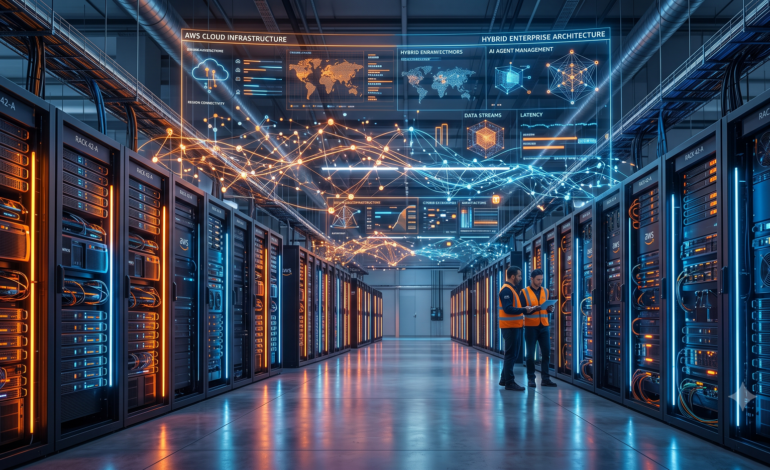
If you spent the last few years bolting AI features onto existing applications, 2026 is the year you rewrite the foundation.
The dust has settled on AWS re:Invent, and the message for enterprise architects is clear: we are moving past the experimental phase of generative AI. Cloud computing is no longer just about migrating servers or adopting microservices. The focus has firmly shifted toward platform engineering, cost discipline, and embedding AI natively into the infrastructure layer.
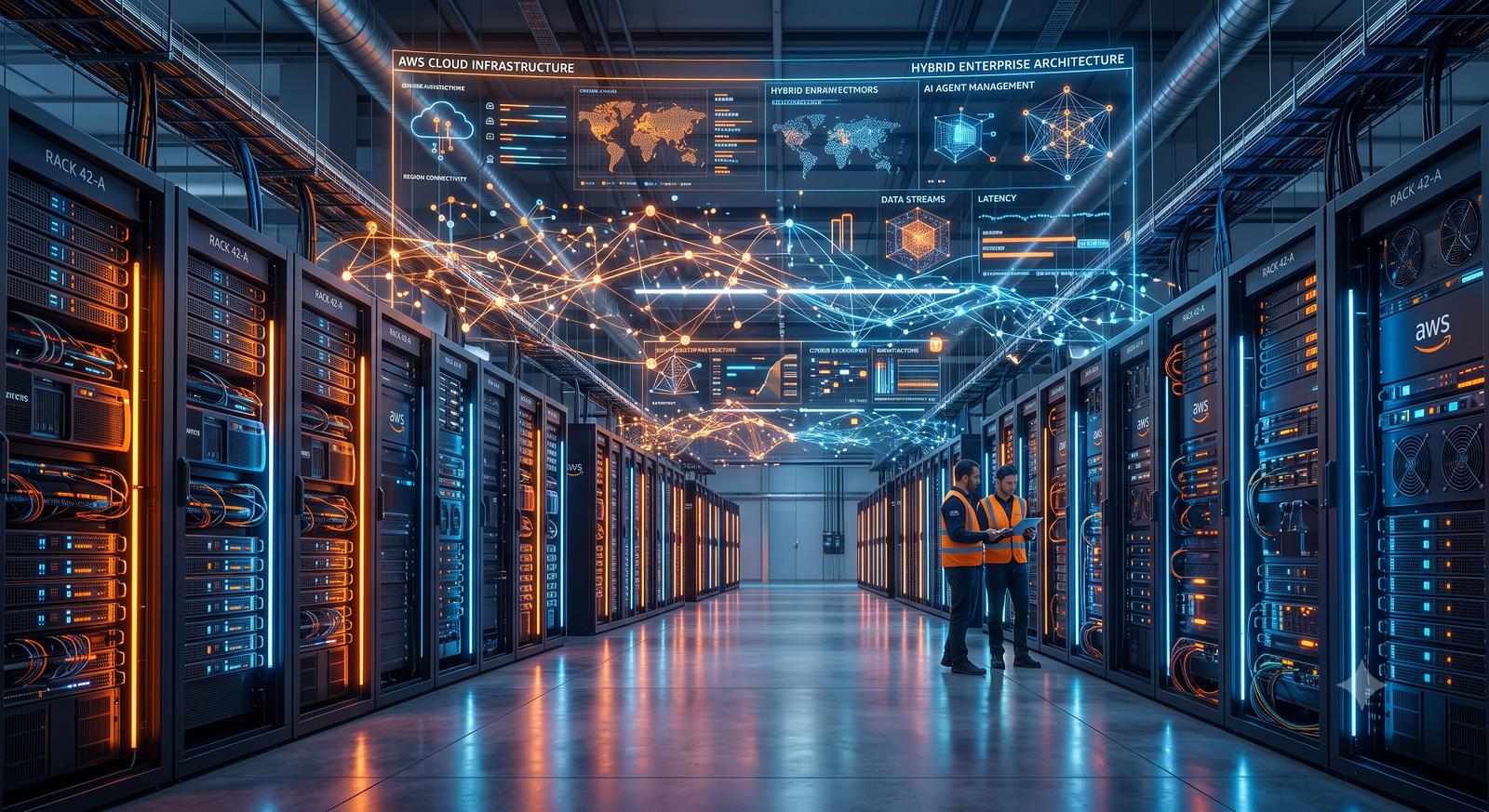
For organizations trying to pinpoint the best AWS in 2026, the strategy requires looking beyond basic compute and storage. The most effective AWS environments this year are characterized by autonomous agents handling operations, massive upgrades in custom silicon, and a hybrid approach that brings AI directly to your data center.
Here is exactly how enterprise technology leaders are architecting their AWS environments this year, the services driving the most value, and how to avoid the trap of “innovation overload.”
AI by Default: Autonomous Agents Take the Wheel
Until recently, AI in the enterprise acted primarily as a copilot—a tool designed to speed up human-driven workflows. The defining shift in 2026 is the transition to autonomous, long-running agents that execute complex operational tasks end-to-end.
AWS has introduced several purpose-built agents that fundamentally change how engineering teams operate. Instead of a human querying logs to find the root cause of an outage, the AWS DevOps Agent operates like a tireless on-call engineer. It analyzes data across CloudWatch, GitHub, and ServiceNow to identify root causes and coordinate remediation efforts without human prompting.
Similarly, the AWS Security Agent functions as a continuous SOC analyst, reviewing application designs and executing contextual penetration testing from development through deployment. Along with Kiro, an autonomous developer agent, these tools run for hours or days—not seconds—to troubleshoot, test, and deploy with strict guardrails.
For developers building customer-facing applications, Amazon Bedrock remains the centerpiece. The platform recently introduced reinforcement fine-tuning, a mechanism that uses feedback-driven training to deliver up to 66% accuracy gains over base models. This eliminates the need for massive labeled datasets, making custom model deployment practical for mid-sized engineering teams. Additionally, the introduction of Amazon Nova 2 Sonic brings a highly sophisticated speech-to-speech model featuring multilingual capabilities and dynamic speech control, drastically reducing the friction in building voice-native AI applications.
The Compute and Storage Backbone
The bottleneck for enterprise AI has consistently been the sheer cost and scarcity of compute power. AWS is attacking this problem aggressively from two angles: custom silicon and AI-optimized storage.
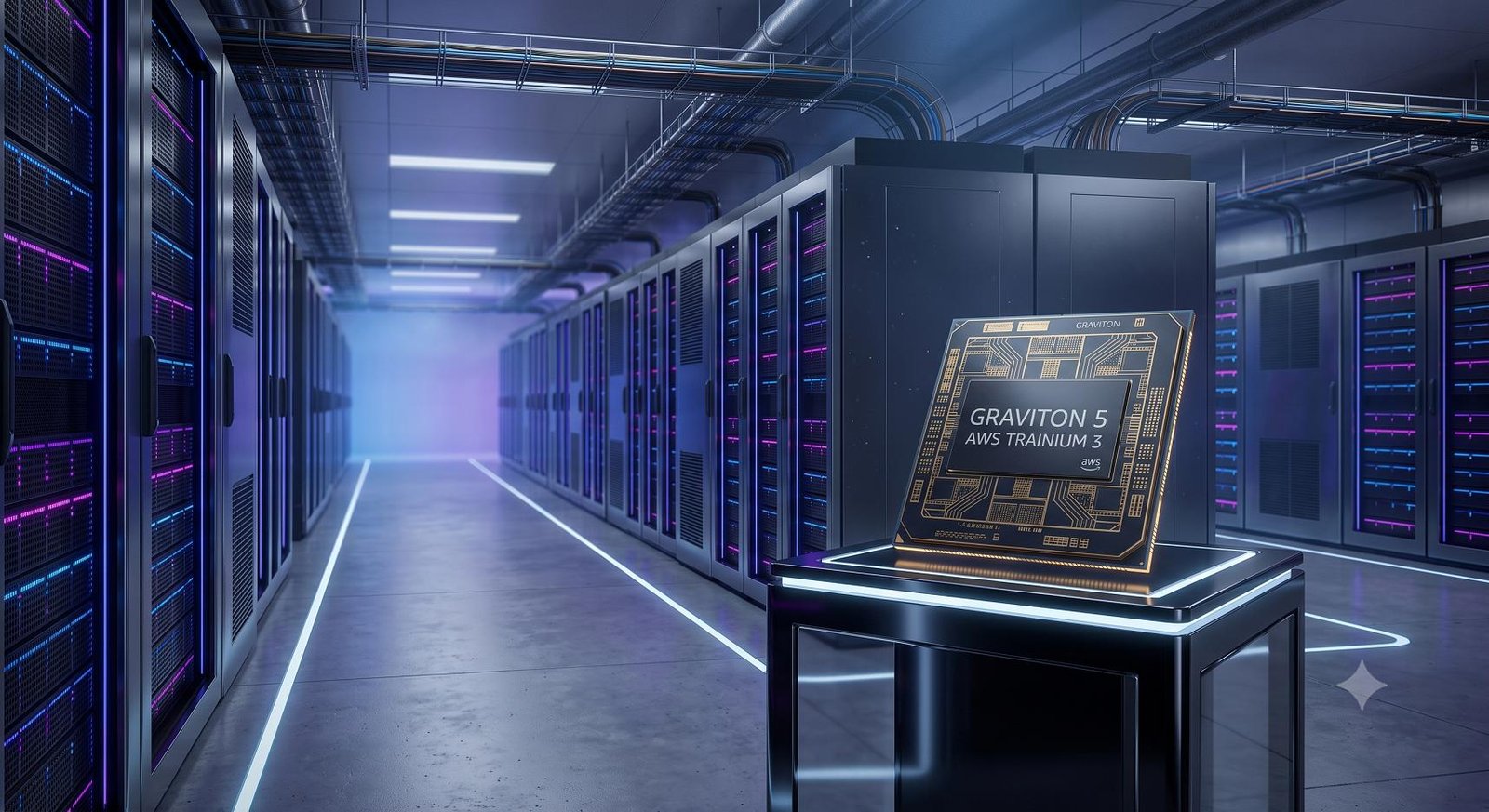
The Silicon Advantage: Trainium3 and Graviton5
If your team is training large-scale models, relying solely on traditional GPU clusters is becoming cost-prohibitive. AWS has shifted the economics with the introduction of Trainium3 UltraServers. Packing up to 144 chips per server, these next-generation machine learning machines deliver massive memory bandwidth and a fourfold gain in compute efficiency over their predecessors.
For standard enterprise workloads, Graviton5 is the new baseline. The fifth generation of AWS’s custom ARM-based processor provides the best price-to-performance ratio for a broad range of EC2 workloads. Migrating legacy x86 workloads to Graviton architecture remains one of the most reliable ways to cut cloud compute costs without sacrificing performance.
Storage Rethought: S3 as an AI Engine
Amazon S3 is no longer just a place to park static files. Recent updates have transformed it into a native AI engine.
AWS bumped the object size limit to 50 TB (a 10x increase) and made S3 Vectors generally available. S3 Vectors supports up to 2 billion embeddings per index at a fraction of the cost of standalone vector databases. This is a massive architectural simplification. Instead of moving data from S3 into a separate vector database for Retrieval-Augmented Generation (RAG) applications, you can index and query it directly where it lives.
For applications requiring ultra-low latency, S3 Express One Zone has matured into the go-to storage class. By delivering consistent single-digit millisecond data access, it accelerates performance-critical applications by up to 10x compared to S3 Standard, significantly lowering the total cost of ownership for high-frequency ML workloads.
The Resurgence of Hybrid and On-Premises AI
Cloud providers spent the last decade trying to pull every workload out of the corporate data center. In 2026, the cloud is coming back to the data center.
Due to strict data sovereignty laws, compliance mandates, and latency requirements, many enterprises simply cannot send proprietary data to a public cloud region. Enter AWS AI Factories. This service allows organizations to deploy fully managed AWS AI infrastructure directly onto their own data center floors. You get the same foundation models, specialized hardware, and AWS tooling, but the data never leaves your physical perimeter.
Connectivity to these hybrid environments has also matured. AWS increased Site-to-Site VPN throughput to 5 Gbps per tunnel—a fourfold jump that drastically accelerates disaster recovery and hybrid migrations. Furthermore, AWS integrated branch connectivity with eero, turning remote distributed sites into plug-and-play endpoints. This seemingly small update solves a massive headache for IT teams trying to secure remote workforces quickly.
Architecture Shift: Traditional Ops vs. 2026 Agentic Ops
Building the best AWS in 2026 requires rethinking how teams interact with the platform. Below is a comparison of how cloud operations are shifting from traditional manual processes to managed, agent-driven architectures.
| Capability | Traditional Cloud Architecture (Pre-2025) | Modern AWS Architecture (2026) |
| Incident Response | Manual log querying via CloudWatch; human on-call teams. | Autonomous remediation via AWS DevOps Agent. |
| Security Audits | Periodic manual penetration testing and compliance checks. | Continuous, design-to-deployment reviews via AWS Security Agent. |
| Vector Storage (RAG) | Bolted-on third-party vector databases (high data movement). | Native indexing via S3 Vectors directly on object storage. |
| Code Modernization | Manual refactoring; expensive consultancy engagements. | Automated repository overhauls via AWS Transform custom. |
| Hybrid Connectivity | Complex, low-bandwidth VPN configurations. | 5 Gbps VPN tunnels and plug-and-play eero branch endpoints. |
Crushing Technical Debt with AI
A common barrier to adopting cutting-edge cloud services is the anchor of legacy technical debt. Organizations waste millions maintaining outdated monoliths simply because the risk of breaking them during a rewrite is too high.
AWS is directly addressing this with AWS Transform Custom. This AI-powered code modernization service learns your organization’s specific architectural patterns and automates transformations across entire repositories. Early data suggests it cuts execution time for large-scale migrations by up to 80%. For enterprises stuck on older versions of Java, .NET, or legacy database schemas, this tool changes the financial math of modernization.
Challenges and the Road Ahead
While the technology is ready, organizational structures often are not. The implementation process for these 2026 strategies comes with distinct friction points:
-
Innovation Overload: AWS releases services faster than most companies can consume them. The risk of decision paralysis is high. The antidote is platform engineering—creating an internal developer platform (IDP) that abstracts AWS complexity and offers developers opinionated, pre-approved paths to production.
-
The Talent Gap: Transitioning from “managing servers” to “managing AI agents” requires a different skill set. Cloud engineers must evolve into system strategists who understand prompt governance, vector indexing, and cost-aware architectural design.
-
Governance Lag: Security processes that happen periodically (e.g., quarterly audits) are incompatible with agents deploying code continuously. Governance must shift left and become an invisible, automated part of the CI/CD pipeline.
Final Thoughts
The best AWS in 2026 isn’t found by simply turning on every new service announced at re:Invent. It is found through highly opinionated architecture.
Success this year means prioritizing custom silicon like Trainium3 and Graviton5 to control compute costs. It means leveraging S3 as an active AI engine rather than a passive storage bucket. Most importantly, it means trusting autonomous agents to handle the operational drudgery, freeing your engineering teams to focus on actual product differentiation.
The era of merely adopting the cloud is over. We have entered the era of cloud optimization, where the platform itself actively participates in building, securing, and maintaining your infrastructure.