Cloud 3.0 for Enterprise Infrastructure

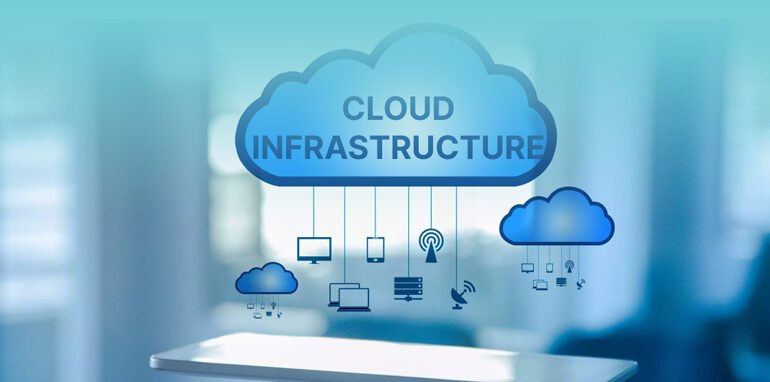
The idea of cloud computing infrastructure used to revolve around a central promise. Move everything to the cloud, gain flexibility, reduce costs, and scale without limits. That promise still holds to some extent. But in practice, organizations discovered that not every workload behaves the same way. Some systems demand strict control. Others need instant scalability. A few require both at the same time, which is where things begin to stretch beyond traditional models.
This is where the notion of Cloud 3.0 starts to take shape. Not as a strict definition, but more like a direction. A shift toward combining hybrid cloud solutions, edge environments, and intelligent optimization into a single, adaptive ecosystem. Instead of asking where everything should go, enterprises are now asking a more nuanced question. Where does each workload actually belong?
Why It Matters
Cloud 3.0 is a useful way to describe where enterprise technology seems to be heading now, toward a more diversified setup built around hybrid, multi-cloud, and sovereign architectures that can support AI scale and resilience. That is the broad direction showing up in current industry research, and it matches what cloud providers are already building for real-world businesses.
The old idea of one giant cloud stack doing everything is starting to look a little narrow. Most organizations now need a blend of public cloud, private cloud, on-premises systems, and sometimes edge locations, because the work itself is not uniform. Some workloads need speed. Some need control. Some need both, which is where the conversation gets interesting.
Hybrid Cloud
Hybrid cloud is not just a trendy phrase. Google Cloud describes it as a mixed computing environment that combines public clouds, private clouds, on-premises data centers, and even edge locations. Microsoft Azure defines it in a very similar way, as an environment that blends on-premises infrastructure with public cloud services so organizations can choose where to run and store applications.
That flexibility matters more than people sometimes admit. A finance team may want sensitive records kept closer to home. A product team may want burst capacity from the public cloud when traffic spikes. A compliance team may care about where data lives, who touches it, and how quickly it can be audited. The point of hybrid cloud solutions is not complication for its own sake. It is control, without giving up scale.
You might notice that hybrid setups often show up during migration, not after everything is finished. That makes sense. Most companies do not jump from one system to another overnight. They move slowly, piece by piece, because business keeps running while the architecture changes underneath it. Google Cloud specifically notes that hybrid cloud is widespread and often used to reduce cost, minimize risk, and extend existing capabilities during digital transformation.
Edge Computing
Edge computing brings computation closer to where the data is created. IBM defines it as a distributed framework that moves enterprise applications closer to data sources such as IoT devices or local edge servers. The practical effect is simple enough: faster insights, better response times, and less pressure on bandwidth.
That matters in places where delay is not a small inconvenience. Think of a factory sensor flagging a machine issue, a logistics system tracking vehicles in real time, or a retail store trying to react to local demand without waiting for a distant data center to weigh in. In those settings, sending everything back and forth to a central cloud can be too slow or too expensive. Edge processing trims that lag. It also reduces the amount of raw data that needs to travel, which can help with network load.
This is where Cloud 3.0 starts to feel different from older cloud models. The cloud is no longer just a faraway storage place. It becomes part of a wider system where some work happens centrally, some happens locally, and some happens right at the edge. That distributed shape is one reason enterprises are leaning into hybrid and edge-connected designs.
AI Optimization
Now we get to the part that really changes the day-to-day picture. AI-driven cloud optimization is not magic, though the marketing around it sometimes tries to make it sound that way. In practice, it means using machine-learning-backed recommendations, usage analysis, forecasting, and automation to rightsize resources, detect idle infrastructure, and improve workload placement. AWS Compute Optimizer, for example, recommends more efficient compute resources to reduce cost and improve performance, while AWS’s cost optimization tools focus on modernizing and rightsizing opportunities.
Google Cloud’s cost management tools point in the same direction. They offer intelligent recommendations, forecasting, budgets, and alerts so teams can see where money is going and make changes before waste piles up. That is a practical form of cloud intelligence, not just a dashboard with pretty charts. It helps teams decide whether a workload is oversized, underused, or simply sitting in the wrong place.
The real benefit is not that the system “thinks” for you in some dramatic sense. It is that it spots patterns faster than a human staring at spreadsheets all week. A model might notice recurring idle hours, seasonal spikes, or under-provisioned servers. Then it can suggest rightsizing, cleanup, or scheduling changes. That is how AI starts to pay its way in enterprise infrastructure, quietly, in small reductions that add up over time.
Cost Efficiency
Cost efficiency is the part every executive cares about, even when nobody wants to say it too loudly. Cloud is powerful, yes, but it can also get messy and expensive if nobody watches the numbers. AWS says its cost management tools help monitor application cost and identify rightsizing opportunities, while Google Cloud says its tools provide visibility into cost trends and intelligent recommendations to optimize usage and minimize costs.
The useful shift in Cloud 3.0 is that cost control is becoming more active. It is no longer just about cutting bills after the fact. It is about designing systems that know where work should run, when resources should scale, and which services are sitting there eating money without helping the business. AWS Compute Optimizer even includes idle detection, over-provisioned resource recommendations, and automation options for recurring optimization.
Actually, that is where the strongest enterprise cases show up. A company might keep sensitive workloads in a private environment, burst into public cloud during peak demand, and push latency-sensitive processing to the edge. That arrangement can be more efficient than forcing everything into one model. It is not always cheaper in every possible scenario, but it often gives leaders more room to match cost with actual business value.
What This Looks Like
Picture a manufacturer with sensors on the shop floor, customer apps in the public cloud, and compliance-heavy records stored privately. The machines need edge computing because delays matter. The customer app needs an elastic scale because traffic jumps without warning. The records need hybrid cloud control because audits do not care about convenience. Put together, that is the kind of architecture Cloud 3.0 is trying to describe. It is not one clean box. It is a layered system that tries to place each workload in the right place, for the right reason.
That layered approach also makes teams think differently about operations. Instead of asking, “How do we move everything to the cloud?”, the better question becomes, “Where should each piece live?” Sometimes the answer is public cloud. Sometimes it is private infrastructure. Sometimes it is an edge. The architecture starts to follow the business, rather than forcing the business to bend around the architecture.
Why Leaders Care
For enterprise leaders, the appeal is pretty clear. Hybrid cloud helps with flexibility and compliance. Edge computing helps with speed and local processing. AI optimization helps with smarter resource use. Cost efficiency keeps the whole thing from turning into an expensive hobby. Each piece solves a different problem, but together they shape a more realistic infrastructure model for modern companies.
The bigger picture is less glamorous, but more useful. Cloud 3.0 is not really about a shiny new label. It is about making infrastructure behave more like the business itself, distributed, selective, adaptable, and a little less wasteful than the old one-size-fits-all approach. That may be the most important shift of all.
FAQs
Q. What is Cloud 3.0?
Cloud 3.0 is a trend term for diversified cloud architectures that blend hybrid, multi-cloud, sovereign, and AI-ready infrastructure for modern enterprises.
Q. Why use a hybrid cloud?
Hybrid cloud lets organizations split workloads across public and private environments, which helps with flexibility, compliance, risk control, and gradual migration.
Q. How does edge computing help?
Edge computing processes data closer to its source, which can improve response times, reduce bandwidth use, and support real-time decisions.
Q. What is AI-driven cloud optimization?
It uses intelligent recommendations, forecasting, rightsizing, and automation to reduce waste, improve performance, and control cloud spend.
Q. Why is cost efficiency important?
Cloud costs can rise quickly when resources are oversized or idle, so visibility, recommendations, and automation help keep spending aligned with business value.
Q. Does Cloud 3.0 replace the cloud?
No, it is more of an evolution in how cloud is designed and managed, with more emphasis on distribution, intelligence, and workload placement.
Closing Thought
Cloud 3.0 is not a clean break from what came before. It feels more like a correction, maybe even a course adjustment. Enterprises are realizing that infrastructure works best when it stops pretending everything belongs in the same place. Some workloads need speed, some need privacy, some need intelligence, and some just need to cost less without breaking anything. That, in a plain way, is the future this model is trying to build.