Apple Hits Record High Amid Restrained AI Strategy

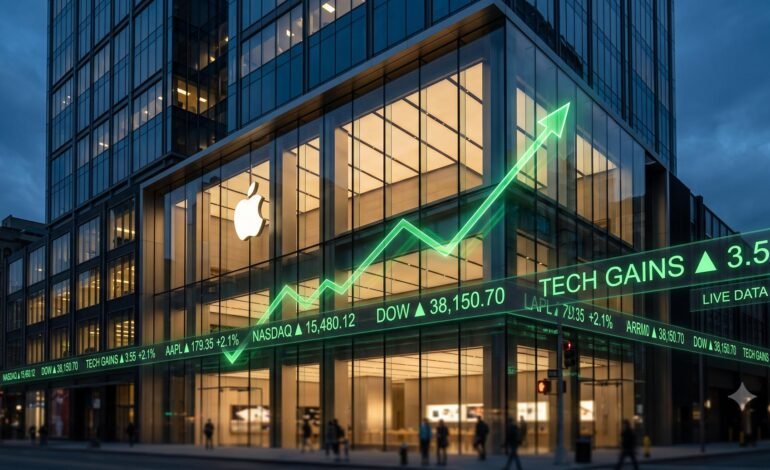
Apple Inc. shares reached an all-time intraday high in mid-July 2026, pushing the company’s market capitalization to approximately $4.89 trillion. The rally comes as institutional investors begin rotating capital away from the massive infrastructure spending race that has defined artificial intelligence development over the past two years. While major competitors commit hundreds of billions of dollars to data center expansion, Apple’s decision to largely sit out the capital-intensive phase of the AI boom is increasingly viewed on Wall Street as a strategic asset rather than a competitive vulnerability.
Apple’s stock closed at $333.26, capping a 15% surge since June 25 that added roughly $600 billion in market value. This places Apple as the best-performing stock among the “Magnificent Seven” technology companies in 2026, up 16% year-to-date. By contrast, companies carrying the bulk of the industry’s AI infrastructure costs have seen their valuations contract. Microsoft is down roughly 20% for the year, while Alphabet and Amazon have both fallen more than 10% from their May peaks.
Background
The financial divergence stems from fundamentally different approaches to the commercialization of artificial intelligence. Beginning in late 2023 and accelerating through 2025, companies like Microsoft, Alphabet, Meta, and Amazon engaged in an aggressive procurement cycle for specialized graphics processing units (GPUs), servers, and power agreements.
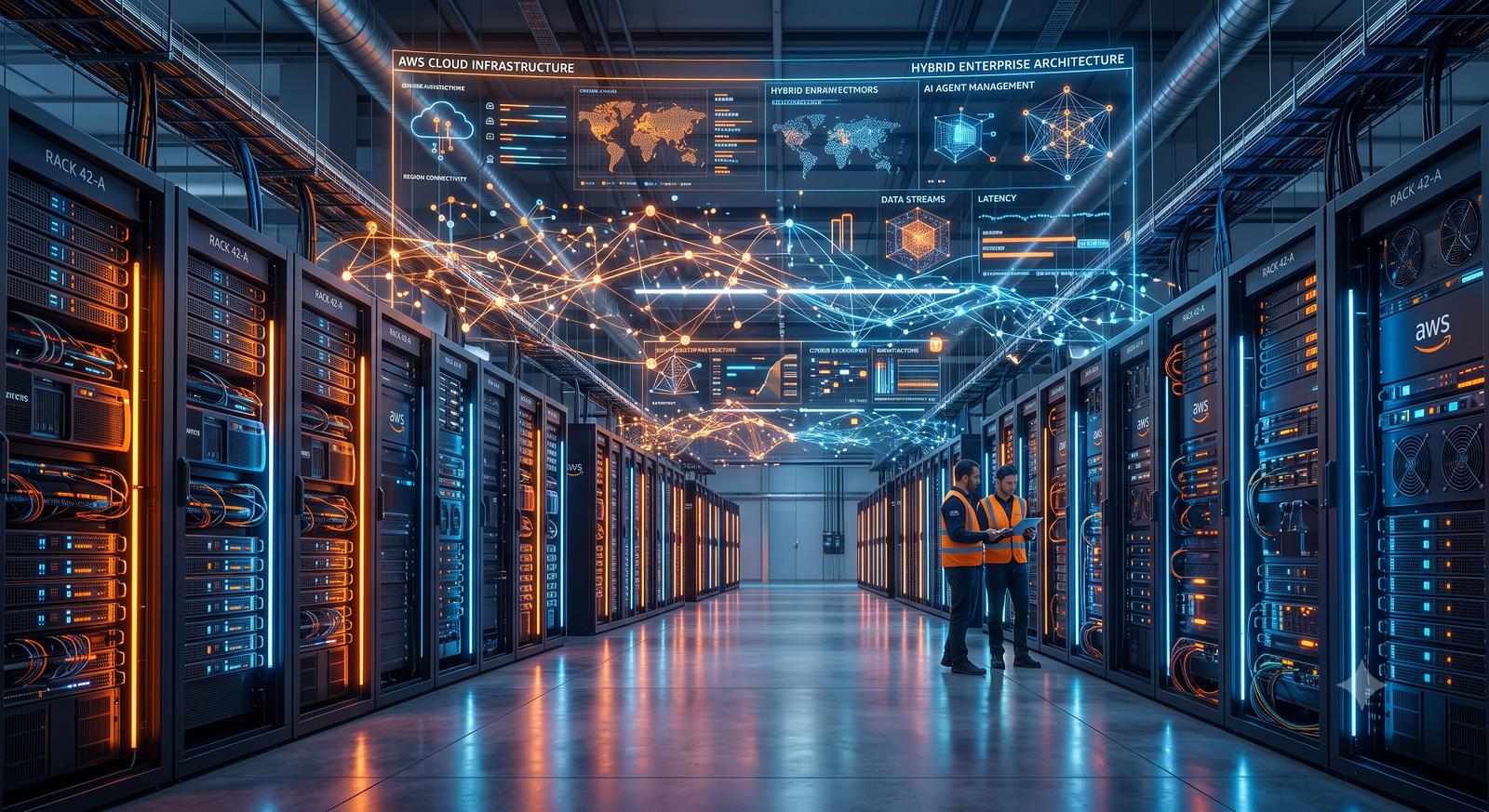
Current analyst projections indicate that Amazon, Alphabet, Meta, and Microsoft will collectively spend approximately $725 billion on capital expenditures in 2026, representing a 77% increase from the $410 billion allocated the previous year. Alphabet alone reported $35.7 billion in capital expenditures during the first quarter of 2026, with full-year guidance set between $180 billion and $190 billion. The primary driver for this outlay is AI infrastructure, including data centers and networking equipment.
Apple has taken a decidedly different path. The Cupertino, California-based company reported $12.7 billion in capital expenditures for its entire 2025 fiscal year. In the first quarter of 2026, Apple’s capital expenditures dropped to $2.0 billion, a 35.8% decline from the same period in 2025. The company has deliberately avoided building proprietary large-scale data centers for training frontier AI models. Instead, it holds $65 billion in cash and cash equivalents, alongside $77 billion in marketable securities, generating a projected $140 billion in free cash flow for 2026. Alphabet’s free cash flow, burdened by server investments, is expected to fall by roughly 67% to $21 billion over the same period.
Key Developments
Apple’s strategy materialized publicly during its Worldwide Developers Conference in June, where the company introduced Apple Intelligence. Rather than competing directly in the foundational model space, Apple established a partnership framework, notably integrating Google’s Gemini models to power the revamped version of its virtual assistant, Siri, and other complex computational tasks across its operating systems.
This partnership model effectively shifts the capital risk associated with model training and server maintenance to third parties. Apple is monetizing AI by applying it as a software feature designed to drive hardware sales and recurring subscription revenues across its active installed base of more than 2.35 billion devices.
The initial market reaction to Apple’s developer conference was muted, with shares briefly dipping as traders assessed the lack of proprietary data center announcements. However, sentiment shifted rapidly in late June and July. Market analysts observed growing skepticism regarding the immediate return on investment for generalized AI infrastructure. While cloud revenues for Alphabet and Microsoft continue to grow—Google Cloud posted a 63% year-over-year increase in the first quarter of 2026—the margin compression caused by massive capital outlays has spooked the broader market.
Why It Matters
The current market dynamic highlights a fundamental question regarding the tech economy: how quickly can consumers and enterprise clients absorb and pay for these new capabilities?
Traders are growing uneasy about the sums of cash continually being poured into data centers without a clear indicator of when investors will see proportional returns. If conversational AI and enterprise tools fail to generate software and advertising revenues that justify the $725 billion infrastructure spend, companies holding the hardware could face severe margin contraction.
Apple’s deliberate restraint functions as a financial hedge against a potential AI spending bubble. By maintaining capital flexibility, the company is not locked into aging server architecture if the technology shifts. Furthermore, if the AI market experiences a correction, Apple’s massive cash reserves position it to acquire distressed assets, specialized firms, or intellectual property at a discount, echoing consolidation patterns seen after the telecommunications infrastructure crash of the early 2000s.
Additionally, the regulatory environment is scrutinizing the data acquisition methods of large foundational models. By licensing access rather than building the largest models in-house, Apple sidesteps a significant portion of the copyright and data privacy litigation currently targeting early entrants.
Industry Perspective
Financial analysts and industry historians note that Apple’s current posture aligns with its historical playbook. The company rarely enters emerging product categories first. Whether with digital music players, smartphones, or smartwatches, Apple typically allows early entrants to absorb the initial research and development costs and define the consumer market. It then enters with a highly refined, premium consumer product once the technology and supply chains are established.
Some market strategists have drawn comparisons between Apple’s AI positioning and John D. Rockefeller’s approach to the oil industry in the late 19th century. Standard Oil achieved dominance not by taking on the speculative risk of drilling, but by controlling the refining and distribution networks. In the modern technology landscape, Apple controls the distribution network—the operating systems running on billions of premium consumer devices. By acting as the distributor rather than the driller, Apple dictates how AI reaches the consumer, allowing other firms to absorb the upfront capital risk of training the models.
“There’s a battle in the market, and right now Apple is benefiting because it isn’t in the storm that the rest of the AI trade is in,” noted Mark Bronzo, chief investment strategist at Rye Strategic Partners, in a recent market briefing.
Market and Consumer Impact
Despite the optimism surrounding its stock, Apple is navigating complex macroeconomic and supply chain pressures. The integration of advanced AI processing on local hardware requires significant memory capabilities. Surging memory chip costs forced Apple to quietly raise retail prices on Mac computers, iPads, and home hardware on June 25, 2026. This pricing adjustment initially triggered the company’s steepest single-day stock decline since April 2025, though shares quickly recovered.
Apple maintained the pricing structure for its iPhone lineup, though management has signaled that future increases could follow if component costs remain elevated. To contain expenditures, supply chain reports indicate the company is engaged in negotiations to source memory chips from Chinese semiconductor manufacturers currently on a Pentagon blacklist.
The consumer hardware cycle remains a critical variable. Investors are closely monitoring the anticipated release of a foldable iPhone model in September 2026. Supply chain intelligence firm Nikkei reported that Apple instructed suppliers to prepare for approximately 10 million units of the new device for the calendar year, an upward revision from earlier forecasts of seven to eight million units. The combination of a novel form factor and local Apple Intelligence features is expected to drive an accelerated upgrade cycle. The company’s revenue is projected to grow nearly 15% in fiscal 2026, marking its fastest pace of expansion since 2021, with net income forecast to rise 17%.
Future Outlook
As the technology sector moves toward the latter half of 2026, the contrast between Apple and its peers will face ongoing tests. Microsoft, Alphabet, Meta, and Amazon will need to demonstrate that their aggressive infrastructure spending translates into sustainable profit margins. If cloud growth metrics or operating margins begin to compress under the weight of capital expenditures, the rotation toward Apple’s stock may accelerate.
Conversely, Apple faces specific execution risks. The company’s valuation, currently trading at a price-to-earnings ratio of 40.3—well above its five-year median of 30.45—prices in near-perfect execution of its Apple Intelligence rollout. If the revamped Siri and integrated AI features fail to drive meaningful consumer upgrades, or if regulatory bodies intervene in its App Store economics, the stock lacks the margin of safety typically associated with value investments.
Additionally, insider activity suggests some caution; corporate filings show Apple insiders have sold approximately $87.6 million worth of shares over the past three months, a metric closely watched by institutional traders.
Conclusion
Apple’s path through the artificial intelligence boom illustrates a disciplined refusal to participate in industry momentum at the expense of capital efficiency. While competitors engage in a historic buildout of computing infrastructure, Apple has opted to act as the primary distributor of the resulting technology.
By utilizing its vast cash reserves, established device ecosystem, and strategic partnerships, the company has insulated itself from the immediate financial risks of the AI arms race. For now, the public markets are validating this restraint, pushing the company to unprecedented valuations while penalizing the aggressive spending of its most direct rivals.
FAQs
1. Why did Apple’s stock hit a record high in July 2026?
Investors rewarded Apple’s disciplined capital approach. The company avoided spending hundreds of billions on AI data centers, opting instead to partner with other tech firms for AI models. This made Apple an attractive haven amid concerns over AI infrastructure spending.
2. How much are Big Tech companies spending on AI infrastructure?
Alphabet, Amazon, Meta, and Microsoft are projected to spend a combined $725 billion on capital expenditures in 2026, largely driven by data center and server investments.
3. What is Apple’s capital expenditure for 2026?
In the first quarter of 2026, Apple reported just $2.0 billion in capital expenditures, following a modest $12.7 billion total for the 2025 fiscal year.
4. Does Apple build its own large language models?
While Apple develops smaller on-device models for privacy and speed, it partnered with Google to use the Gemini models for more complex, off-device cloud computations.
5. How is Apple’s strategy compared to John D. Rockefeller?
Analysts compare Apple to Rockefeller’s Standard Oil, which achieved wealth by refining and distributing oil rather than taking the capital risk of drilling for it. Apple is distributing AI to billions of devices rather than building the risky backend infrastructure.
6. Did Apple raise prices on its devices in 2026?
Yes, surging memory chip costs forced Apple to raise prices on Macs, iPads, and home devices in late June 2026. However, iPhone prices remained unchanged.
7. How is Microsoft performing compared to Apple in 2026?
As of July 2026, Apple shares are up 16% year-to-date, while Microsoft shares are down roughly 20%, reflecting market concerns over Microsoft’s massive AI infrastructure spending.
8. What new products is Apple expected to release to boost sales?
Apple is expected to release a foldable iPhone model in September 2026, with production forecasts indicating up to 10 million units for the year.
9. What are the main risks to Apple’s current valuation?
Apple’s price-to-earnings ratio is unusually high (40.3). If Apple Intelligence fails to spur a major consumer hardware upgrade cycle, or if App Store revenues are hindered by regulatory actions, the stock could face a significant correction.
10. How much free cash flow is Apple expected to generate in 2026?
Apple is projected to reach a record $140 billion in free cash flow in 2026, up over 40% from 2025.