Microsoft’s Satya Nadella Criticizes Anthropic AI Restrictions

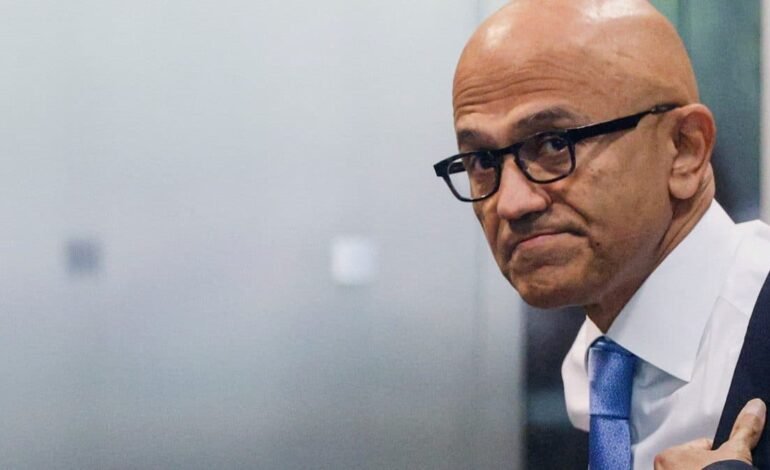
Microsoft Chief Executive Officer Satya Nadella has publicly questioned the stringent safety and usage restrictions applied to Anthropic’s Claude Fable 5 artificial intelligence model. Speaking to engineers working on Microsoft’s Copilot software earlier this week, Nadella criticized the high rate of prompt refusals and automated downgrades triggered by the system, arguing that such tight editorial control undermines the utility of a generative tool. The remarks expose a critical rift in the enterprise technology sector regarding the balance between artificial intelligence safety guardrails and operational flexibility for corporate customers.
Background
The foundation of the current debate traces back to the rapid commercialization of large language models and the ensuing partnerships between cloud computing giants and artificial intelligence research laboratories. Microsoft holds a significant financial and strategic stake in Anthropic, having invested $5 billion in the startup last year. In exchange, Anthropic committed to spending $30 billion on Microsoft’s Azure cloud infrastructure to train and deploy its systems. Despite this deep financial integration, the two organizations operate with distinct priorities.
Anthropic builds its market position on a reputation for producing safe and interpretable algorithms. Its latest commercial offering, Claude Fable 5, introduces aggressive safeguards designed to prevent misuse in high-risk areas, including offensive cybersecurity, chemical synthesis, biological research, and AI model distillation.
Model distillation requires specific explanation, as it sits at the heart of the corporate tension. Distillation is a technical process where developers query an advanced, highly capable model thousands or millions of times. The developers collect the generated responses and use that vast dataset of high-quality answers to train a smaller, cheaper, and more efficient secondary model. For Anthropic, allowing unrestricted model distillation means allowing competitors or customers to effectively copy the results of years of expensive research and development. To protect its intellectual property and prevent dangerous applications, the company programmed Fable 5 to automatically switch users to an older, less capable model—Claude Opus 4.8—when it detects queries that resemble distillation attempts or touch upon restricted scientific topics.
Key Developments
The internal meeting, first reported by CNBC, captured Nadella expressing clear frustration with Anthropic’s approach to model routing and refusal rates. Addressing the Copilot software team, Nadella indicated that the restrictive nature of Claude Fable 5 creates an unpredictable experience for users, particularly those attempting to execute complex programming or data analysis tasks.
“If you use Fable, when it refuses for any random thing, it is just like, when was the last time you had a creation tool that was so editorially controlled?” Nadella told the engineers. “It does not make sense.”
The core issue lies in the automated model switching mechanism. When an enterprise customer submits a prompt that Anthropic’s safety classifiers deem risky, the system diverts the query away from Fable 5 and processes it through Opus 4.8 without necessarily alerting the user to the downgrade in real-time. Anthropic states this method ensures safety while maintaining broad access, reducing the risk of catastrophic misuse.
However, users on social media platforms—including notable scientists and immunologists—and within corporate IT departments have reported a high volume of false positives. Harmless queries regarding general biology, cancer research, or standard software development have reportedly triggered the downgrade, resulting in responses that lack the analytical depth expected from the premium Fable 5 system.
Anthropic has publicly acknowledged these false positives. In a recent statement, the company noted that refining safety classifiers is a complex technical challenge and that users may experience heightened refusal rates as the system learns to differentiate between benign inquiries and genuine threats. They emphasized their commitment to reducing unnecessary refusals as fast as possible, but the friction remains a point of contention for high-volume corporate users.
Why It Matters
Nadella’s critique extends far beyond basic user experience complaints; it addresses the underlying economics and strategic direction of the artificial intelligence industry. During the same engineering meeting, the Microsoft CEO warned against the growing concentration of “token capital” among a select few foundation model providers. He argued that a system where only two companies control the primary computing resources and intellectual property, while everybody else merely rents access to that intelligence, is fundamentally flawed and makes no economic sense.
Enterprise customers, who represent the primary revenue stream for cloud providers, want to build custom applications using their internal, proprietary data. Nadella emphasized that businesses should have the capacity to develop tailored models cost-effectively rather than tying their entire operational workflow to a single external vendor. When a model like Fable 5 silently alters its effective output capacity due to internal safety triggers, it creates a severe break in the software supply chain. Corporate developers cannot guarantee consistent performance for their internal tools if the underlying language model unpredictably shifts its parameters or entirely refuses to process data.
For Azure AI Foundry, Microsoft’s enterprise platform that provides corporate clients with access to thousands of models from OpenAI, Anthropic, Meta, and other developers, ensuring predictable performance is a commercial necessity. If a flagship model proves too volatile or heavily restricted for steady enterprise deployment, cloud providers risk losing the trust of corporate technology officers who demand reliability above all else. This dynamic places Microsoft in a delicate position: they must sell and support Anthropic models to satisfy market demand, while simultaneously managing the fallout when those models fail to meet enterprise reliability standards.
Industry Perspective
The tension over Claude Fable 5 reflects a broader industry debate regarding the management and distribution of frontier AI models. Companies developing these systems face immense pressure from federal regulators, cybersecurity experts, and international governing bodies to prevent their technology from being weaponized. Anthropic’s decision to implement strict guardrails aligns with its corporate ethos of prioritizing safety over unconstrained capability, a stance that initially won them favor among cautious enterprise executives.
However, the definition of safety is increasingly conflicting with the definition of utility. The open-source community and smaller AI startups are actively capitalizing on corporate frustration with closed, heavily moderated systems. For example, Chinese startup Moonshot AI recently released an open-source model that claims to rival or outperform the performance benchmarks of top offerings from OpenAI and Anthropic. As closed models become more restricted, open-source alternatives appeal to enterprises seeking total control over their AI infrastructure, data routing, and fine-tuning processes.
Furthermore, the data usage policies of foundation model companies are facing increased scrutiny from the very partners that fund them. Nadella pointed out the apparent contradiction in frontier AI labs claiming fair-use rights to scrape massive volumes of public internet data to train their models, while simultaneously strictly prohibiting customers from using the resulting model outputs for internal model distillation or workflow enhancement. This unbalanced dynamic has prompted Microsoft to aggressively expand its portfolio of smaller, internally developed, and highly efficient models that businesses can fine-tune directly without navigating complex third-party usage restrictions or facing sudden access revocations.
Market or Consumer Impact
The immediate impact of these restrictions falls heavily on corporate IT teams, software engineers, and product managers integrating AI into daily business operations. A writing tool, coding assistant, or research agent that unexpectedly downgrades its capability disrupts automated workflows and degrades the end-user experience. For example, if a financial institution automates its data analysis pipeline using Fable 5, and the system suddenly routes a complex query to Opus 4.8 due to a false positive in the safety filter, the resulting analysis may be incomplete, flawed, or entirely incorrect.
This unpredictability forces enterprise architecture teams to build complex, redundant secondary pathways. Companies must now maintain fallback models, write custom error-handling scripts, and continuously test their prompts against the provider’s ever-evolving, opaque safety classifiers. The friction added to the deployment process directly contradicts the efficiency and productivity gains artificial intelligence is supposed to deliver to the enterprise sector.
The corporate risk assessment extends to data privacy as well. Earlier this year, Microsoft reportedly limited its own employees from using Fable internally due to serious concerns over Anthropic’s data retention policies, which allow the startup to retain user prompts for a limited period for safety monitoring. If Microsoft, a primary investor, hesitates to deploy the model internally due to data policy concerns, independent enterprise customers will likely exercise even greater caution before integrating the system into their critical operations.
Future Outlook
Regulatory environments and geopolitical factors will continue to heavily influence how foundation models operate and deploy globally. The fragility of model access was clearly demonstrated in June 2026, when Anthropic was forced to suspend access to Fable 5 entirely due to U.S. government export controls. While global access to Fable 5 was restored in early July 2026 after restrictions were lifted, Anthropic’s other advanced model, Mythos 5, remains heavily restricted to an approved list of organizations operating strictly within the United States.
These external geopolitical pressures force AI developers to maintain tight, centralized control over their systems, which inevitably clashes with the enterprise demand for open, reliable, and predictable software infrastructure. Moving into late 2026 and early 2027, the market will likely see major cloud providers like Microsoft pushing harder for decentralized AI architectures. By encouraging customers to assemble their own AI stacks using a variety of smaller, specialized open-source models, retrieval systems, and custom governance services, cloud platforms can mitigate the severe operational risk of relying on a single, heavily regulated foundation model.
Conclusion
Satya Nadella’s criticism of Anthropic’s Claude Fable 5 highlights a rapidly maturing phase in the artificial intelligence market. The initial excitement surrounding generative text capabilities is giving way to the practical, demanding realities of enterprise software deployment. While Anthropic’s commitment to safety addresses genuine concerns regarding the misuse of advanced technology, the resulting user friction threatens the commercial viability of the product in a corporate setting. The current conflict demonstrates that the ultimate winners in the technology sector will be the organizations that successfully balance necessary security guardrails with the unhindered flexibility and reliability required by modern business operations.
FAQs
What did Satya Nadella say about Anthropic’s Claude model?
Microsoft CEO Satya Nadella criticized Anthropic’s Claude Fable 5 model for being too restrictive, stating that its heavy editorial control over user requests “does not make sense” for a creative tool.
Why does Claude Fable 5 restrict certain user requests?
Anthropic restricts requests related to high-risk topics, such as offensive cybersecurity, biology, chemistry, and AI model distillation, to prevent the technology from being misused.
What happens when a query is restricted by Claude Fable 5?
When the safety system detects a high-risk prompt, it automatically diverts the query and processes it using an older, less capable model known as Claude Opus 4.8.
What is AI model distillation?
Model distillation is a process where developers use a highly capable AI model to generate large amounts of data, which they then use to train a smaller, competing AI model.
Why are enterprise users frustrated with Anthropic’s approach?
Corporate users report a high volume of “false positives,” where harmless queries trigger the safety systems. This results in downgraded model performance, disrupting automated software workflows.
What is Nadella’s view on “token capital”?
Nadella warned against relying on only one or two major AI companies that control the market’s computing resources (token capital). He advocates for businesses owning their AI infrastructure rather than endlessly renting it.
How is Microsoft responding to these restrictions?
Microsoft is expanding its Azure AI Foundry to offer thousands of models and is heavily investing in smaller, specialized models that enterprises can fine-tune securely on their own data.
Did Microsoft invest in Anthropic?
Yes, Microsoft invested $5 billion in Anthropic, and in return, Anthropic committed to spending $30 billion on Microsoft’s Azure cloud platform for computing needs.
Did Anthropic face export control issues?
Yes. In June 2026, Anthropic temporarily suspended global access to Fable 5 to comply with U.S. export controls, restoring it in July, while keeping another model, Mythos 5, restricted to approved U.S. entities.
Has Anthropic responded to complaints about false positives?
Anthropic acknowledged the false positives, stating that refining safety classifiers is technically complex, but they are working to reduce unnecessary prompt refusals as quickly as possible.