Endurance Redefined: Redmi’s Note 17 Pro Series Brings a 10,000mAh Battery to India

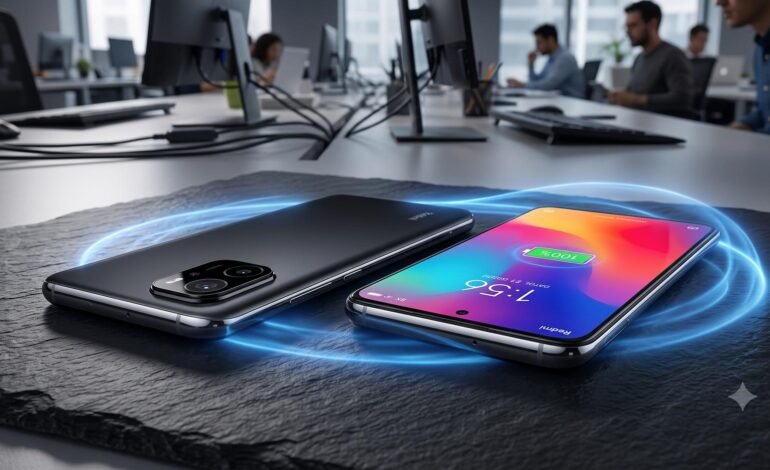
Battery anxiety has been the Achilles’ heel of the smartphone industry for the better part of a decade. While manufacturers have largely focused on chasing faster charging speeds to compensate for modest battery sizes, Redmi has taken a radically different approach with its latest launch.
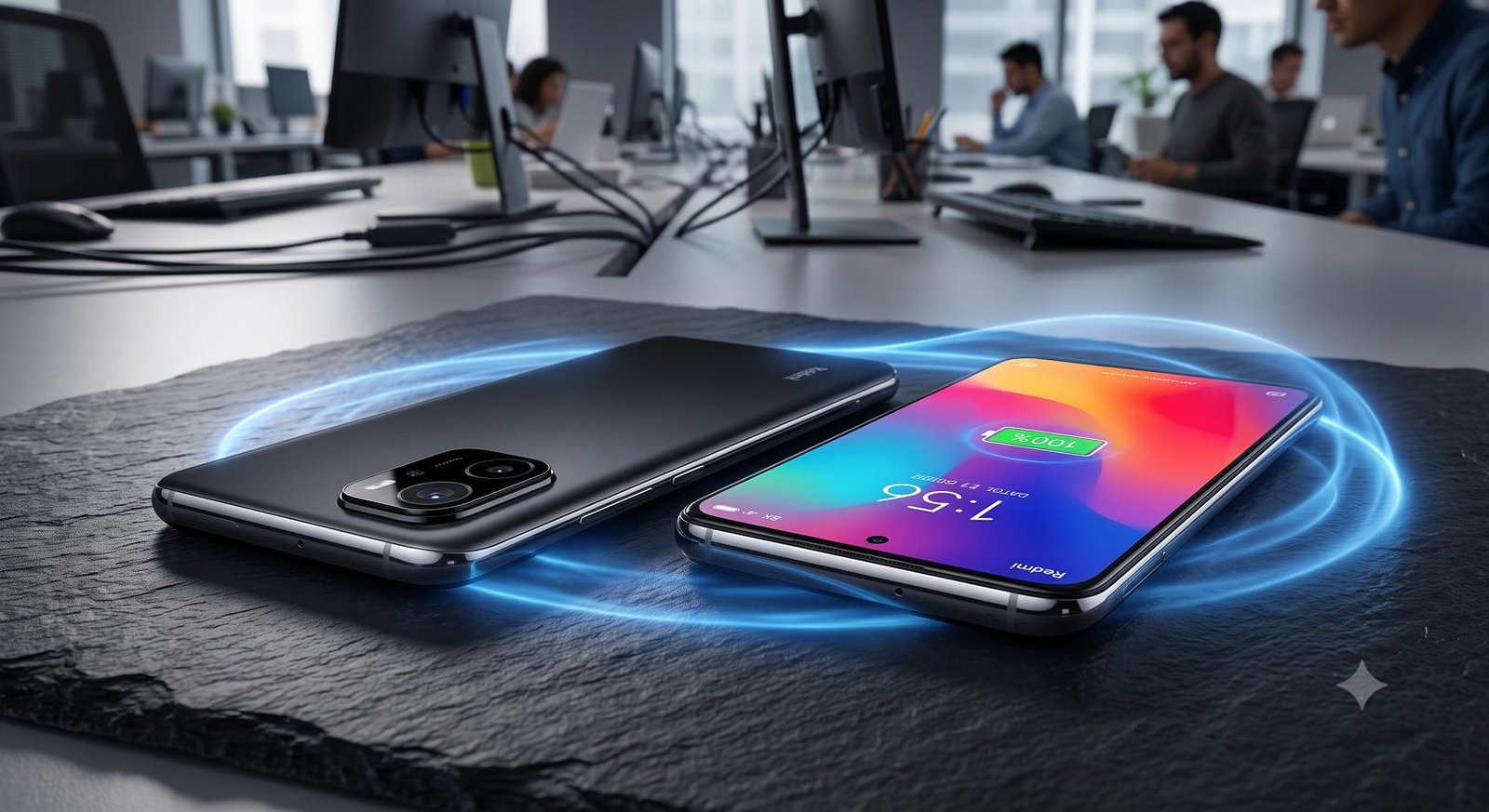
The company just unveiled the Redmi Note 17 Pro series in India, and the spec sheet is a wake-up call for the mid-range market. Leading the charge is the Redmi Note 17 Pro Max—the brand’s very first smartphone to pack a staggering 10,000mAh silicon-carbon battery. Alongside it, the standard Redmi Note 17 Pro arrives with an equally impressive 9,000mAh cell.
With the lineup starting at ₹36,999, Xiaomi is clearly pivoting the Note series away from marginal iterative upgrades and aiming directly at power users, gig workers, travelers, and anyone tired of tethering their phone to a wall before dinner time.
Here is a deep dive into what the Redmi Note 17 Pro and Note 17 Pro Max bring to the table, and why this endurance-first philosophy might just dictate the next major trend in smartphone design.
The Silicon-Carbon Revolution: Why 10,000mAh Works Now
Might you be wondering: hasn’t the industry seen massive batteries before? Yes, but mostly in bulky, ruggedized novelty phones designed for extreme outdoor conditions. The Redmi Note 17 Pro Max manages to fit a 10,000mAh power pack into a mainstream chassis.
This is largely thanks to the adoption of silicon-carbon battery technology. Traditional lithium-ion batteries hit a density wall; making the battery hold more charge required making it physically thicker. Silicon-carbon anodes allow for a much higher energy density, meaning you get significantly more power without turning the phone into a literal brick.
What does a 10,000mAh capacity look like in practical terms?
-
Multi-day usage: For moderate users, this is comfortably a three-day phone.
-
Reverse charging utility: With 27W wired reverse charging, the Note 17 Pro Max doubles as a fast power bank for your wireless earbuds, smartwatch, or even a friend’s dying iPhone.
-
Battery longevity: Because you’re charging it less often, the battery degrades slower. Xiaomi rates the Pro Max’s battery to retain 80% capacity even after 1,600 charge cycles—easily outlasting the phone’s software support lifecycle.
Spec Showdown: Redmi Note 17 Pro vs. Pro Max
To understand where your money is going, here is a direct comparison of the two models.
| Specification | Redmi Note 17 Pro | Redmi Note 17 Pro Max |
| Display | 6.83″ 1.5K AMOLED, 120Hz, 3500 nits peak | 6.83″ 1.5K AMOLED, 120Hz, 3500 nits peak |
| Processor | Snapdragon 6s Gen 4 (4nm) | Snapdragon 6 Gen 5 (4nm) |
| RAM/Storage | Up to 8GB LPDDR4X / 256GB UFS 3.1 | Up to 12GB LPDDR5X / 256GB UFS 4.1 |
| Rear Cameras | 50MP Main (OIS) + 8MP Ultra-wide | 50MP Main (OIS) + 8MP Ultra-wide |
| Front Camera | 16MP | 32MP |
| Battery | 9,000mAh | 10,000mAh |
| Charging | 67W Wired, 22.5W Reverse | 100W Wired, 27W Reverse |
| Durability | IP66/IP68/IP69/IP69K, TÜV SÜD | IP66/IP68/IP69/IP69K, TÜV SÜD |
| Software | Android 16 (HyperOS 3) | Android 16 (HyperOS 3) |
Performance Traded for Endurance
There is an elephant in the room regarding the internal hardware. The Pro Max runs on the Snapdragon 6 Gen 5, while the standard Pro uses the older Snapdragon 6s Gen 4.
Historically, the “Pro” tier of the Redmi Note series pushed upper-mid-range silicon (like the Snapdragon 7-series). By opting for 6-series chips this year, Redmi is making a calculated compromise. These processors are incredibly power-efficient, which perfectly complements the massive batteries, but they aren’t built for heavy, sustained 3D gaming.
If your primary use case is rendering 4K video on the fly or maxing out graphics on Genshin Impact, this might feel like a slight downgrade in raw compute power compared to previous iterations. However, for 95% of consumers who use their phones for web browsing, media consumption, navigation, and social media, the day-to-day performance will remain buttery smooth—especially backed by the 120Hz AMOLED panel.
A Display Built for the Elements
Speaking of the display, the Note 17 Pro series doesn’t cut corners here. Both phones feature a 6.83-inch 1.5K AMOLED screen capable of hitting a blistering 3,500 nits of peak brightness.
A standout feature is the “Wet Touch 2.0” technology. If you’ve ever tried to respond to a text in the rain or with sweaty fingers at the gym, you know how erratic touchscreens can get. This tech optimizes touch response when water is present on the screen, a practical addition that pairs perfectly with the phone’s rugged credentials.
Over-Engineered Durability
Redmi is bringing flagship-level durability to the mid-range. Both devices boast an alphabet soup of ingress protection: IP66, IP68, IP69, and IP69K.
To translate that into real-world terms:
-
IP68: Can survive submersion in water.
-
IP69K: Can withstand high-pressure, high-temperature water jets (the kind used in heavy industrial cleaning).
While you probably shouldn’t pressure-wash your smartphone, the IP69K rating guarantees that steam from a hot shower, a drop in the pool, or a heavy monsoon downpour won’t ruin your device. Combined with Corning Gorilla Glass Victus 2, these phones are built like tanks despite retaining a relatively standard smartphone aesthetic.
Camera Philosophy: Practical over Flashy
Redmi hasn’t packed a gratuitous 200MP sensor just to look good on a billboard. Both models rely on a sensible 50MP primary sensor with Optical Image Stabilization (OIS), flanked by an 8MP ultra-wide lens.
Xiaomi has integrated AI-powered features for glare and reflection removal, which cleans up photos taken through glass (like airplane windows or coffee shop fronts). The main difference lies in the selfie shooter, where the Pro Max gets a sharper 32MP sensor capable of 4K recording, compared to the Pro’s 16MP 1080p camera.
Pricing and Market Strategy
Redmi’s pricing structure places these devices in the fiercely competitive upper-mid-range segment:
-
Redmi Note 17 Pro: Starts at ₹36,999 (8GB/128GB) and ₹39,999 (8GB/256GB).
-
Redmi Note 17 Pro Max: Starts at ₹49,999 (8GB/256GB) and ₹55,999 (12GB/256GB).
Sales for the Note 17 Pro commence on September 17, while the Pro Max will hit the shelves (both digital and physical, via Amazon and Xiaomi retail) on September 23. With bank discounts knocking up to ₹5,000 off the sticker price, the value proposition becomes even sharper.
Xiaomi’s software promise of 4 years of OS upgrades (taking it to Android 20) and 6 years of security patches cements this as a long-term investment.
The Verdict: Who is This For?
The Redmi Note 17 Pro series is a fascinating pivot. By trading top-tier gaming performance for unmatched battery life and extreme durability, Xiaomi is speaking directly to practical users.
If you are tired of carrying a power bank, work long hours outdoors, or simply hate battery anxiety, the Redmi Note 17 Pro Max is arguably the most compelling phone on the market right now. The smartphone industry has spent years telling us we need thinner phones and marginally faster chips. Redmi is betting that what we actually want is a phone that just stays alive.