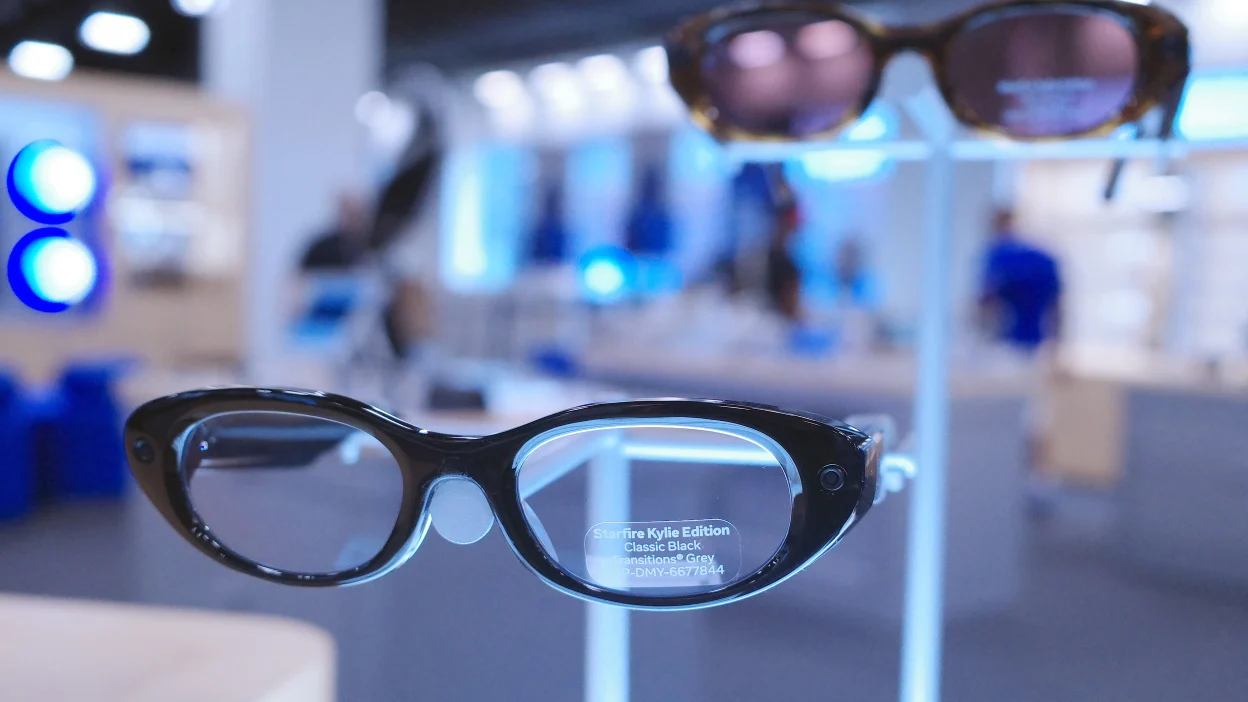
Meta’s Camera-Free AI Glasses Target Wearable Privacy Concerns

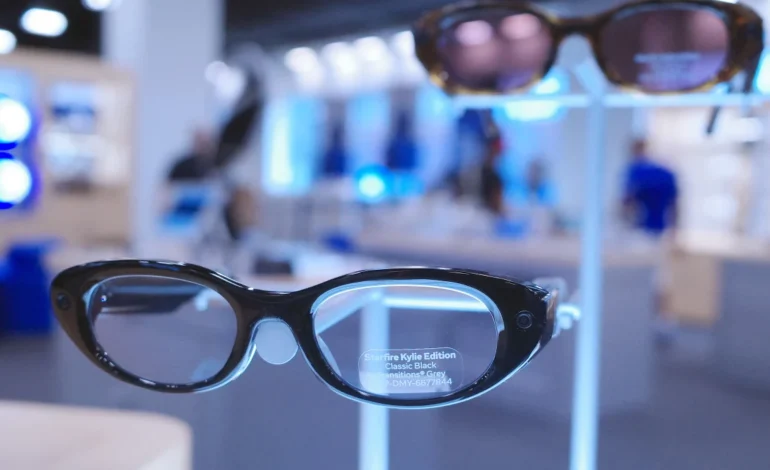
Meta has introduced a camera-free version of its popular smart glasses, attempting to solve the biggest obstacle facing facial wearables: public anxiety over being secretly recorded.
Announced at the company’s Connect 2026 conference, the new Ray-Ban Meta Audio glasses remove the camera lenses that have defined Meta’s wearable strategy for the past three years. Instead, the device functions as an audio-only wearable that connects users to the company’s AI voice assistant.
Developed in partnership with eyewear conglomerate EssilorLuxottica, the new model looks like traditional sunglasses or prescription frames but houses microphones and open-ear speakers. The device goes on sale October 13 starting at $349.
The decision to strip the camera from a major hardware release marks a shift in how technology companies are approaching the wearable market. Until now, the industry consensus was that smart glasses needed to “see” what the user sees to be useful. Meta is testing whether consumers want the convenience of an AI assistant on their face without the social friction that comes with wearing a camera in public.
The Privacy Pushback
The launch comes at a time of growing resistance to camera-equipped eyewear. While Meta’s previous smart glasses feature a white LED indicator light that illuminates when a photo or video is being captured, privacy advocates have repeatedly argued that the warning is too subtle.
The consequences of this design have already spilled into the real world. Earlier this year, New York banned camera-equipped smart glasses from courtrooms, and several businesses and private venues have instituted similar restrictions. Recent incidents, including one where university students combined Meta’s smart glasses with facial recognition software to identify strangers in real time, have further fueled public unease.
By removing the image sensor, Meta is offering a product that bypasses these restrictions. Users can wear the Ray-Ban Meta Audio glasses in secure facilities, sensitive workplace environments, or private events without violating recording policies.
Meta executives noted during the presentation that privacy was not the only factor driving the new design, pointing out that audio features have consistently been the most utilized function on their existing glasses. However, the timing of the release suggests the company is actively trying to insulate its hardware business from potential regulatory crackdowns on public surveillance.
Hardware and AI Integration
Without the image processor and camera modules, Meta managed to reduce the weight of the glasses to 43 grams. The company claims the internal battery supports up to 12 hours of use, with the included charging case providing an additional 48 hours of power.
The glasses come in two frame styles: the rectangular Burbank and the retro-inspired Clubmaster. Both support a full range of prescription lenses and will be available in 23 color and lens combinations.
The primary function of the device is to serve as a hands-free interface for Meta’s digital assistants, including its newer personalized AI agent known as Muse. Users can activate the microphone by saying a wake word or tapping a button on the frame, allowing them to ask questions, control smart home devices, or draft messages without pulling out a smartphone.
Because the glasses lack a camera, the AI cannot answer questions about the user’s immediate surroundings—a heavily promoted feature of Meta’s standard smart glasses. Instead, the functionality is closer to wearing a set of wireless earbuds, just integrated into standard eyewear.
The glasses also handle standard Bluetooth audio tasks. Wearers can listen to music, stream podcasts, and take phone calls through the directional speakers built into the temples.
The Broader Wearable Strategy
Meta is not abandoning camera-equipped glasses. The company will continue to sell its Ray-Ban Meta Gen 3 models, which feature a 12-megapixel camera and a six-microphone array, starting at $449.
The dual-product strategy mirrors the approach taken by audio companies that sell different tiers of headphones, but applied to face computers. Consumers who want to capture point-of-view video can purchase the standard model, while those who want voice assistance in environments where cameras are prohibited can opt for the audio-only version.
While removing the camera solves the visual privacy problem, it does not eliminate data concerns. The Ray-Ban Meta Audio glasses still contain active microphones capable of transmitting voice data. The privacy debate will likely shift from concerns about secret photography to questions regarding how companies handle, store, and process the audio captured by these always-listening wearables.
The success of the Ray-Ban Meta Audio will test a core assumption in Silicon Valley: whether a wearable device needs a screen or a camera to be useful, or if an intelligent voice assistant is enough to justify the price.