Smaller Scale, Bigger Stakes: How ‘A Knight of the Seven Kingdoms’ is Rewriting HBO’s Fantasy Playbook

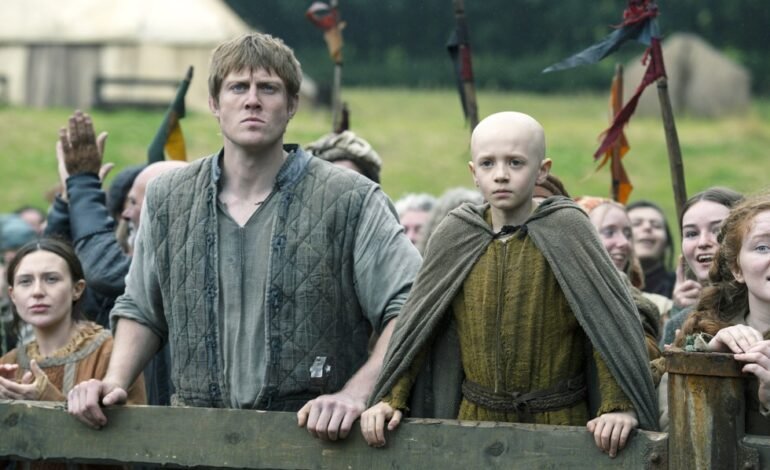
For the past two decades, prestige television has operated under a hyper-inflationary doctrine: bigger budget, higher pixel density, more massive world-ending stakes. HBO pioneered this approach with Game of Thrones, later raising the stakes with the dragon-heavy spectacle of House of the Dragon.
When the network announced it was adapting George R.R. Martin’s Tales of Dunk and Egg novellas, structural skepticism followed. How could a story about a single hedge knight and a young boy traveling between muddy regional fiefdoms captivate an audience accustomed to global apocalypse and massive CGI battles?
The response arrived with the premiere of the first season. By trading world-ending wars for intimate, performance-driven storytelling, the series didn’t just win over critics; it stabilized an audience fatigued by constant green-screen excess.
Now, with a knight of the seven kingdoms Season 2 greenlit for a 2027 release, the show faces a different operational challenge. It must scale its production to match a shifting landscape while protecting the distinct, smaller identity that made the initial episodes a critical success.
Shifting Focus: What Happens Next in Westeros?
The freshman season introduced viewers to Ser Duncan the Tall (Peter Claffey) and his young squire Egg (Dexter Sol Ansell), establishing their unique dynamic at the Ashford Meadow Tourney. The narrative structure focused heavily on individual honor, localized stakes, and a grounded portrayal of the smallfolk who actually inhabit Westeros.
Showrunner Ira Parker has confirmed that the upcoming batch of six episodes will adapt Martin’s second novella, The Sworn Sword. For viewers expecting an immediate escalation into the sprawling regional politics of King’s Landing, the creative team is consciously steering the narrative in the opposite direction.
Instead of broad political conflicts, the next chapter shifts to a localized, resource-driven dispute. Dunk and Egg enter the service of Ser Eustace Osgrey of Standfast, a minor landholder locked in a bitter border feud over water rights with Lady Rohanne Webber of Coldmoat. Set against the backdrop of a severe drought affecting the Reach, the story strips away the typical romanticism of high fantasy. It focuses squarely on resource scarcity, generational resentment, and how macro-level political collapses disrupt everyday survival on the margins of the realm.
| Narrative Phase | Core Location | Driving Conflict | Themes Explored |
| Season 1 | Ashford Meadow | Tourney politics and accidental royal confrontation | Chivalric ideals vs. systemic injustice |
| Season 2 | Standfast & Coldmoat | A localized border feud over a dammed river | Resource scarcity, drought, and post-war resentment |
The Logistical Reality of Filming a Drought
While the narrative scale remains focused on local events, the physical production of the sophomore season presents distinct engineering and geographical challenges. The first season utilized the lush, damp environments of Northern Ireland to represent the fertile grounds of the Reach. However, portraying a prolonged, devastating drought requires an entirely different environmental landscape.
To capture this arid setting, production moved from the soundstages of Belfast to the open terrain of Gran Canaria in the Canary Islands. This structural pivot highlights a growing challenge for modern streaming platforms: managing the balance between practical location shooting and escalating production overhead.
| Production Factor | Season 1 (The Hedge Knight) | Season 2 (The Sworn Sword) |
| Primary Location | Belfast, Northern Ireland | Gran Canaria, Canary Islands |
| Environmental Aesthetic | Lush, fertile meadows | Arid, drought-stricken terrain |
| Episode Count | 6 Episodes | 6 Episodes |
| Narrative Engine | Chivalric Tourney Politics | Resource Scarcity & Water Rights |
| Core Structural Risk | Establishing a smaller-scale tone | Managing high inflation & location costs |
Filming under intense, natural sunlight on rocky terrain reduces the reliance on heavy post-production lighting adjustments. However, it introduces complex logistical demands, including shifting crews, transport logistics, and managing local resource constraints. In an era where global inflation has significantly inflated per-minute production costs across the television industry, choosing to film on location rather than using LED volume screens or digital set extensions represents a deliberate investment in a practical, physical aesthetic.
Preserving the Human Element in Modern Fantasy
The success of this adaptation reflects a broader trend among viewing audiences: an increasing desire for grounded, character-led drama over overwhelming visual effects. For several years, streaming platforms assumed that retaining subscribers required matching theatrical-level CGI every week. This approach led to inflated production budgets and a repetitive visual style across the fantasy genre.
The story of Dunk and Egg challenges this paradigm by focusing on the mechanics of its world rather than its magical elements. In the upcoming season, magic is treated as a rumor rather than a regular plot device. The conflict revolves around a dam built to divert a river, making a simple wooden structure the central focus of the narrative.
| Production Strategy | High Visual Effects (VFX) Dominant | Grounded, Practical Focus |
| Franchise Example | House of the Dragon | A Knight of the Seven Kingdoms |
| Budget Priorities | Heavy CGI rendering, massive battle staging | On-location sets, physical stunt work |
| Narrative Engine | Continent-spanning geopolitics, civil war | Localized family disputes, personal honor |
| World Stakes | Existential threat to a royal dynasty | Immediate survival of smallfolk communities |
This structural constraint allows the writing to emphasize human behavior. Peter Claffey’s performance as Dunk subverts the typical fantasy archetype; he is not a flawless warrior or a secret heir to a throne, but a lowborn fighter trying to navigate an unyielding social hierarchy.
Dexter Sol Ansell’s portrayal of Egg adds depth by contrasting his hidden royal lineage with the hard realities of life on the road. The emotional weight of the show relies on this dynamic rather than the threat of dragon fire, proving that focused storytelling can match the impact of high-budget spectacle.
Distribution Strategy and the Evolution of Streaming
The scheduling of this project illustrates HBO’s long-term strategy for managing its most valuable intellectual property. By alternating years between House of the Dragon and A Knight of the Seven Kingdoms, the network establishes a consistent presence for the franchise without exhausting its audience.
| Calendar Year | Active Franchise Project | Production Phase | Role in Ecosystem |
| 2024 | House of the Dragon Season 2 | Broadcast / Post-Release Analysis | Tentpole anchor event |
| 2025 | Franchise Transition | Filming & Setup | Mid-cycle development gap |
| 2026 | A Knight of the Seven Kingdoms Season 1 | Broadcast Launch | Agile, narrative-shift experiment |
| 2027 | A Knight of the Seven Kingdoms Season 2 | In-Production (Canary Islands) | Subscriber retention driver |
This deliberate release cadence solves two distinct structural challenges for the network:
-
Mitigating Subscriber Churn: Major fantasy series require long post-production cycles, often leaving gaps of up to two years between seasons. Introducing a lighter, more agile production fills these empty windows, ensuring a steady stream of content that helps retain subscribers throughout the year.
-
Diversifying the Programming Portfolio: Maintaining multiple series with distinct tones ensures the franchise appeals to different segments of the audience. Viewers who find the complex, multi-character politics of the main series difficult to follow can engage with a more straightforward, episodic journey.
Long-Term Outlook: Can the Intimate Approach Last?
The primary challenge moving forward lies in the limited amount of source material available. George R.R. Martin has completed three novellas in this specific series: The Hedge Knight, The Sworn Sword, and The Mystery Knight. Showrunner Ira Parker has indicated a desire to expand the series into a multi-season arc that covers the characters’ entire lives, hinting that the television adaptation may eventually move beyond the published books.
Given past production challenges within this universe, executing a story that outpaces its source material carries inherent risks. However, the structured, episodic nature of Dunk and Egg’s journey makes it uniquely suited for expansion. Because their story functions as a travelogue through a fractured society, the creative team can introduce self-contained regional conflicts without needing to manage a massive, interconnected global plot.
Summary of Key Insights
As production continues in Gran Canaria, this adaptation represents a crucial experiment in the economics of modern television. It demonstrates that the path forward for major franchises doesn’t always require expanding the scope of the story; sometimes, the most effective strategy is to narrow the focus.
-
Revisiting Localized Stakes: Shifting the narrative conflict to a regional water dispute during a drought shows that minor, localized tensions can generate significant, dramatic momentum.
-
Prioritizing Practical Filmmaking: Moving production to the Canary Islands reflects a commitment to real, physical environments over digital sets, establishing a distinct visual identity for the show.
-
Optimizing the Release Schedule: Using a smaller, more agile production to fill the gaps between massive franchise releases helps stabilize subscriber engagement over the long term.
-
Emphasizing Character Over Spectacle: The positive reception to the show’s grounded style proves that audiences remain highly receptive to performance-driven drama over continuous visual effects.