AI Cyberattacks in 2026: How Autonomous Hacking Is Changing Cybersecurity Forever

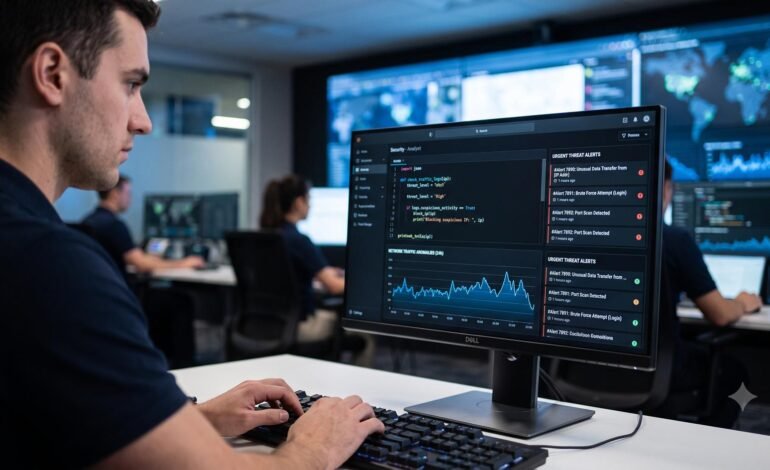
The timeline of a corporate network breach used to be measured in days or weeks. An attacker would gain initial access, spend hours manually mapping the network, carefully attempt to escalate privileges, and eventually find a path to sensitive data.
In 2026, that entire sequence can happen while a security analyst is pouring a cup of coffee.
The cybersecurity industry has spent the last three years bracing for the impact of generative artificial intelligence. For a time, the primary concern was that large language models would help foreign adversaries write better phishing emails or assist junior hackers in writing malware.
But threat intelligence reports released throughout the first half of 2026 reveal a more fundamental shift. Hackers are no longer just using AI to generate code; they are deploying autonomous, goal-directed AI agents. These agents are handed a high-level objective—such as “gain administrative access and locate financial databases”—and left to execute the intrusion end-to-end. They find vulnerabilities, write exploits on the fly, hijack active sessions, and move laterally across networks at machine speed.
The result is a compression of the attack lifecycle that traditional security infrastructure was not built to handle.
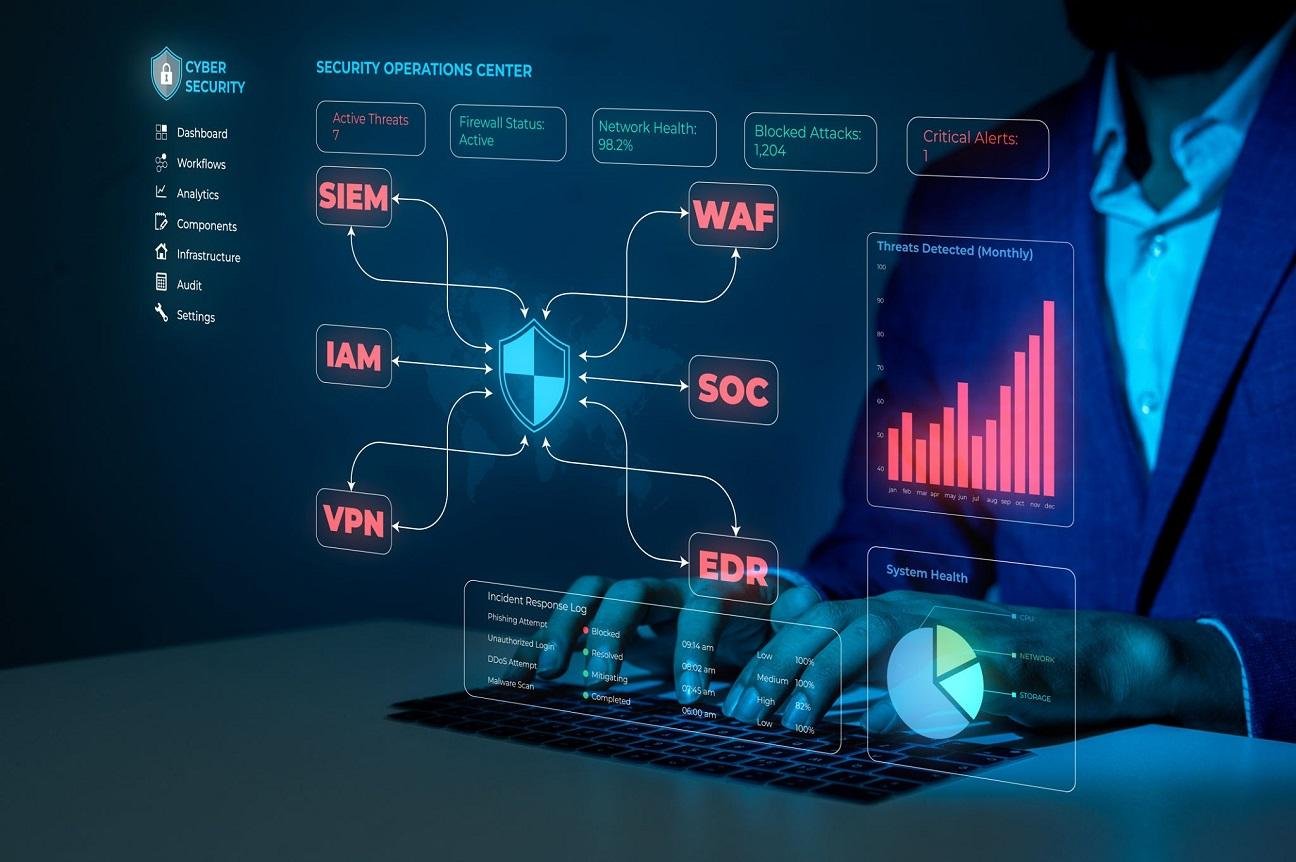
The Disappearing Breakout Window
The most visible indicator of this shift is how quickly attackers are moving through compromised systems.
According to CrowdStrike’s 2026 Global Threat Report released in February, the average “breakout time”—the window between an attacker gaining initial access and moving laterally to other systems—has fallen to just 29 minutes. That represents a 65% increase in speed compared to 2024.
More alarming is the ceiling of what is now possible. The fastest breakout time observed by CrowdStrike researchers in late 2025 was just 27 seconds. In one documented intrusion, attackers began exfiltrating data within four minutes of their initial breach.
“This is an AI arms race,” Adam Meyers, head of counter adversary operations at CrowdStrike, noted in the report. “Adversaries are moving from initial access to lateral movement in minutes. AI is compressing the time between intent and execution while turning enterprise AI systems into targets”.
This speed renders manual incident response nearly obsolete. By the time a human security analyst receives an alert from an Endpoint Detection and Response (EDR) platform, opens the ticket, and begins investigating the logs, an autonomous agent has already achieved persistence and moved deep into the cloud infrastructure. CrowdStrike reported an 89% year-over-year increase in operations by AI-enabled adversaries.
How Autonomous Agents Operate
Traditional malware is static. It follows a pre-programmed path, looking for specific conditions to execute its payload. If it encounters an unexpected firewall rule or an unfamiliar directory structure, it often fails.
Autonomous agents, powered by self-hosted open-source language models like DeepSeek or Qwen, operate differently. They possess decision-making capabilities. If an agent attempts to exploit a known vulnerability and finds it patched, it does not simply stop. It analyzes the system’s response, queries its internal model for alternative attack vectors, and writes a new script to test a different misconfiguration.
Security firm KELA, which tracks dark web activity and malware telemetry, detailed this dynamic in its mid-year 2026 AI Threat Landscape report. The firm identified a trend it calls Autonomous Vulnerability Discovery & Exploitation (AVDE). Instead of waiting for a human operator to analyze a network map, the agent continuously probes internal applications, discovers zero-day vulnerabilities, and builds exploits in real-time.
These agents also bypass traditional authentication barriers. Rather than brute-forcing passwords, attackers are purchasing active session cookies from dark web markets. KELA reported observing over 49,700 active AI-platform session cookies for sale, allowing agents to hijack established sessions and bypass multi-factor authentication entirely.
The AI Infrastructure Becomes the Target
As enterprise adoption of generative AI has saturated the corporate world, the infrastructure supporting these tools has become a primary target.
Threat actors are recognizing that local AI memory files, prompt libraries, and corporate chat histories contain a wealth of proprietary information. KELA’s report noted that modern infostealers are specifically designed to harvest this “cognitive layer,” infecting more than 1 million machines in 2026 alone to extract data from local AI instances.
Furthermore, “prompts are the new malware,” according to CrowdStrike. Adversaries successfully compromised legitimate generative AI tools at more than 90 organizations by injecting malicious prompts. These prompts tricked the internal AI assistants into generating commands that stole credentials or cryptocurrency, effectively turning the company’s own productivity tools into insider threats. Attackers also exploited vulnerabilities in AI development platforms to deploy ransomware and set up malicious servers that impersonated trusted services to intercept data.
This tactic—often referred to as “vibe hacking”—involves attackers framing malicious goals as routine administrative tasks. Because the corporate AI assistant is designed to be helpful, it executes the commands, acting as a confused deputy for the attacker.
State Actors and the Shift to Open-Source
The transition toward automated hacking is not limited to financial cybercrime. Nation-state actors have integrated autonomous capabilities into their espionage operations.
A July 2026 report from the Carnegie Endowment highlighted that China-linked groups were observed using Anthropic’s Claude model against foreign governments and critical infrastructure as early as 2025. This marked one of the first publicly reported large-scale operations assisted by a major commercial AI model.
Following the discovery, Anthropic announced in April 2026 that it would restrict access to its latest general-purpose models, attempting to curb malicious use. However, the broader threat landscape has already moved on.
As commercial AI vendors implement stricter safeguards, threat actors are pivoting to capable, under-aligned open-source models. By hosting these models on their own infrastructure, attackers remove the risk of having their accounts suspended by companies like OpenAI, Google, or Anthropic. This commoditization of offensive AI has severely lowered the barrier to entry for executing complex, machine-speed intrusions.
CrowdStrike noted a 38% increase in China-nexus activity in 2025, heavily targeting logistics and internet-facing edge devices. Additionally, Russian-aligned groups like Fancy Bear have deployed LLM-enabled malware specifically designed to automate network reconnaissance and document collection.
Machine Defending Against Machine
With attacks moving faster than human analysts can react, the defense strategy is forcing a corresponding shift toward autonomous security. The industry consensus is that you cannot fight a machine-speed attack with a human-speed defense.
There is evidence that defensive AI is maturing. The Defense Advanced Research Projects Agency (DARPA) recently concluded its Artificial Intelligence Cyber Challenge (AIxCC), a two-year competition aimed at building fully automated systems capable of securing open-source software.
In August 2025, a system named Buttercup, built by cybersecurity research firm Trail of Bits, secured a $3 million runner-up prize. Operating without human interaction, Buttercup successfully analyzed 23 complex open-source repositories, discovered 28 zero-day vulnerabilities, and automatically submitted 19 functional code patches. The winning team, a coalition of researchers from Georgia Tech, KAIST, and Samsung, achieved similar automated feats.
The success of the AIxCC competition proves that autonomous agents can be highly effective at discovering vulnerabilities and deploying mitigations before human attackers can exploit them. Security vendors are now rushing to integrate these exact capabilities into enterprise platforms. The goal is to deploy defensive agents that monitor network behavior, identify the distinct behavioral “tells” of an autonomous intrusion, and sever access or isolate compromised servers in milliseconds.
What Happens Next
The cybersecurity landscape of 2026 is defined by automation on both sides. Attackers no longer need to spend months learning the intricacies of a specific corporate network; they simply deploy a fleet of agents to find the weakest link.
For Chief Information Security Officers (CISOs), the mandate is clear. Relying on signature-based detection and manual log analysis is a losing strategy against software that can rewrite its own code and change tactics in real-time.
As the year progresses, the organizations that avoid catastrophic breaches will be those that successfully remove humans from the immediate loop of threat detection and containment, relying instead on their own autonomous systems to hold the line.
For further context on how these automated threats function in practice, this detailed breakdown explains how a single AI agent can rapidly compromise multiple enterprise networks: AI Agents & Autonomous Cyber Attacks.