AI Stocks Slide as Investors Reassess Tech Spending Plans


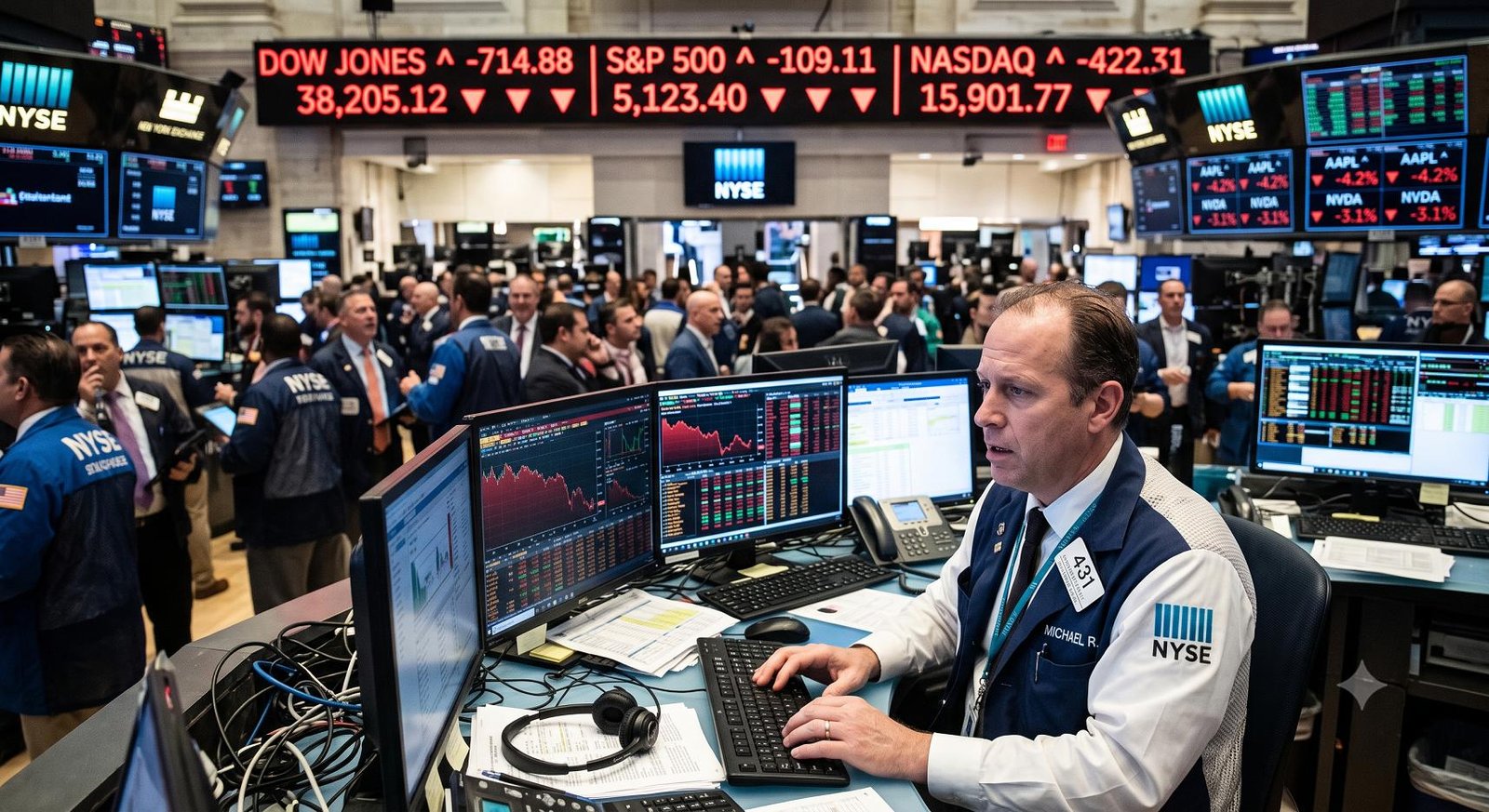
NEW YORK — Wall Street’s enthusiasm for artificial intelligence faced a reality check this week, as a sweeping selloff in technology stocks erased roughly $1.2 trillion in market value. Investors are increasingly questioning whether the massive capital expenditures required to build AI infrastructure will translate into near-term profits.
The tech-heavy Nasdaq Composite dropped sharply, extending a broader market retreat that began earlier in the week. The slide comes just days before several of the world’s largest technology companies are scheduled to report their quarterly earnings, setting up a critical test for the sustainability of the ongoing AI market rally.
Much of the anxiety stems from early earnings reports by Alphabet and Tesla, which shifted investor focus from revenue growth to profit margins and operating costs. The market reaction indicates a changing standard for tech valuations: investors want proof that the billions being poured into data centers, cloud infrastructure, and custom silicon are generating tangible returns.
Alphabet and Tesla Set a Cautious Tone
The latest market drop gathered momentum after Alphabet and Tesla released second-quarter results that fell short of Wall Street’s profitability expectations.
Alphabet reported strong overall revenue of $119.8 billion, a 24 percent increase from the previous year, with its Google Cloud division surging 82 percent. But the company’s stock fell more than 6 percent after management raised its 2026 capital expenditure guidance to a range of $195 billion to $205 billion, up from prior estimates. Alphabet spent $44.9 billion on capital expenditures in the second quarter alone—double what it spent during the same period last year.
Tesla suffered an even steeper decline, with shares dropping 14 percent after the electric vehicle maker reported a significant miss on adjusted earnings. While Tesla posted record second-quarter vehicle deliveries and a 25.5 percent increase in revenue, its operating expenses surged 47 percent to $4.35 billion. The company attributed the higher costs to investments in AI, its Cybercab project, and the Tesla Semi. Consequently, Tesla’s operating margin shrank to 1.4 percent from 4.1 percent a year earlier.

Semiconductor Stocks Feel the Pinch
The concern over spending limits quickly spilled over into the semiconductor industry, which has been the primary beneficiary of the AI hardware buildout.
Nvidia shares fell 5 percent during Monday trading, bringing the chipmaker’s market value down to $4.77 trillion. The decline was steep enough to allow Apple to temporarily reclaim the title of the world’s most valuable publicly traded company. Other major semiconductor players, including ASML in Europe and Texas Instruments in the US, also traded lower despite generally positive revenue forecasts.
The hardware selloff was especially severe in Asian markets. SK Hynix, the world’s second-largest memory-chip maker and a key supplier of high-bandwidth memory for AI hardware, saw its stock plunge nearly 20 percent before closing roughly 10 percent lower.
The drop occurred even though SK Hynix reported a record operating profit of 60.5 trillion won ($42 billion), a 557 percent increase compared to the same period last year. Investors focused instead on the fact that the company narrowly missed a forecasted 64 trillion won operating profit, sparking fears that the memory chip market may have peaked.
Samsung Electronics, SK Hynix’s larger rival, fell 5.2 percent in Seoul. In Tokyo, semiconductor groups including Tokyo Electron and Murata Manufacturing suffered steep declines, pushing the Nikkei 225 down 1.5 percent.
Growing Competition and Supply Fears
Executives at major hardware firms remain confident in the long-term demand for AI infrastructure. SK Hynix leadership told investors this week that cloud service providers are expected to continue increasing their AI spending well past 2027. They also noted that long-term supply agreements, some running for five years, should help shield the company from the memory market’s traditional volatility.
However, the hardware sector is facing new pressures from Chinese competitors. Chinese DRAM manufacturer CXMT recently raised $8.5 billion in a massive Shanghai listing, increasing anxiety among investors that a flood of new supply could eventually push memory prices down.
Analysts note that the combination of high valuations and supply concerns leaves hardware stocks highly sensitive to any sign of slowing demand. Market estimates currently suggest that Alphabet, Microsoft, Amazon, and Meta will spend a combined $724 billion on capital expenditures this year, and nearly $950 billion in 2027. If any of these companies decide to scale back those plans to protect their profit margins, the impact on semiconductor revenues could be substantial.
Macroeconomic Headwinds Complicate the Picture
The tech sector’s internal spending debate is occurring against a backdrop of increasing macroeconomic instability. Rising geopolitical tensions have pushed energy prices higher, threatening to reignite inflation just as central banks consider interest rate cuts.
Brent crude oil futures settled above $100 a barrel this week for the first time since May, while US oil futures crossed the $92 mark. The price spike followed a series of military actions in the Middle East, including US airstrikes on Iran and Houthi attacks on Saudi oil tankers in the Red Sea.
Higher oil prices routinely drive up transportation and manufacturing costs, complicating the inflation outlook for the US Federal Reserve. A renewed bout of inflation could force the Fed to hold interest rates higher for longer, a scenario that typically hurts growth stocks by increasing borrowing costs and reducing the present value of future earnings.
Despite the inflation risks tied to energy markets, traders are currently pricing in a 64 percent probability that the Federal Reserve will hold interest rates steady at its upcoming policy meeting.
For now, Wall Street’s attention remains fixed on the upcoming Big Tech earnings reports. Investors will be dissecting statements from Meta, Microsoft, and Amazon for any indication that the rapid pace of AI infrastructure investment is either slowing down or finally translating into measurable software and service revenue.