Microsoft Quietly Drops the “Copilot+ PC” Brand for New Windows Hardware

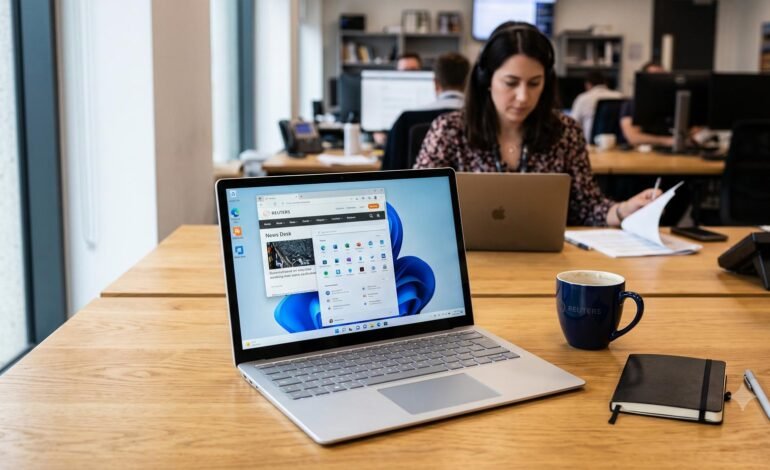
Microsoft is quietly abandoning the “Copilot+ PC” brand it introduced just two and a half years ago to define a new generation of artificial intelligence hardware.
The label is noticeably absent from Microsoft’s latest 2026 Surface announcements. The newly refreshed 12-inch Surface Pro and 13-inch Surface Laptop—powered by Qualcomm’s new Snapdragon X2 Plus processors—continue to meet the strict hardware requirements for local AI processing. However, the company has deliberately stopped using the Copilot+ PC badge to describe them.
Brett Ostrum, Microsoft’s Corporate Vice President of Surface, confirmed the shift in marketing strategy when asked about the omission. Speaking to Windows Central, Ostrum stated flatly that the new systems “are not called Copilot+ PCs,” though he clarified that they still support all the associated local computing features.
The shift signals a broader industry consensus. Qualcomm’s Senior Vice President of Compute and Gaming, Kedar Kondap, echoed the sentiment, noting that upcoming computers offering similar local AI experiences would “probably” avoid using the Copilot+ branding moving forward.
Why the Label Failed to Stick
Microsoft introduced the Copilot+ PC category in May 2024 to create a clear dividing line in the Windows hardware market. To earn the badge, laptops needed a neural processing unit (NPU) capable of at least 40 trillion operations per second (TOPS) and a minimum of 16GB of RAM. The goal was to help consumers easily identify machines capable of running advanced AI models directly on the device, rather than relying on cloud servers.
The brand quickly accumulated baggage. The flagship feature meant to sell Copilot+ PCs—a screen-recording tool called Windows Recall—faced immediate and severe backlash over privacy and security concerns. Microsoft was forced to pull the feature just before its initial launch, delay it for over a year, and ultimately redesign it as an opt-in service requiring Windows Hello authentication.
Beyond the Recall controversy, the rapid pace of hardware development made the specialized branding redundant. By 2026, nearly every new mid-range and premium Windows laptop includes an NPU that meets the original Copilot+ specification.
Hardware partners also pushed back against the Microsoft-centric naming convention. When Nvidia introduced its ambitious RTX Spark platform for AI-focused laptops, it opted to promote its own hardware identity rather than adopt the Copilot+ PC badge. For manufacturers, emphasizing the specific capabilities of their own chips has become more important than carrying a generalized Windows label.
A Shift to “AI on the Edge”
Instead of forcing a consumer badge, Microsoft is now framing its AI efforts around where the processing happens.
During its recent Surface launch, the company emphasized “AI on the edge”—a computing model that dynamically shifts workloads between local hardware and cloud servers depending on the required processing power. According to Microsoft, the latest Snapdragon X2-based PCs deliver up to 95% faster local AI inference compared to the previous generation.
This hybrid approach allows developers to build software that runs small language models directly on the device for speed and privacy, while outsourcing heavy computing tasks to the cloud only when necessary. At its Build 2026 conference, Microsoft showcased this direction by introducing small language models integrated directly into the Edge browser, designed to run efficiently on standard CPUs and GPUs without strictly requiring a high-end NPU.
What This Means for Windows Users
For consumers, the end of the Copilot+ PC brand actually simplifies the buying process.
The underlying technology is not disappearing. Windows 11 will continue to support local AI features, and Microsoft’s hardware requirements for running those features remain in place. However, buyers will no longer need to look for a specific Microsoft marketing sticker to guarantee performance.
Instead, AI processing hardware is simply becoming a standard component of a modern computer, much like a Wi-Fi card or a solid-state drive. As NPUs become ubiquitous, Microsoft’s decision to drop the Copilot+ moniker acknowledges a simple reality: when every PC is an AI PC, the distinction no longer matters.