Top Trending AI Tools in 2026: What Developers, Creatives, and Enterprises Are Actually Using


Three years ago, the tech industry was obsessed with the novelty of generative AI. We spent hours asking chatbots to write sea shanties and generate surreal images of astronauts riding horses. Fast forward to 2026, and the novelty has entirely worn off. We have entered the era of hyper-specialized utility.
If you are still relying on a single, generalized chatbot for every task in your workflow, you are falling behind. The top trending AI tools this year are not just doing everything passably well; they are doing one specific thing better than a human can.
Recent market data from February 2026 shows a massive stabilization in the AI sector. While OpenAI’s ChatGPT maintains a staggering 57% market share with 5.5 billion monthly visits, the real story is happening in the margins. Developers are migrating en masse to AI-native IDEs. Researchers are abandoning traditional search engines. Creative directors are building entire pipelines around commercially safe image generators.
Here is a definitive look at the AI tools dominating professional workflows in 2026, separated by the industries they are actively transforming.
The Foundation Models: The General-Purpose Heavyweights
The “Big Three” continue to battle for everyday supremacy, but their distinct personalities and strengths have never been more apparent.
1. ChatGPT (OpenAI)
ChatGPT remains the undisputed default. With its latest iterations leaning heavily into deep reasoning, the platform has transitioned from a simple conversational agent into a robust analytical engine. It handles complex, multi-step logic problems without the hallucination rates that plagued earlier models. For general brainstorming, content outlining, and everyday problem-solving, it remains the most versatile tool on the market.
2. Claude (Anthropic)
Ask any professional writer or senior engineer what they use, and the answer is increasingly Claude. Anthropic’s release of the Claude 4.6 family (Opus for high-stakes logic, Sonnet for speed and coding) cemented its reputation as the intellectual heavyweight of the group. Its massive context window allows users to upload entire books, codebases, or financial ledgers, and Claude processes them without losing the thread. It writes with a noticeably more human, nuanced tone than its competitors.
3. Gemini (Google)
Gemini’s true power in 2026 isn’t in its standalone chat interface, but in its deep integration within the Google Workspace ecosystem. Gemini 3.0 acts as an invisible assistant that can parse your inbox, summarize lengthy Google Docs, and pull data directly from your spreadsheets to build presentations. It is the ultimate administrative shortcut.
The Developer Revolution: AI-Native Coding
Perhaps no demographic has adopted AI as aggressively as software developers. We have moved past basic code-completion plugins; in 2026, we are working alongside autonomous coding agents.
4. Cursor
If there is a breakout star of the last 18 months, it is Cursor. This AI-native IDE, built on a fork of VS Code, recently hit a staggering $2 billion in annual recurring revenue. Why? Because it understands your entire codebase.
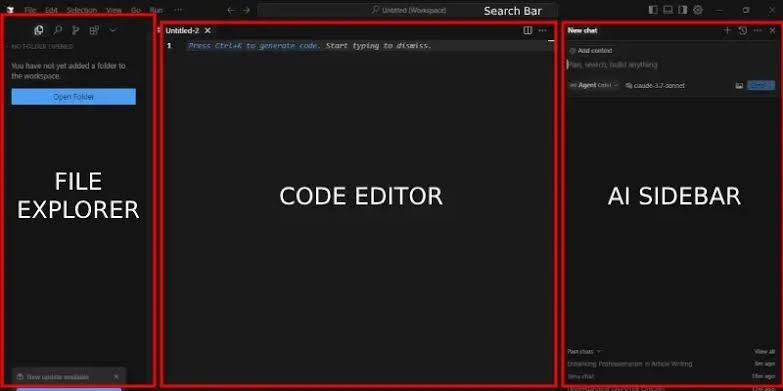
Instead of just suggesting the next line of code, Cursor acts as a senior pair programmer. You can ask it to refactor a complex component, and it will edit multiple files simultaneously, understanding the dependencies across your entire project. Its Agent Mode allows developers to outline a feature in plain English and watch the IDE write, test, and implement the code in real-time.
5. GitHub Copilot & Claude Code
While Cursor dominates the IDE space, GitHub Copilot remains heavily entrenched in enterprise environments due to Microsoft’s aggressive integration and strict security compliance. Meanwhile, Claude Code is leading the charge in autonomous terminal agents, scoring exceptionally high on SWE-bench benchmarks for resolving complex, multi-step engineering tickets without human intervention.
The End of Traditional Search: Research & Synthesis
The way knowledge workers find and synthesize information has fundamentally broken away from the traditional “ten blue links” search engine model.
6. Perplexity AI
Perplexity has effectively replaced Google for a rapidly growing segment of analysts, journalists, and students. Currently processing nearly 800 million queries a month, Perplexity functions as a conversational answer engine. Its core differentiator is strict citation. Every claim it makes is backed by a linked footnote to a live web source, making it an indispensable tool for fact-checking and deep-dive research.
7. Google NotebookLM
While Perplexity searches the web, NotebookLM searches your brain. This tool has become the gold standard for internal document analysis.
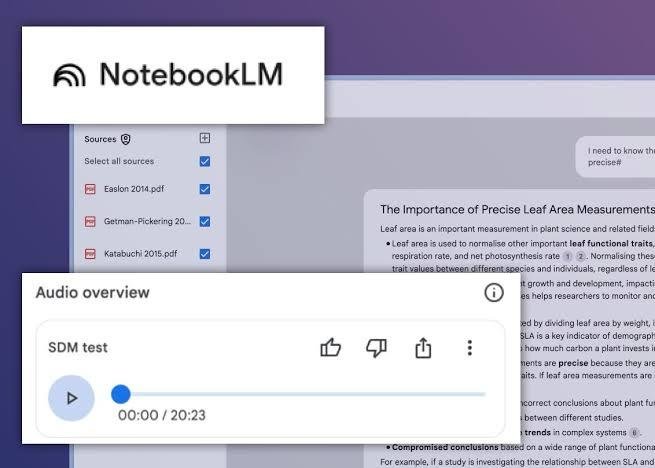
You upload a mix of PDFs, interview transcripts, and research notes, and NotebookLM becomes a localized expert on exactly that data. It refuses to pull outside information, eliminating the risk of hallucination. Its breakout feature—the ability to generate a highly realistic, two-person podcast discussing your uploaded documents—has revolutionized how professionals consume dry reports and study materials.
The Creative Suite: Visuals, Video, and Audio
Generative media has matured from making meme fodder to producing production-ready, commercial assets.
8. Midjourney V7
For sheer aesthetic quality, Midjourney remains untouched. Version 7 has largely solved the anatomical quirks of previous generations and offers unprecedented control over lighting, texture, and cinematic composition. It is the go-to tool for concept artists, game designers, and creative agencies.

9. Adobe Firefly
While Midjourney wins on artistry, Adobe Firefly wins in the boardroom. Because Firefly was trained exclusively on licensed stock imagery and public domain content, it is entirely free of the copyright ambiguity that haunts other platforms. For commercial advertising, client work, and global brand campaigns, Firefly is the only enterprise-approved option.
10. Veo 3.1 & Kling AI
The video generation space is moving at breakneck speed. Google’s Veo 3.1 leads in hyper-realistic, audio-visual generation, allowing creators to produce cinematic B-roll in minutes. Kling AI has carved out a massive user base by excelling at character consistency across multiple shots—the holy grail for AI filmmakers trying to stitch together cohesive narratives.
11. ElevenLabs
Audio generation crossed the uncanny valley a year ago, and ElevenLabs drove the vehicle. Offering hyper-realistic voice cloning, emotion control, and multi-language support, it is now the backbone infrastructure for audiobook narration, automated customer service, and localized video dubbing.
Market Breakdown: The 2026 AI Stack
To understand how these tools fit together, we can look at the current ideal tech stack for a modern digital worker.
| Workflow Category | Market Leader | Best Runner-Up | Primary Value Proposition |
| General Reasoning | ChatGPT | Claude | Versatile problem-solving and drafting. |
| Software Development | Cursor | GitHub Copilot | Codebase-aware, multi-file refactoring. |
| Web Research | Perplexity AI | Gemini | Instant, citation-backed answers. |
| Document Synthesis | NotebookLM | Claude | Hallucination-free analysis of user uploads. |
| Commercial Images | Adobe Firefly | Canva Magic | Copyright-safe, brand-ready visuals. |
| Voice & Audio | ElevenLabs | Murf | Indistinguishable-from-human speech synthesis. |
| Business Video | Synthesia | HeyGen | AI avatar presentations from text scripts. |
Challenges, Opportunities, and the Road Ahead
Despite the incredible utility of these top trending AI tools, the ecosystem in 2026 is not without its friction points.
The Challenge of AI Fatigue: Enterprise buyers are experiencing subscription fatigue. Paying $20 a month for ChatGPT, another $20 for Cursor, $15 for Midjourney, and $20 for Perplexity adds up quickly. We are beginning to see a push toward consolidation, where platforms like Microsoft Copilot and Google Workspace attempt to bundle these capabilities, even if the native versions aren’t quite as powerful as the standalone apps.
Data Privacy and Local Models: As companies feed highly sensitive financial and proprietary data into these tools, privacy remains a paramount concern. This has driven a massive surge in local, open-source models. Tools like Super Whisper (for local transcription) and enterprise-grade local LLM deployments allow companies to harness AI without transmitting a single byte of data to a third-party server.
The Rise of Agentic AI: The most significant trend of late 2026 is the shift from assistive AI to agentic AI. We are moving away from chatting with a bot to give it instructions, and moving toward defining an end goal and letting the AI string together the necessary tools to achieve it. Automation platforms like n8n and Zapier AI are bridging this gap, allowing an email trigger to automatically spin up a research agent, draft a report, and drop it into a Slack channel without human oversight.
The Final Verdict
The defining characteristic of the top trending AI tools this year is integration. The winners are no longer the models with the highest parameter counts; they are the platforms that fit most seamlessly into how people already work.
Cursor won by embedding itself in the developer’s IDE. NotebookLM won by accepting the PDFs students and lawyers already have. Gemini is winning by living inside the Gmail inbox.
If you are looking to upgrade your tech stack this year, the strategy is simple: audit your daily friction points. If you spend hours reading, get NotebookLM. If you write code, migrate to Cursor. If you are lost in search engine spam, switch to Perplexity. In 2026, AI is no longer a destination you visit in a separate browser tab; it is the infrastructure running quietly beneath everything you do.