Microsoft’s AI Expansion Faces a New Challenge: Power and Data Centers

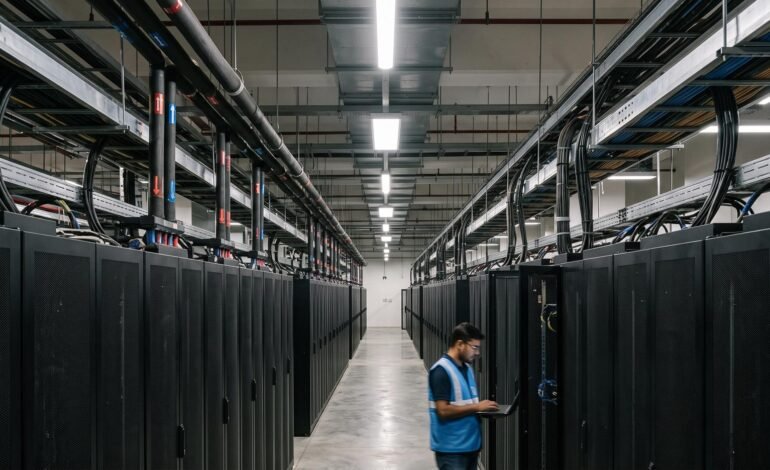
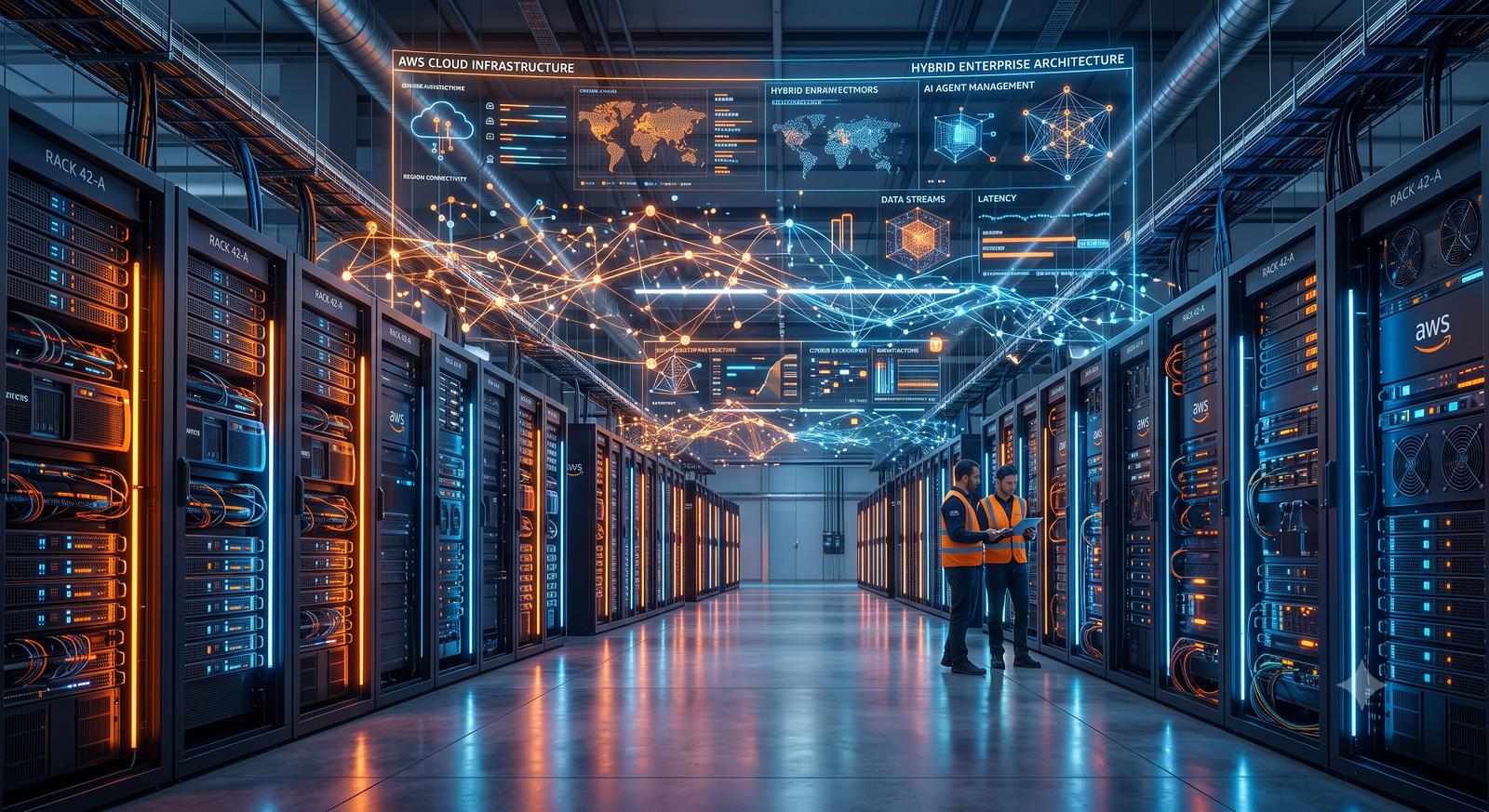
Microsoft’s massive push to build the infrastructure for the artificial intelligence era is colliding with a physical reality: the company cannot find enough electricity or build data centers fast enough to deploy the hardware it already owns.
For the past two years, the technology industry has largely blamed a shortage of advanced semiconductors for holding back AI development. But the primary bottleneck for Microsoft and other cloud providers has shifted from silicon to the electrical grid.
According to internal documents reviewed in a recent Guardian investigation, there is an apparent discrepancy between the AI capacity Microsoft says it has added and the number of chips actively running inside its facilities. The investigation suggests that while the company holds thousands of advanced AI chips in inventory, data center construction has fallen behind schedule, leaving the hardware without a facility to operate in.
A Shift From Silicon to Substation
Microsoft Chief Executive Satya Nadella confirmed the nature of the delay in a recent interview, acknowledging that the company’s deployment challenges stem from power availability rather than a lack of processors.
“The biggest issue we are now having is not a compute glut, but it’s power—it’s sort of the ability to get the builds done fast enough close to power,” Nadella said. “If you can’t do that, you may actually have a bunch of chips sitting in inventory that I can’t plug in”.
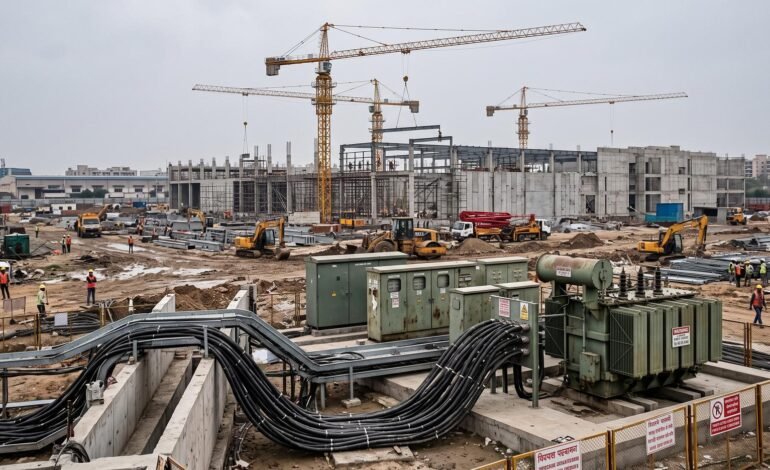
The shift represents a reversal for an industry that spent the last few years aggressively securing orders for Nvidia graphics processing units (GPUs). Now, wait times for grid connections, high-density power transformers, and liquid-cooling systems have stretched data center deployment timelines from a typical six months to 18 months or more.
The gap between announced capacity and operational reality is visible in Microsoft’s largest U.S. AI project, a massive development spanning Wisconsin and Georgia known as Fairwater. Nadella noted in April that the Wisconsin site was coming online, but satellite imagery analyzed by Epoch AI indicated only a fraction of it was operational. By May, the company conceded to local media that the site was not fully live yet. While securing a gigawatt of power on paper within a quarter is possible, bringing that capacity into service on the same timeline is a different operational challenge.
Research from management consulting firm Bain & Company highlights that electric utility connection delays, which can take up to five years, are now the most significant obstacle for data center growth.
The Revenue Gap and Infrastructure Reality
The delays are occurring as Microsoft faces soaring demand for its cloud and AI services. Microsoft’s Azure revenue grew 40% year-over-year in its most recent quarter, with its AI business reaching a $37 billion annual run rate. Commercial remaining performance obligations—a metric indicating the backlog of contracted cloud services awaiting delivery—recently surged to $627 billion.
Yet the company is struggling to bring physical capacity online fast enough to satisfy its contracted backlog. Chief Financial Officer Amy Hood summarized the situation during an earnings call, stating: “I thought we were going to catch up. We are not. Demand is increasing”.
This capacity gap forces a difficult financial balancing act. Microsoft expects its capital expenditures to exceed $50 billion in the first quarter of fiscal 2026. However, keeping inventory in warehouses while waiting for data center completion means expensive compute assets are depreciating without generating revenue.
To mitigate the self-build slowdown, Microsoft has shifted part of its strategy toward leasing ready-built capacity from third-party data center operators. The company spent over $11 billion in the first quarter of 2026 to lease available space and maintain flexibility.
The broader construction industry is also struggling to keep up with the tech sector’s ambitions. Data center projects in the U.S. face a severe labor shortage, with estimates suggesting a deficit of nearly 439,000 construction workers. These labor shortages are currently causing delays at up to 40% of AI data center construction sites nationwide.
The Custom Silicon Push
Beyond data center construction, Microsoft is also attempting to lower its reliance on Nvidia by developing its own custom silicon. The company rolled out its Maia 200 AI accelerator in early 2026, and expects the follow-up Maia 300 later this year. Microsoft is currently negotiating with Taiwan Semiconductor Manufacturing Co. (TSMC) for the production of more than 300,000 next-generation AI chips targeted for delivery in 2027.
However, custom chip production at Microsoft is lagging what Amazon and Google have achieved with their own in-house hardware programs. Amazon’s Trainium chips and Google’s Tensor Processing Units (TPUs) have been running production workloads inside their respective cloud platforms for years.
Regardless of who manufactures the chips, custom silicon faces the same physical infrastructure limits as Nvidia processors. A chip cannot process data without a specialized cooling system and an active high-voltage grid connection.
What Happens Next
The physical constraints on Microsoft’s infrastructure raise questions about whether the broader tech industry can sustain its current pace of growth. If cloud providers cannot expand their physical footprint fast enough, enterprise customers may eventually face limited availability, longer wait times, or throttled performance for the AI-powered services they pay for.
For now, the technology sector’s ability to expand artificial intelligence hinges less on how many chips can be manufactured in Taiwan, and more on how quickly local utility companies can upgrade regional power grids.