Nvidia’s AI Data Centers Face a Looming Power Bottleneck

For the past three years, the dominant narrative in the artificial intelligence industry centered on supply chains and silicon shortages. Companies raced to secure allocations of Nvidia’s highly coveted graphics processing units (GPUs) to train and run large language models. Now, as supply constraints ease and hardware becomes more readily available, a secondary and far more rigid barrier has emerged: electricity.
The primary constraint on AI infrastructure expansion has shifted from capital and technology to the physical limitations of public electrical grids. Utilities are struggling to deliver sufficient, reliable power to the sprawling facilities required to host the next generation of AI workloads.
This operational bottleneck is forcing a strategic pivot across the technology industry. Major cloud providers and data center operators are moving away from sole reliance on grid-supplied electricity, directing their capital toward dedicated, on-site power generation solutions and reevaluating their geographic expansion plans.
The Blackwell Reality Check
The shift in infrastructure requirements is largely driven by the physical characteristics of modern AI hardware. Nvidia’s flagship Blackwell architecture, which is now entering volume deployment, effectively ends the era of the traditional air-cooled data center.
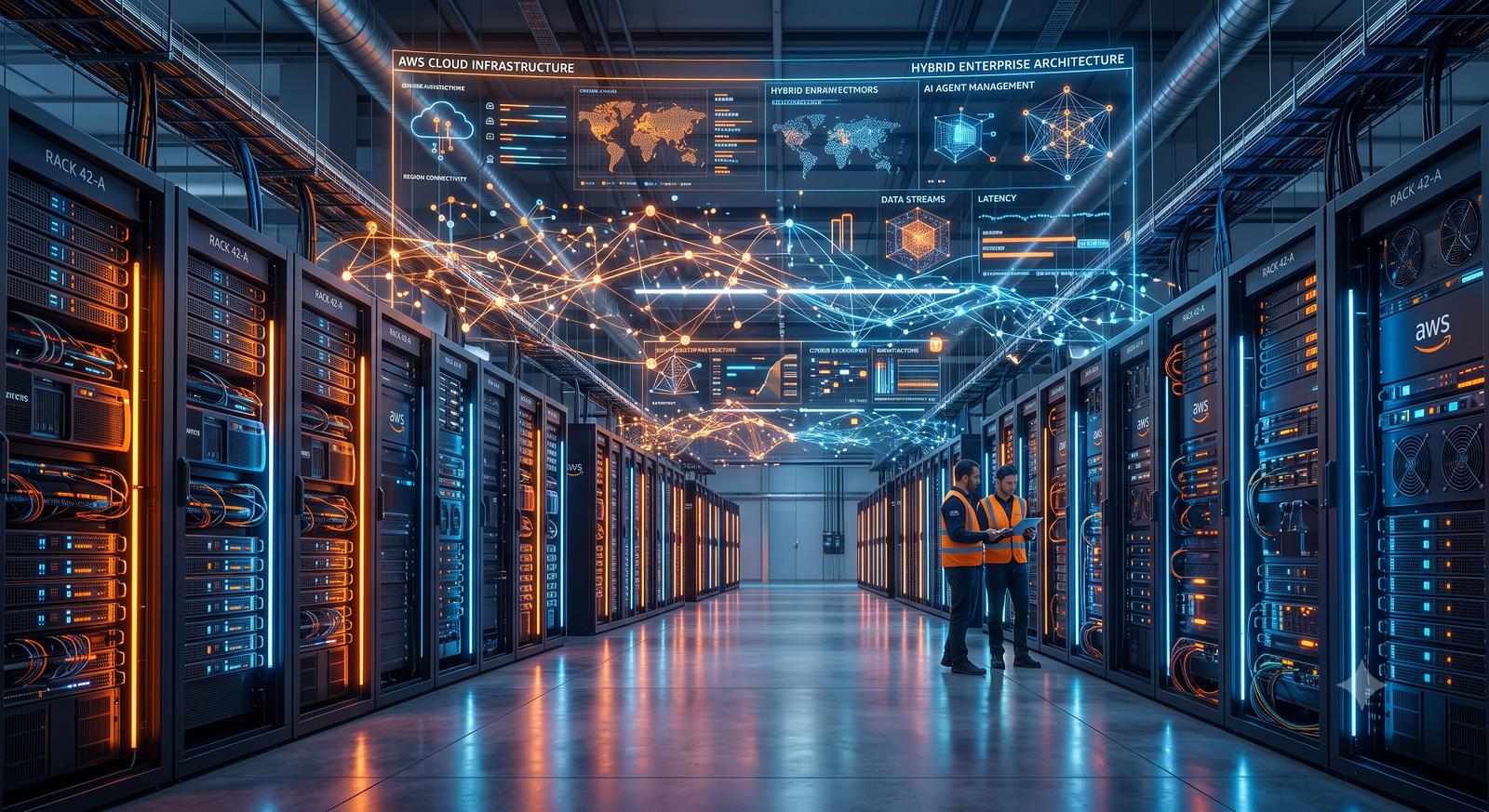
The company’s premier system, the GB200 NVL72, packs 72 Blackwell GPUs and 36 Grace CPUs into a single rack. This configuration draws a nominal 120 kilowatts (kW) of power, with observed loads reaching up to 132 kW during intensive processing. By comparison, a standard enterprise data center rack typically operates on just 5 to 15 kW.
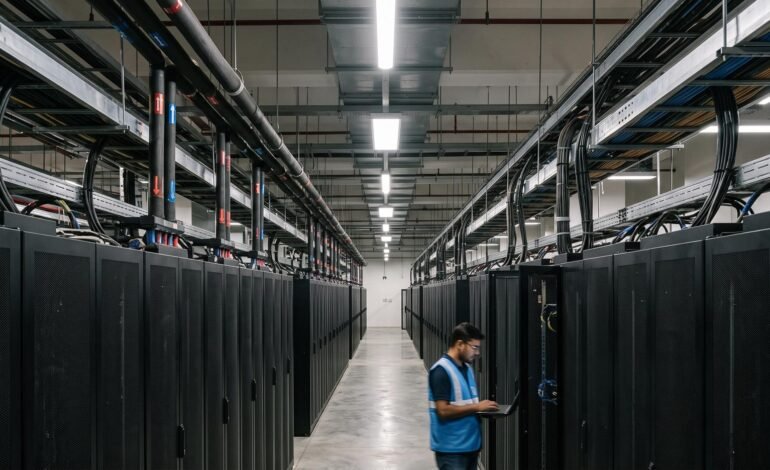
This represents a severe density jump that most existing enterprise facilities are not equipped to handle. Beyond electricity, the racks introduce immense structural and thermal challenges. A fully configured GB200 NVL72 rack weighs roughly 1.36 metric tons, surpassing the point-load ratings of standard raised data center floors. The systems also require direct-to-chip liquid cooling by design; facilities lacking facility-scale coolant distribution units and water loops are fundamentally unable to host the hardware.
Consequently, older data centers cannot be easily retrofitted to accommodate these workloads. The industry is being forced to construct purpose-built infrastructure from the ground up, escalating both the capital required and the time needed to bring new computing capacity online.
Financing Solves the Silicon Problem, Not the Power Problem
The financial sector has recognized the immense capital requirements of building these specialized facilities. Nvidia recently partnered with several major financial firms in a push to mobilize a targeted $500 billion for AI infrastructure financing.
This initiative is designed to treat AI compute as an underwritable asset with usage-linked revenue, effectively lowering the cost of capital and allowing data center operators to move heavy GPU expenditures off their immediate balance sheets. The program includes residual-value support from Nvidia, capped at 25% for individual projects, which gives lenders a mechanism to price GPU depreciation.
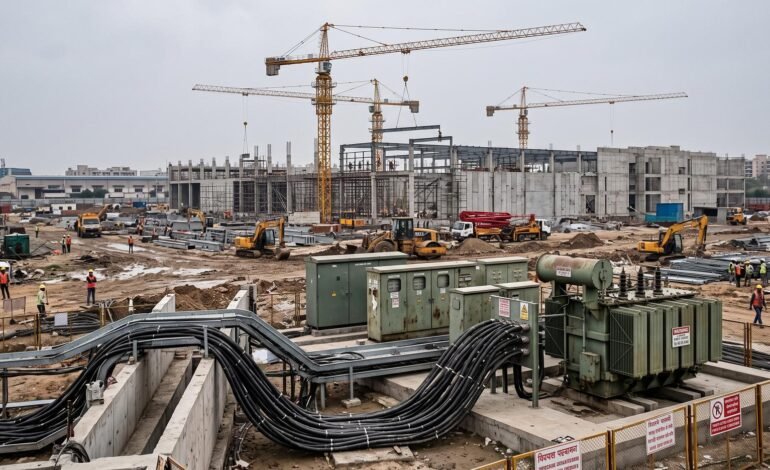
However, analysts note that while easier access to capital can fund hardware purchases, it does not resolve the physical realities of grid interconnection queues, transformer lead times, or municipal permitting. The availability of long-duration financing actually increases the premium on “power-ready” sites. Because the servers can now be financed more efficiently, the land and the electrical infrastructure required to turn those servers on have become the most valuable assets in the supply chain.
If a company has a warehouse full of financed GB200 racks but lacks a substation capable of delivering hundreds of megawatts of power, the hardware remains dormant.
The Grid Interconnection Logjam
The scale of power required by these new facilities is staggering. The era of 50-megawatt hyperscale data centers is giving way to gigawatt-scale deployments. A one-gigawatt (1GW) data center consumes approximately 8.76 terawatt-hours (TWh) annually and requires access to massive transmission infrastructure.
Projections regarding the aggregate impact of these facilities underscore the strain on public utilities. According to the International Energy Agency (IEA), electricity demand from data centers worldwide is projected to more than double by 2030, reaching around 945 TWh. To put that figure in context, it slightly exceeds the entire annual electricity consumption of Japan.
The IEA notes that AI is the most significant driver of this increase, with electricity demand from AI-optimized data centers expected to more than quadruple by the end of the decade. The impact is highly localized. In the United States, data center energy growth is expected to account for nearly half of all electricity demand growth through 2030. The IEA projects that by 2030, the U.S. economy will consume more electricity for data processing than for the production of all energy-intensive goods, including steel, aluminum, cement, and chemicals combined.
This localized demand has created severe grid saturation in primary data center hubs. Interconnection queues—the wait time for a new facility to be approved and connected to the regional transmission grid—can now exceed three years in high-demand areas. Wholesale electricity costs near established U.S. data center clusters have spiked as regional utilities scramble to procure enough generation capacity to meet the projected load.
A Redefined Data Center Model
Faced with grid delays that threaten their operational timelines, cloud providers are changing their approach to energy procurement. Between 2021 and 2024, the primary strategy was to improve Power Usage Effectiveness (PUE) and purchase renewable energy credits to offset consumption. Today, the strategy is shifting toward primary, “behind-the-meter” power generation.
Major technology companies are increasingly looking to co-locate new AI factories directly adjacent to power plants or invest in on-site generation. This has sparked renewed interest in nuclear power and natural gas as baseload energy sources that can run continuously, unlike intermittent renewables such as wind and solar. Recent agreements between technology firms and energy producers indicate a willingness to fund the restart of dormant nuclear reactors or finance the construction of dedicated power generation facilities just to bypass grid interconnection delays.
Nvidia itself has adapted to this reality. The company’s data center architectures now integrate power and grid integration into the core design, creating flexible AI factories that can adapt their computing demand based on real-time grid conditions.
What Happens Next
The transition from a silicon bottleneck to a power bottleneck fundamentally alters the timeline and economics of artificial intelligence expansion. Building a gigawatt-scale data center is no longer a standard commercial real estate project; it is the construction of a regional energy system.
Regulatory scrutiny is expected to follow. As data centers consume a larger share of municipal and regional power output, public utility commissions and local governments are beginning to weigh the economic benefits of hosting AI infrastructure against the potential for higher electricity rates for residential and industrial consumers.
In the short term, companies that have already secured access to significant power capacity will hold a distinct structural advantage over competitors who are still navigating the utility queues. The competition for AI dominance has left the semiconductor fabrication plant and entered the electrical substation.