Beats Debuts Lightweight, Customizable Headphones

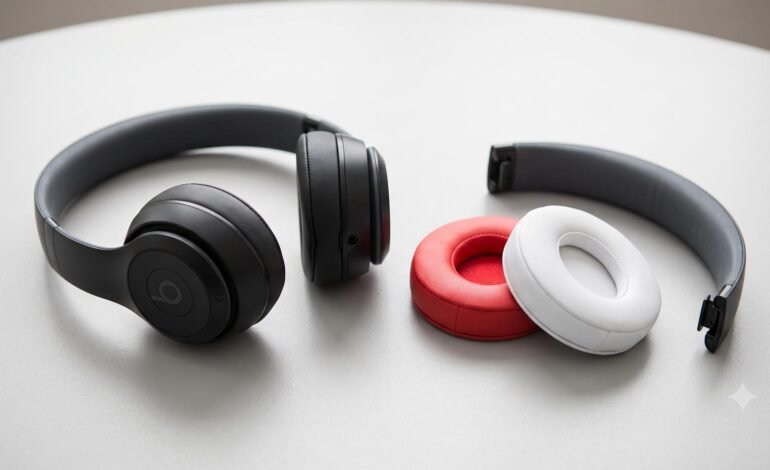
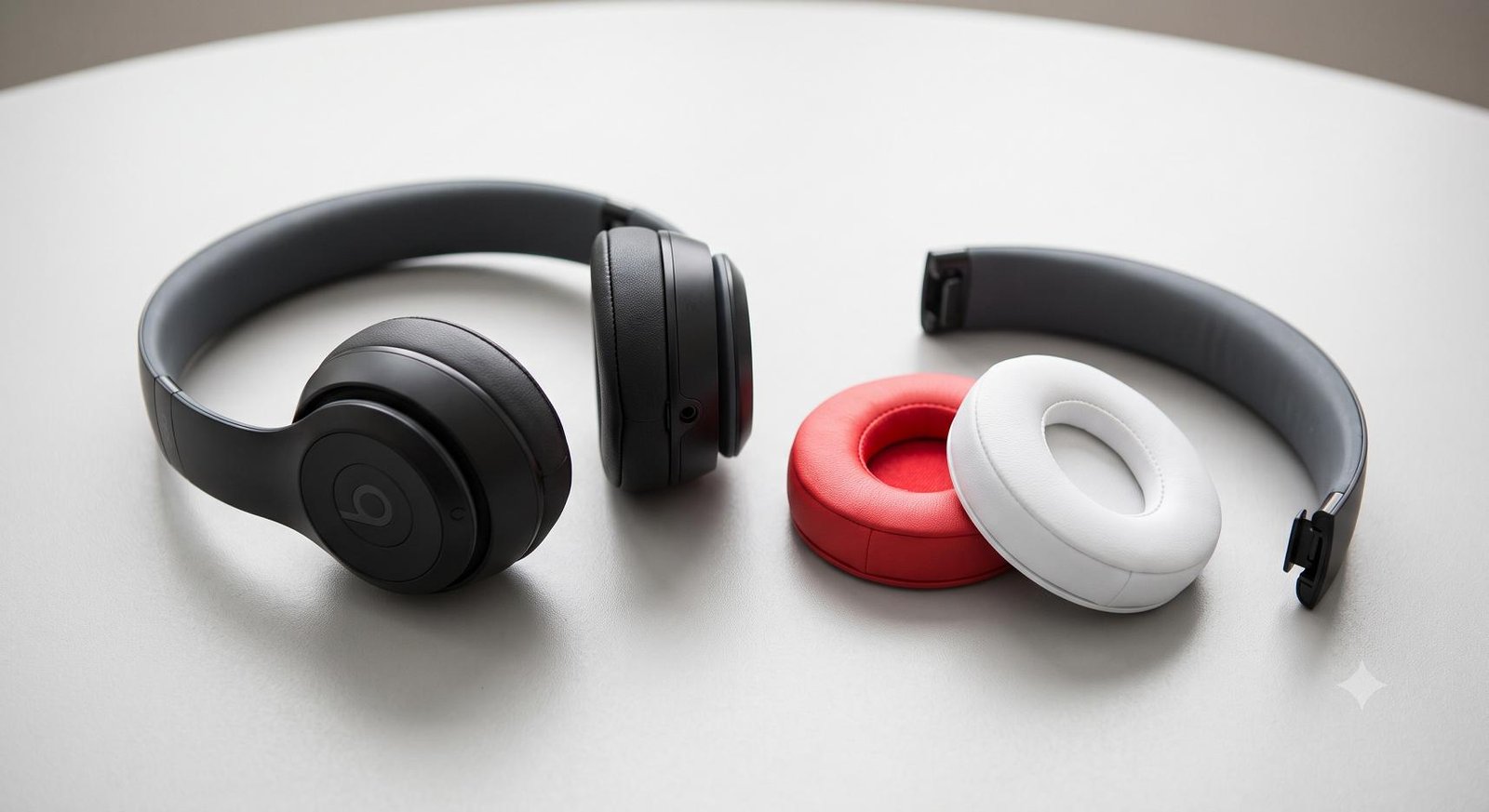
Apple’s Beats subsidiary has announced a new lightweight headphone model centered around user customization. The on-ear headphones introduce a modular design approach, allowing owners to swap out ear cushions and headband inserts to create personalized color combinations.
The announcement represents a shift for the audio brand, which has historically relied on static, solid-color designs and high-profile celebrity collaborations to drive sales. By introducing interchangeable physical components, Beats is testing a new hardware model in a crowded mid-tier audio market.
Company representatives stated that the headphones are designed for extended daily wear, emphasizing a reduction in clamping force and overall weight compared to previous on-ear models like the Beats Solo line.
The Customization Framework
The core of the new release is its modular aesthetic. Out of the box, the headphones ship in a standard base color—reportedly available in matte black, silver, and a muted blue. Users can then purchase separate customization kits that include replacement magnetic ear cushions and snap-in silicone headband tracks.
This approach addresses two distinct consumer demands: aesthetic personalization and hardware longevity. Ear cushions are typically the first component to degrade on on-ear headphones. By making them easily replaceable via a magnetic locking mechanism, Beats is extending the potential lifespan of the hardware.
While Beats heavily markets the fashion aspect of these interchangeable parts, the move also aligns with growing regulatory and consumer pressure for more repairable consumer electronics. The ability to replace worn cushions without specialized tools or adhesives represents a functional improvement over several older Beats models.
Technical Specifications and Compatibility
Internally, the new headphones share much of their architecture with recent Beats releases. The company continues to use its proprietary custom acoustic platform rather than directly porting over the H-series chips found in Apple’s AirPods Pro and AirPods Max.
This chip strategy is intentional. It allows Beats to maintain native feature parity across both iOS and Android platforms. Apple users still get one-touch pairing, automatic switching across iCloud devices, and “Find My” support. However, Android users get a nearly identical experience—including multipoint pairing and device tracking—through the dedicated Beats app.
The headphones support personalized Spatial Audio with dynamic head tracking for iOS users. For physical connectivity, Beats has fully transitioned to USB-C for charging and lossless wired audio, completely phasing out the Lightning connector in line with Apple’s broader hardware strategy and recent European Union mandates.
Battery life estimates reflect the current industry standard for on-ear models. The hardware is expected to deliver upwards of 40 hours of playback on a single charge, with a quick-charge feature providing roughly five hours of playback from a ten-minute charge.
Market Context and Apple’s Audio Strategy
The introduction of a customizable, lightweight headphone clarifies how Apple is positioning Beats within its wider audio portfolio. While the AirPods Max remain Apple’s premium, heavy-duty over-ear offering, Beats is tasked with capturing the sub-$300 market, fitness enthusiasts, and younger consumers who prioritize aesthetics.
Competitors in this price bracket, notably Sony and JBL, have increasingly focused on aggressive active noise cancellation (ANC) and battery life. Beats is attempting to differentiate itself through industrial design and cross-platform flexibility. The modular design serves as a unique selling proposition in a market where basic technical specifications have largely plateaued.
The lightweight category has seen renewed interest as consumers look for alternatives to heavier over-ear models and in-ear monitors. On-ear headphones offer a middle ground, providing a larger soundstage than earbuds without the bulk of over-ear designs. However, they are traditionally criticized for comfort issues during long listening sessions. Beats claims to have addressed this through redesigned acoustic nozzles and a lighter chassis, though independent testing will be required to verify these ergonomic claims.
Implications for E-Waste and Accessories
The shift toward replaceable components could have secondary effects on the accessory market. By standardizing the connection points for the ear cushions and headbands, Beats opens the door for a third-party ecosystem of accessories, similar to the market for Apple Watch bands.
Currently, it remains unclear if Beats will license the design to third-party manufacturers or keep the customization ecosystem closed. A closed system would allow the company to capture high margins on replacement parts, a highly profitable revenue stream.
Furthermore, making the most wearable parts of the headphone easily replaceable addresses one of the primary drivers of electronic waste in the audio sector. Consumers frequently discard functional audio hardware simply because the synthetic leather on the ear pads has begun to flake. A modular approach mitigates this specific point of failure.
What Happens Next
The new customizable headphones are slated to roll out to Apple retail stores and authorized third-party vendors in the coming weeks. Beats has indicated that the initial customization kits will launch alongside the hardware, with seasonal color additions expected later in the year.
Industry analysts will be watching to see if the modular approach is eventually adopted by Apple’s flagship AirPods Max line, which currently features easily replaceable magnetic ear cups but lacks the broader customization options introduced by Beats today.