RTX 6090 Rumors Roundup: Expected Specifications, Performance, AI Features, and Release Timeline

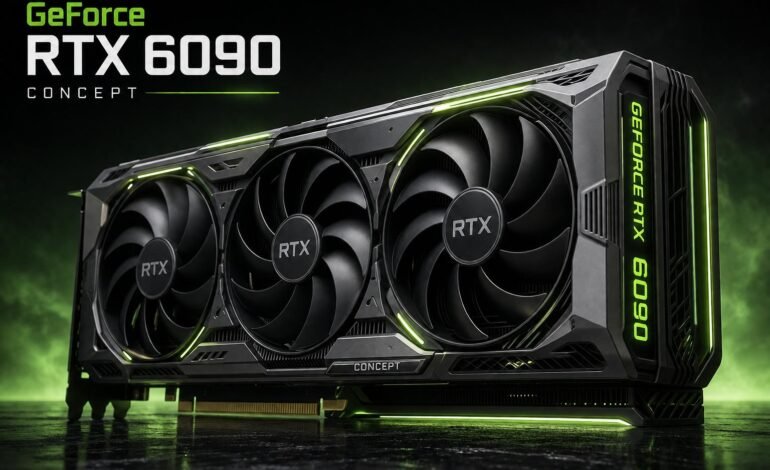
The dust is still settling from NVIDIA’s Blackwell generation, but the hardware industry never stops moving. Enthusiasts and enterprise IT teams are already piecing together the roadmap for what comes next: the NVIDIA GeForce RTX 6090.
Based on a steady stream of supply chain leaks and industry analysis, the RTX 6090 represents a fundamental pivot. It is shaping up to be less of a traditional gaming card and more of a localized supercomputer. NVIDIA is designing this flagship to handle the massive compute loads required by next-generation graphics and advanced local intelligence.
If you are planning a massive workstation upgrade, here is everything you need to know about the expected architecture, hardware specs, and why you might be waiting a while to get your hands on one.
Key Takeaways
-
Architecture: Built on the upcoming “Rubin” (GR202) architecture using TSMC’s 3nm manufacturing process.
-
Memory: Expected to feature 32GB of VRAM (likely GDDR7) on a massive 512-bit bus.
-
Performance: Analysts project a 40% to 70% performance uplift over the RTX 5090 in path tracing and rendering.
-
AI Focus: Packed with 6th-generation Tensor cores optimized specifically for heavy local AI tools.
-
Release Window: Pushed back to late 2027 or early 2028 due to an ongoing global DRAM shortage and NVIDIA’s focus on data center chips.
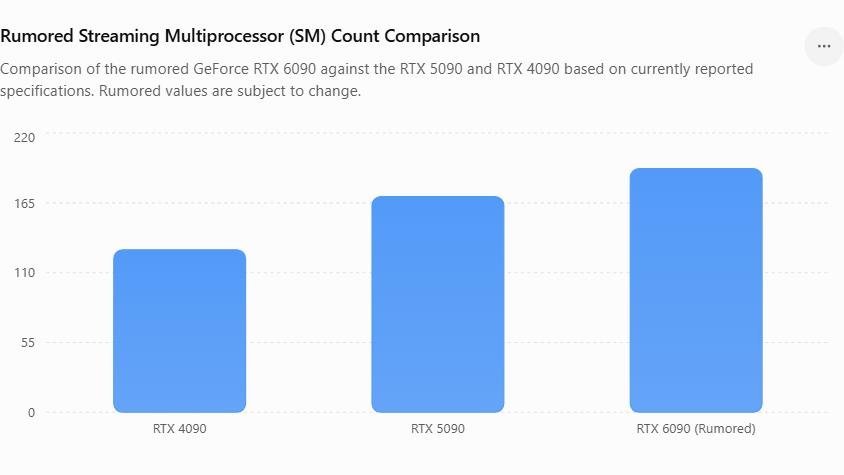
Expected Specifications Comparison
| Feature | RTX 4090 (Ada Lovelace) | RTX 5090 (Blackwell) | RTX 6090 (Rubin) Rumored |
| Silicon | AD102 | GB202 | GR202 |
| Process Node | TSMC 4N | TSMC 4NP | TSMC 3nm |
| SM Units | 128 | 170 | Up to 192 |
| VRAM | 24GB GDDR6X | 32GB GDDR7 | 32GB+ GDDR7/8 |
| Memory Bus | 384-bit | 512-bit | 512-bit |
| Max Power (TDP) | 450W | 600W | 525W – 600W+ |
Unpacking the Hardware and Architecture
The beating heart of the RTX 6090 is reportedly the GR202 silicon, named after the pioneering astronomer Vera Rubin. Leaks indicate that a fully enabled GR202 chip houses an astonishing 192 Stream Multiprocessors (SMs). Even if NVIDIA shaves a few SMs off the final consumer die to improve yields, the core count will dwarf current flagships.
This massive die will likely be fabricated on TSMC’s cutting-edge 3nm node. Moving to 3nm allows NVIDIA to cram significantly more transistors into the same physical space, boosting efficiency.
However, that efficiency will be pushed to the limit. Current thermal design power (TDP) estimates place the 6090 between 525W and 600W. You will absolutely need a premium power supply and a case with exceptional airflow to keep this hardware from thermal throttling.
Pros of the Rumored Specs:
-
Unmatched memory bandwidth for heavy 3D rendering.
-
True zero-compromise 8K gaming capabilities.
-
Can comfortably run massive 120B-parameter models locally.
Cons of the Rumored Specs:
-
Extreme power draw requires expensive complementary hardware.
-
Physical size will likely exceed triple-slot dimensions.
-
Pricing is expected to start north of $2,000.
How the 6090 Transforms Local Computing
NVIDIA’s CEO Jensen Huang has made it clear that the future of the PC relies on neural rendering and agentic processing. The RTX 6090 is built expressly for this transition.
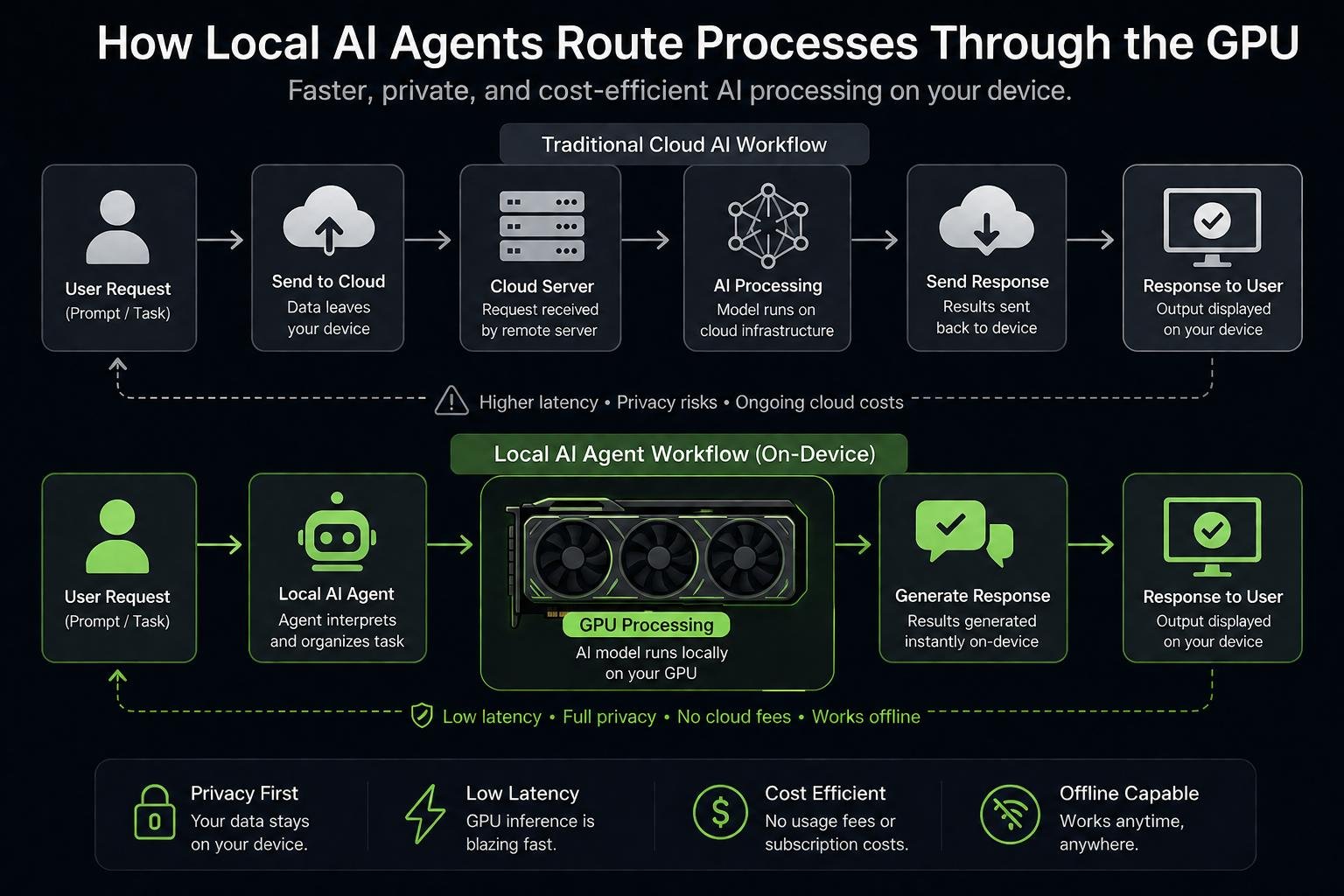
Right now, the best AI tools July 2026 has to offer are heavily reliant on cloud servers. If you want to train a complex model or generate heavy video assets, you are usually pinging a data center. The RTX 6090 flips that dynamic. Armed with 6th-generation Tensor Cores and FP4 precision capabilities, this GPU brings data-center-level computation to your desk.
By running advanced AI tools natively, users eliminate cloud latency and protect their privacy. Your data never has to leave your machine.
The Rubin Architecture Edge
What makes Rubin different from Blackwell is its specialization. While previous generations treated tensor cores as a neat addition to rasterization, the Rubin architecture places them at the forefront. The GR202 chip is designed to execute advanced neural rendering natively.
Technologies like DLSS (Deep Learning Super Sampling) will evolve. We aren’t just talking about generating intermediate frames anymore. The GPU will use AI to predict and render complex lighting effects, making path tracing the default rather than an optional setting that tanks your frame rate.
Examples
To understand the practical impact of the RTX 6090, here is how different professionals will likely use it:
-
3D Environment Artists: Using 3D-guided generative platforms like ComfyUI or FLUX, an artist can adjust a camera angle in Blender and watch the GPU render a fully path-traced, AI-generated landscape in real-time without buffering.
-
Data Scientists: A researcher can load and fine-tune a massive 100-billion parameter language model entirely on local VRAM, bypassing expensive cloud subscription fees and strict corporate data security hurdles.
-
Enthusiast Gamers: Players will experience native 8K resolution in AAA titles, pushing well past 60 frames per second with full ray-tracing enabled, thanks to next-generation DLSS and frame generation.
FAQs
Q. When will the RTX 6090 be released?
Hardware insiders point to a launch window in late 2027 or early 2028. This delay is largely driven by a severe global shortage of high-speed DRAM and NVIDIA prioritizing their enterprise AI chips.
Q. How much will the RTX 6090 cost?
While nothing is official, rising manufacturing costs for the 3nm node and expensive GDDR7 memory suggest an MSRP of at least $2,000, with AIB partner cards likely to push much higher.
Q. Will I need a new power supply for the 6090?
Almost certainly. With power draw estimates sitting around 525W to 600W, a high-quality 1000W or 1200W ATX 3.0 power supply with dedicated 12VHPWR connectors will be required for system stability.
Q. Why is 32GB of VRAM necessary?
While 16GB is plenty for standard 4K gaming, 32GB is the minimum threshold required to locally host and run large language models and advanced video generation algorithms without system crashes.
Conclusion
The NVIDIA RTX 6090 is not being built for the casual consumer. It is shaping up to be an uncompromising piece of silicon designed for professionals, creators, and enthusiasts who refuse to wait for cloud servers to process their workflows.
The leap to the 3nm Rubin architecture brings unprecedented core counts and AI processing capabilities to a desktop form factor. While the wait until late 2027 is frustrating—and the expected price tag will be painful—the hardware represents a genuine paradigm shift. The RTX 6090 won’t just render your games; it will serve as the localized brain for the next decade of personal computing.