AI Smart Glasses Face a Major Privacy Problem


The push to put artificial intelligence on our faces is colliding with basic privacy expectations. As tech companies position smart glasses as the next major consumer computing platform, they are facing growing pushback from regulators, privacy advocates, and the public over how these devices monitor the world around them.
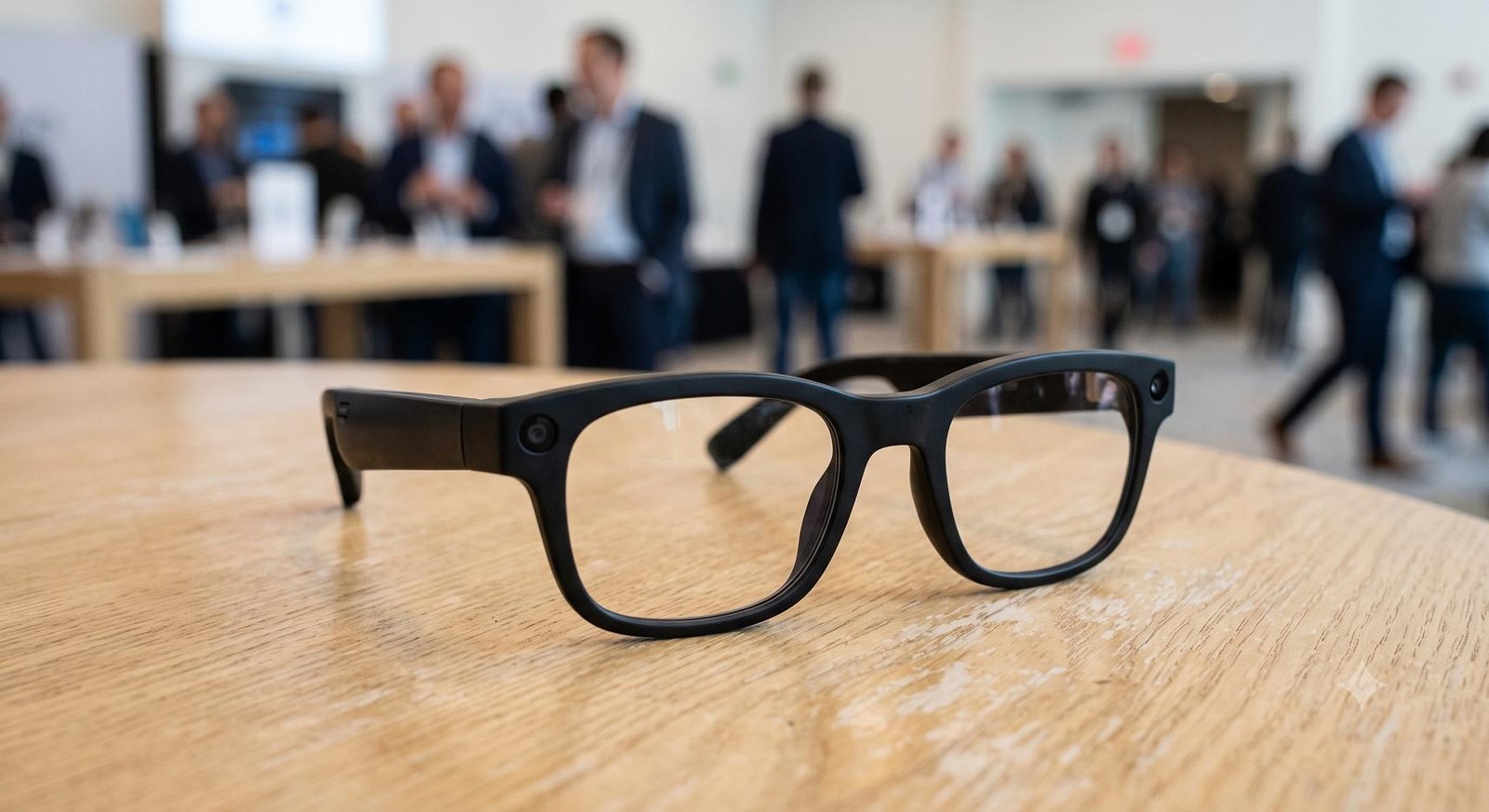
The core issue is that cameras and microphones are becoming embedded in accessories that look like ordinary eyewear. Unlike a smartphone, which requires a user to hold it up to take a picture, smart glasses provide few visual clues that they are recording or analyzing a scene.
The European Pushback
This tension is already generating legal action in Europe. French prosecutors recently opened a criminal investigation into the alleged use of smart glasses to film women without their knowledge. Concurrently, France’s data protection authority, the CNIL, warned that smart glasses can capture images and voices in an “almost invisible” manner, prompting an action plan to examine their privacy implications.
In Germany, a digital rights organization filed a criminal complaint earlier this year regarding Meta’s AI glasses and the country’s laws governing disguised recording devices. While no finding of illegality has been made, the complaints highlight a central regulatory question: how conspicuous must a wearable camera be before bystanders can reasonably consent to its presence?
The emergence of smart glasses is testing existing European data laws. The CNIL considers processing personal information via smart glasses to be subject to the General Data Protection Regulation (GDPR). The EU’s newly enforced Artificial Intelligence Act adds another layer, applying different obligations depending on the system, though it excludes individuals using AI systems for purely personal, non-professional purposes. Regulators note that transparency rules are difficult to enforce if the person whose image or voice is being processed cannot tell that an AI-enabled device is operating in the first place.
The “Always-On” AI Problem
Manufacturers have tried to address bystander privacy with hardware indicators. Meta’s popular Ray-Ban smart glasses include a front-facing capture LED that shines bright white to indicate when the wearer is recording video or taking a photograph. Meta also implemented a hardware lock that automatically disables the camera if the device detects the LED has been covered with tape, physically tampered with, or destroyed.
However, the line between recording a video and processing an AI prompt is blurring. According to the manufacturer’s documentation, when certain AI functions use the camera—such as asking the device to identify a plant or a landmark—the external capture LED does not necessarily illuminate because the device is not saving a photo to the user’s gallery.
This means the AI system can actively analyze information gathered through the camera while a person standing in front of the wearer remains unaware. Meta states that when its AI processes a scene, faces and license plates are automatically blurred, and the images used to generate the answer are not saved to the user’s gallery. Despite these software guardrails, privacy advocates argue the lack of an external indicator during AI processing fundamentally changes how people behave in public spaces.
The “I-XRAY” Warning
The potential for misuse was demonstrated sharply in late 2024 when two Harvard students, AnhPhu Nguyen and Caine Ardayfio, built a project called I-XRAY. Using a pair of Meta Ray-Ban glasses, they streamed live video to a computer program that detected faces.
The system ran those faces through public facial recognition search engines like PimEyes and FaceCheck.id, matched them to online profiles, and used large language models to scrape public databases for names, phone numbers, and home addresses. The creators demonstrated the system in a video posted to X, showing how they could approach strangers in public and gain their trust by referencing their relatives or hometowns.
The project highlighted how rapidly consumer hardware can outpace public expectations of privacy. The students did not release the software, stating the project was intended to raise awareness about the capabilities of existing technology. Meta responded at the time by pointing out that its glasses were not uniquely vulnerable, noting that the same software could be connected to any wearable camera or smartphone.
A Pivot to Camera-Free Wearables
The ongoing scrutiny is prompting hardware manufacturers to hedge their bets. Meta is reportedly preparing to announce a new line of camera-free smart glasses, codenamed Luna, as soon as next month.
According to reports, the upcoming frames will feature six microphones and six speakers, allowing users to interact with Meta AI entirely through voice commands without the privacy complications of a built-in lens. The new model is expected to retain a dedicated button for quick access to the AI assistant.
This audio-first approach is gaining traction across the industry. Brands like Dymesty and Even Realities are marketing smart glasses that omit cameras entirely, relying instead on microphones and internal heads-up displays. Removing the camera lowers power consumption, slims down the frames, and allows the wearer to enter schools, locker rooms, and corporate offices where cameras are strictly prohibited.
The next phase of the smart glasses market will likely split into two distinct categories: high-end devices equipped with cameras for visual AI processing, and discreet, audio-focused models designed to navigate increasingly strict privacy rules. Whether consumers will broadly accept wearing cameras everywhere they go—or whether regulators will force a change in how these devices operate—remains the industry’s biggest unanswered question.